What Can Horses Eat and Not Eat? Safe Foods, Toxic Foods, and Plants
Knowing what horses can eat and not eat starts with one fact: a horse’s gut is built for forage. Most feeding emergencies begin with something that is not forage. This guide covers daily feed, safe treats, foods to skip, toxic plants, and feed-room hazards.
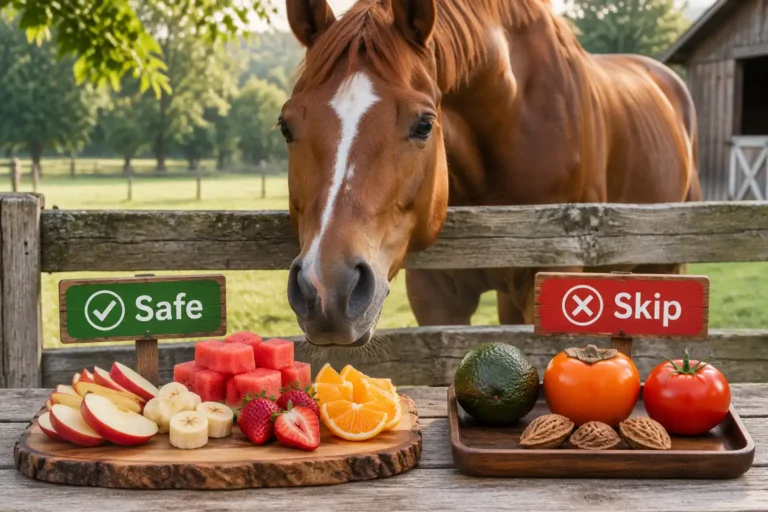
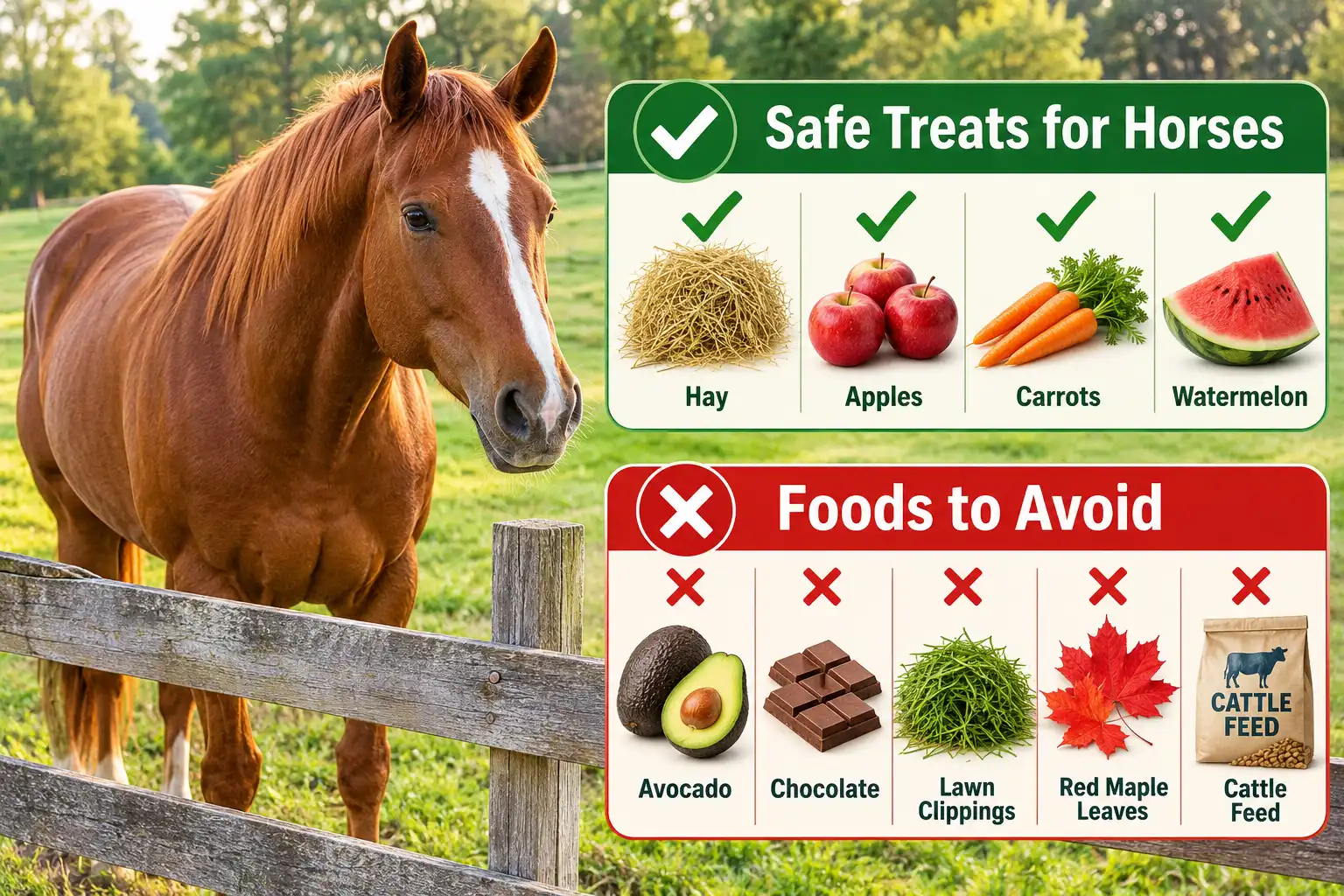
Horses can eat grass, hay, oats, apples, carrots, and watermelon. They should not eat avocado, chocolate, tomatoes, raw potatoes, lawn clippings, moldy hay, or cattle feed carrying monensin. Yew and wilted red maple leaves can kill a horse.
If a horse has already eaten something on the unsafe lists below, call a large animal veterinarian before any home remedy. Several poisonings look like ordinary colic at first, and some have no antidote.
What Horses Should Eat Every Day
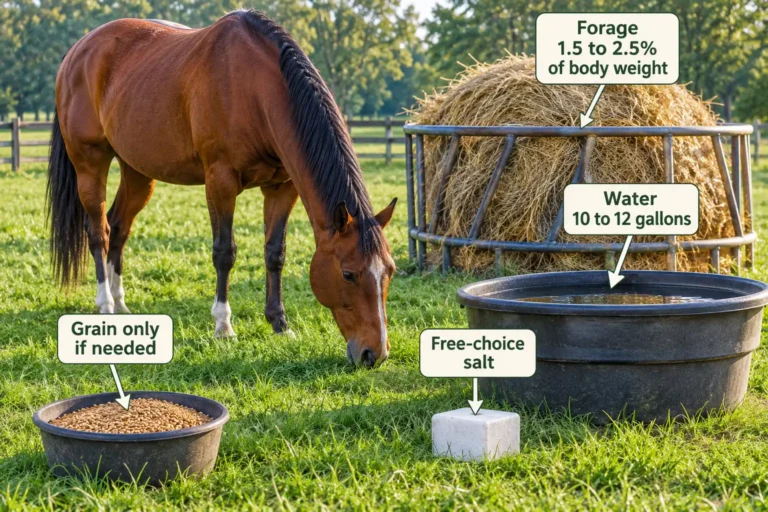
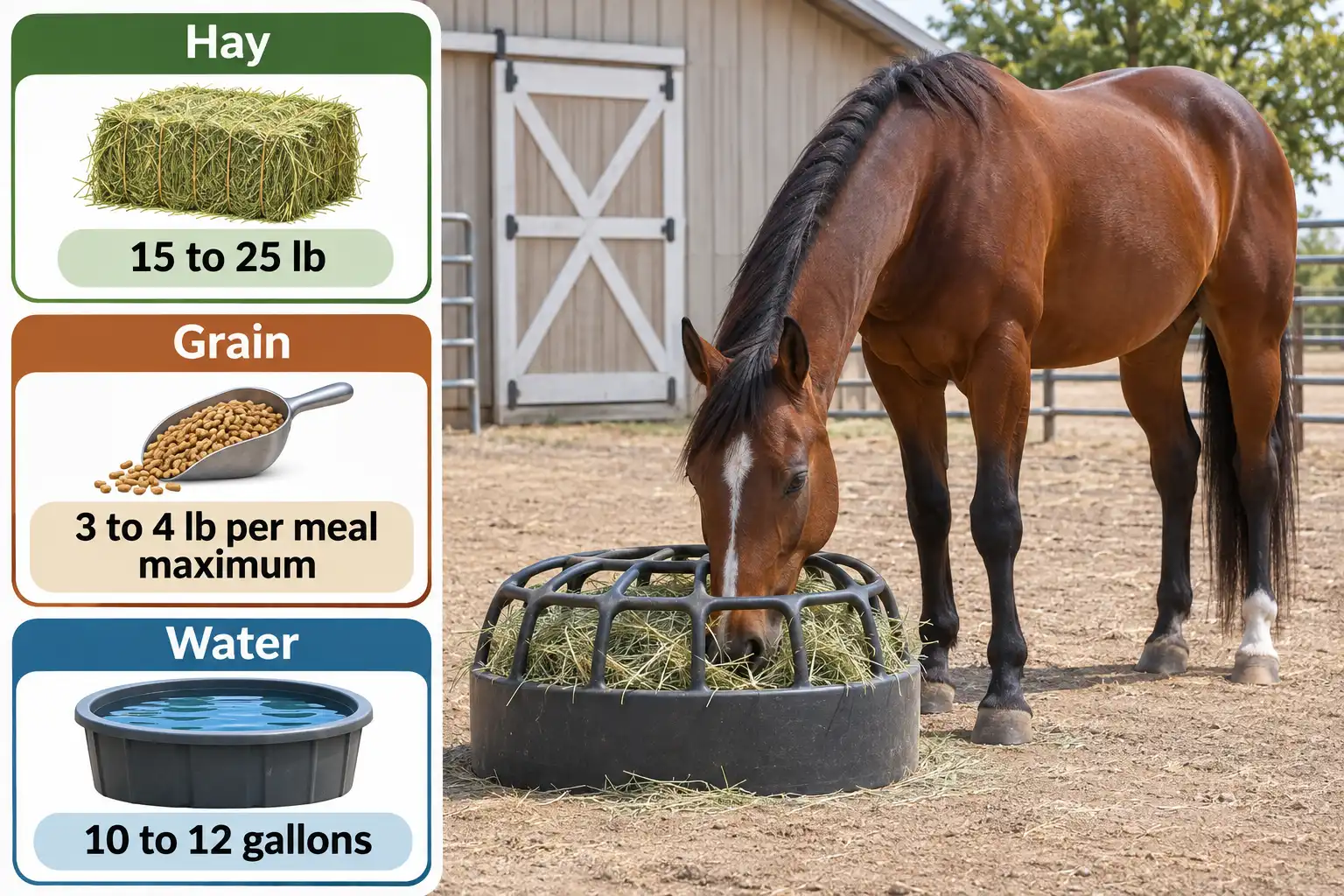
Horses should eat forage first: pasture, grass hay, or a grass and legume mix, with clean water always in reach. University of Minnesota Extension recommends at least 1 percent of body weight in forage daily. Ideally, the figure is 1.5 to 2.5 percent. For a 1,000-pound horse, that means 15 to 25 pounds of hay or pasture equivalent daily.
Grain is optional for many horses, since idle adults can meet their needs on good grass hay alone, per the same guidance. When a horse does need grain, Minnesota Extension caps it at 0.3 to 0.4 percent of body weight per feeding. So a 1,000-pound horse should get no more than 3 to 4 pounds of grain in one meal.
Water matters more than any feed. Most 1,000-pound horses drink 10 to 12 gallons a day, according to Minnesota Extension. A working horse in summer heat can drink 12 to 16, and horses on dry hay drink more than horses on pasture.
Every figure scales with body weight, so estimating your horse’s weight comes before any ration. Keep horse salt within reach at all times.
| Need, 1,000-lb adult horse | Amount |
|---|---|
| Forage, minimum | 10 lb |
| Forage, typical range | 15 to 25 lb |
| Grain, maximum per meal | 3 to 4 lb |
| Water at rest | 10 to 12 gal |
| Water, working in summer heat | 12 to 16 gal |
Figures from University of Minnesota Extension.
Read next: Horse Eat a Day
Safe Treats Horses Can Eat
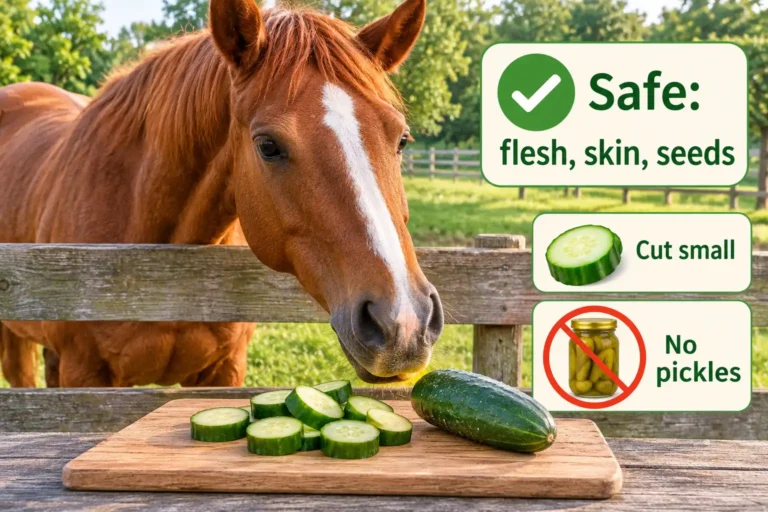
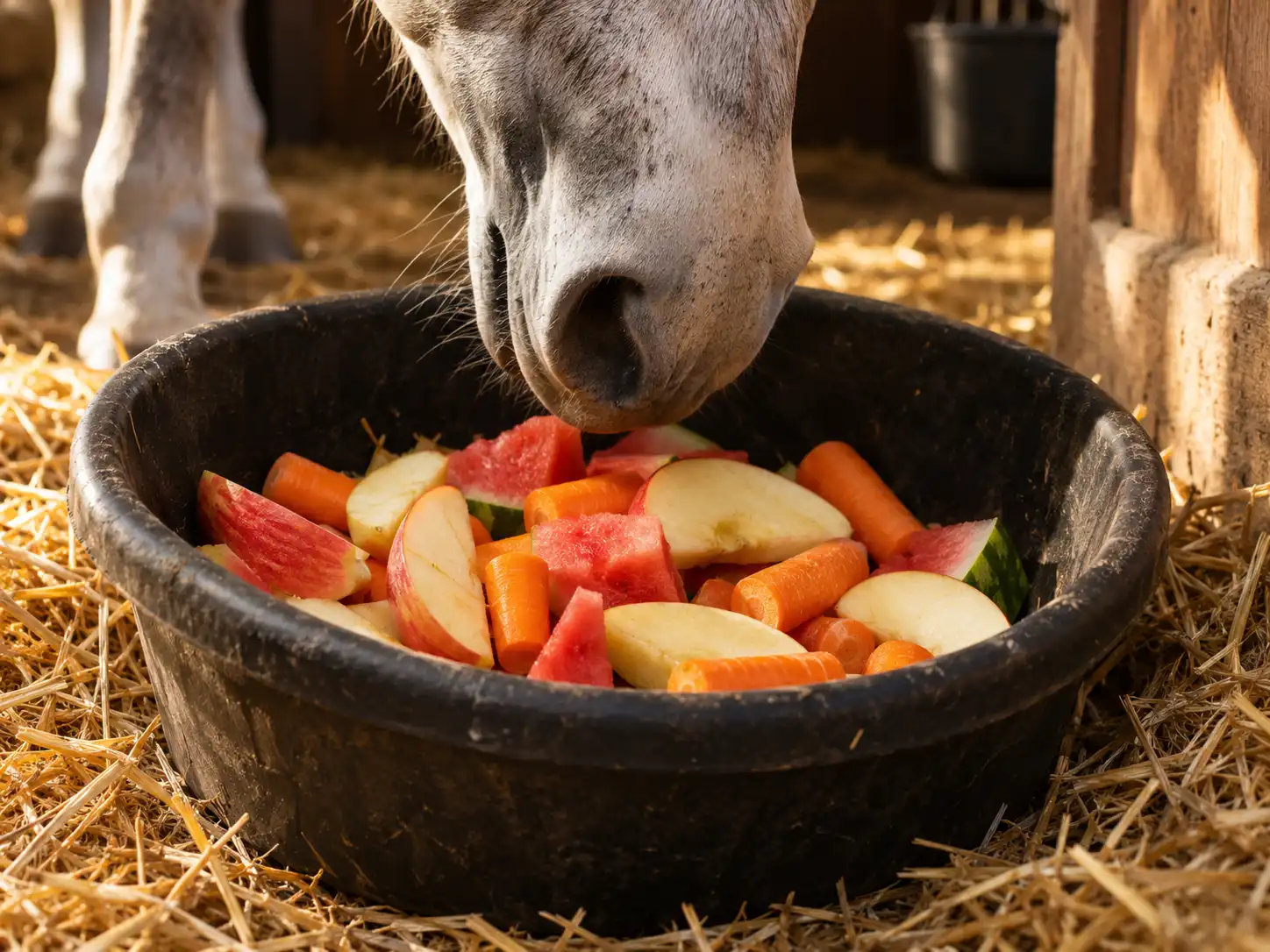
Most common fruits and vegetables are safe for horses in small amounts. Penn State Extension’s acceptable list includes apples, carrots, bananas, peaches, cucumbers, oranges, pears, strawberries, watermelon, beets, corn, pumpkin, and turnips. Peppermints, sugar cubes, and commercial horse treats are on it too.
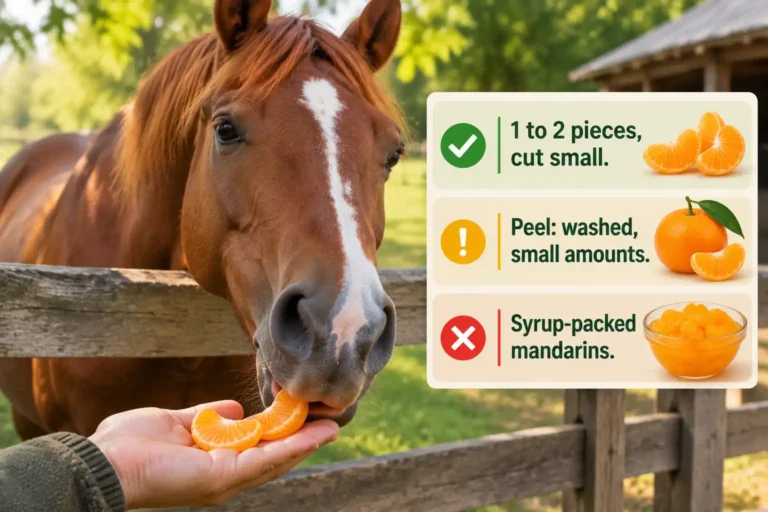
How you serve a treat matters as much as what it is. Penn State Extension advises slicing apples and breaking up large carrots so a horse cannot choke on them. Pits come out of peaches and apricots for the same reason.
Keep amounts small. Unless a label says otherwise, Penn State’s rule of thumb is one to two pieces, whatever the size. Treats should never be the source of a horse’s vitamins or minerals, because that job belongs to forage and concentrate.
Offering treats in a bucket instead of your hand also cuts down on nipping, per the same Penn State guidance.
| Treat | How to serve |
|---|---|
| Apples | Sliced into pieces |
| Carrots | Broken into short lengths |
| Watermelon | Small chunks |
| Bananas | A few pieces |
| Peaches, apricots | Pits removed, sliced |
| Pumpkin | Fresh and cut small, never moldy |
| Peppermints, sugar cubes | One or two, skipped for metabolic horses |
Foods Horses Should Not Eat
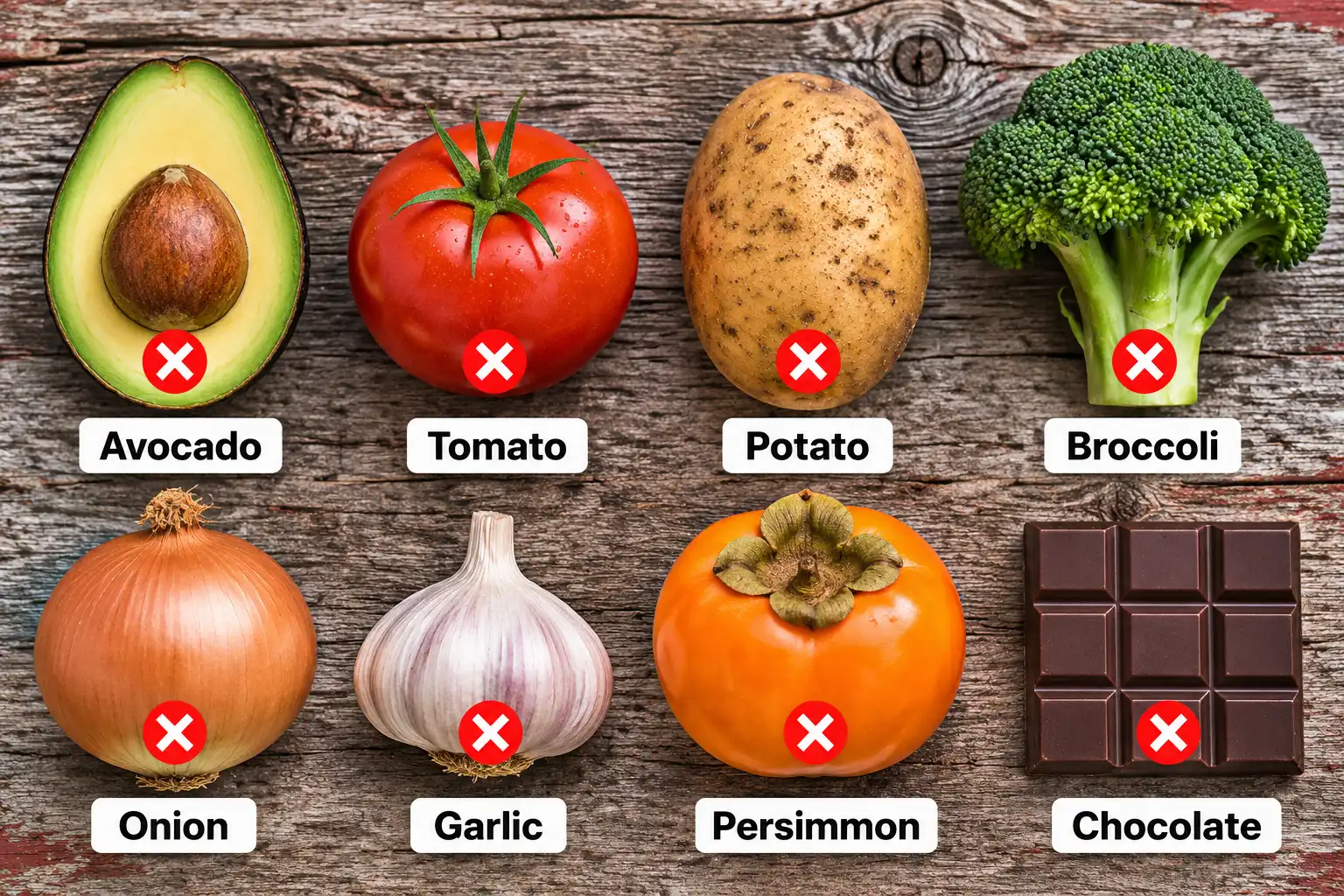
Horses should not eat avocado, tomatoes, raw potatoes, persimmons, broccoli, cauliflower, chocolate, onions, or garlic. Some of these are toxic. Others build enough gas or blockage to bring on colic.
Penn State Extension flags tomatoes and raw potatoes because they belong to the nightshade family, which is toxic to horses. Broccoli and cauliflower are on its list for another reason: they can cause excess gas in the hindgut.
University of Georgia Extension lists avocado leaves, bark, seeds, and fruit skin as toxic to horses. Swelling of the lips, head, and neck is among the signs. The same list warns that persimmon fruit can cause stomach ulcers, severe colic, intestinal blockage, and even a ruptured stomach.
Onions and garlic belong to the allium family, which damages red blood cells in horses. Garlic needs a closer look, because it is sold as a horse supplement. A 2005 trial in the American Journal of Veterinary Research tested this. Horses voluntarily ate enough freeze-dried garlic to develop Heinz body anemia. However, that trial used only four horses, and no safe intake has been set. Until better data exists, garlic is a risk with no proven payoff.
Chocolate carries theobromine and caffeine. Both are stimulants, and both are screened for in competition drug testing.
Meat, dairy, and baked goods have no place in a horse’s ration either. Horses are herbivores, and their gut is built to ferment fiber.
Quick Reference: What Horses Can Eat and Not Eat
This table gathers the common foods in one place. Use it as a first check, then read the sections above for the full reason.
| Food | Verdict | Why |
|---|---|---|
| Apples | Yes | Slice to prevent choke |
| Carrots | Yes | Break large ones |
| Watermelon | Yes | Small chunks |
| Bananas | Yes | Small amounts |
| Corn | Yes, as a treat | Never moldy |
| Peppermints | Limit | Mostly sugar |
| Broccoli, cauliflower | No | Hindgut gas |
| Tomatoes | No | Nightshade family |
| Raw potatoes | No | Nightshade family |
| Avocado | No | Toxic leaves, pit, and skin |
| Persimmons | No | Stomach blockage |
| Onions, garlic | No | Red blood cell damage |
| Chocolate | No | Stimulants |
| Lawn clippings | No | Mold, choke, colic |
| Cattle or goat feed | No | May carry monensin |
Lawn Clippings Are Not Grass
Lawn clippings are a classic well-meant mistake. Penn State Extension warns that piled clippings can mold and ferment, becoming toxic. Horses also gulp a pile of clippings fast enough to choke.
The finely cut grass ferments quickly in the hindgut, too. That raises the risk of colic and, in horses prone to it, laminitis. Lawns may also be treated with chemicals not cleared for grazing animals.
Garden waste is worse. Penn State notes that colorful ornamental plants are frequently toxic. Its pasture guidance says to keep garden and lawn clippings out of pastures entirely.
So tell neighbors plainly: no clippings over the fence, ever.
Feed-Room Hazards That Can Kill a Horse
Three feed-room problems can poison a horse that never leaves its stall. They are monensin in cattle and goat feed, blister beetles in alfalfa, and moldy hay.
Cattle and Goat Feed With Monensin
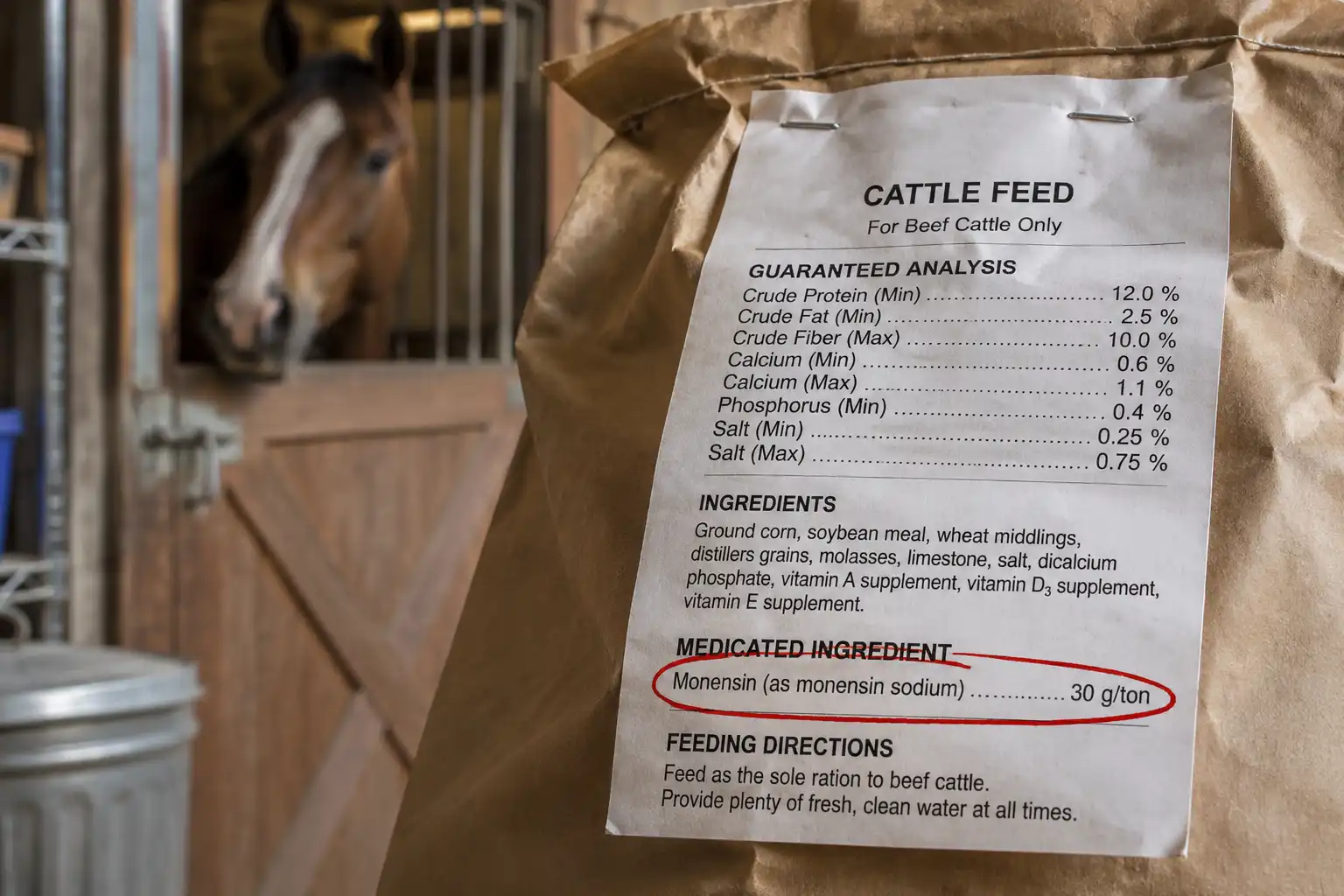
Keep horses away from cattle and goat feed. FDA’s Center for Veterinary Medicine states that monensin is safe for cattle and goats fed as directed. At those same levels, it is toxic and potentially lethal to horses.
The FDA also notes that acute poisoning can move so fast that a horse shows few signs before death. Treatment rarely works. Most poisoned horses die or are euthanized to end their suffering, and survivors can carry permanent heart damage.
On a mixed farm, that changes the layout. Store cattle supplements, mineral, and tubs behind a gate horses cannot open. Read every tag, since monensin is approved for cattle on pasture as well as in the feedlot. It is also approved in goat rations, so the same rule holds on farms that keep both species.
Contamination at the mill is a second route. The FDA has investigated horse deaths traced to monensin carried over into horse feed. Keep the tag and lot number from every bag until it is used up.
Blister Beetles in Alfalfa
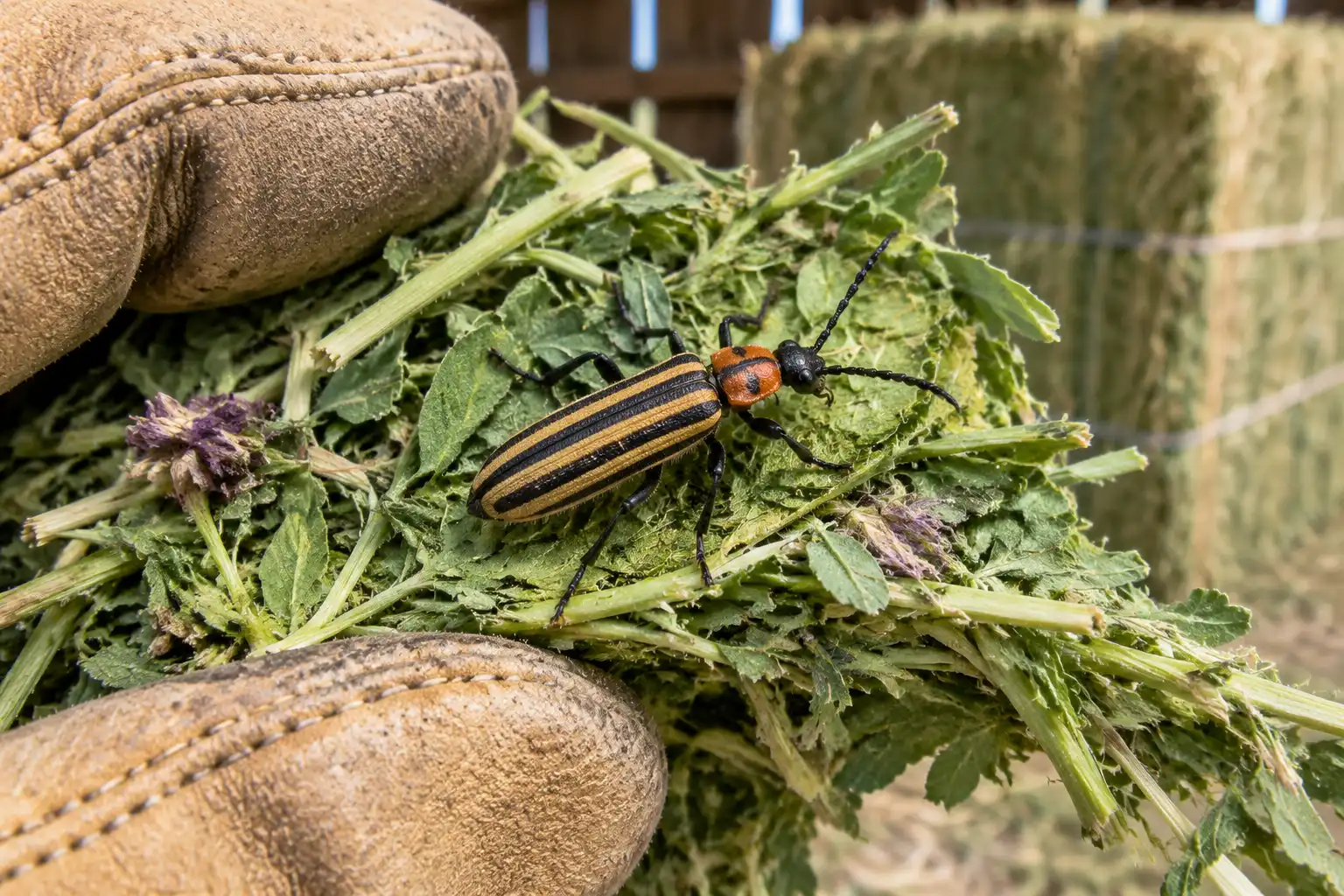
Blister beetles carry cantharidin, a toxin that can kill a horse. Texas A&M AgriLife Extension entomologists report that the beetles gather on blooming alfalfa and weeds. They then get crushed into the hay at harvest. Outbreaks run worst from early June through August.
Distance does not protect a barn. As Texas A&M AgriLife points out, West Texas alfalfa ships all over the state. So one local outbreak can reach many herds. Dead beetles remain toxic, too, which means spraying a field does not clean the hay.
So buy alfalfa cut before summer beetle activity when you can. Small square bales also help, because you can open each flake and look for beetles as you feed.
Moldy Hay
Do not feed moldy hay to horses. University of Minnesota Extension explains that most moldy hay problems come from mold spores, which cause respiratory disease. Many mold toxins also form in the field during a delayed harvest.
Moisture at baling decides much of this. In Minnesota Extension trials, bales made at 12 percent moisture and wrapped forage were desirable horse feed. Unwrapped bales made at 17 to 33 percent moisture were not.
Wetting dusty hay cuts the dust, but Minnesota Extension notes it does not reduce mold toxins. If a bale smells musty or shows white or gray patches inside, set it aside for disposal.
Toxic Trees Around Horse Pastures
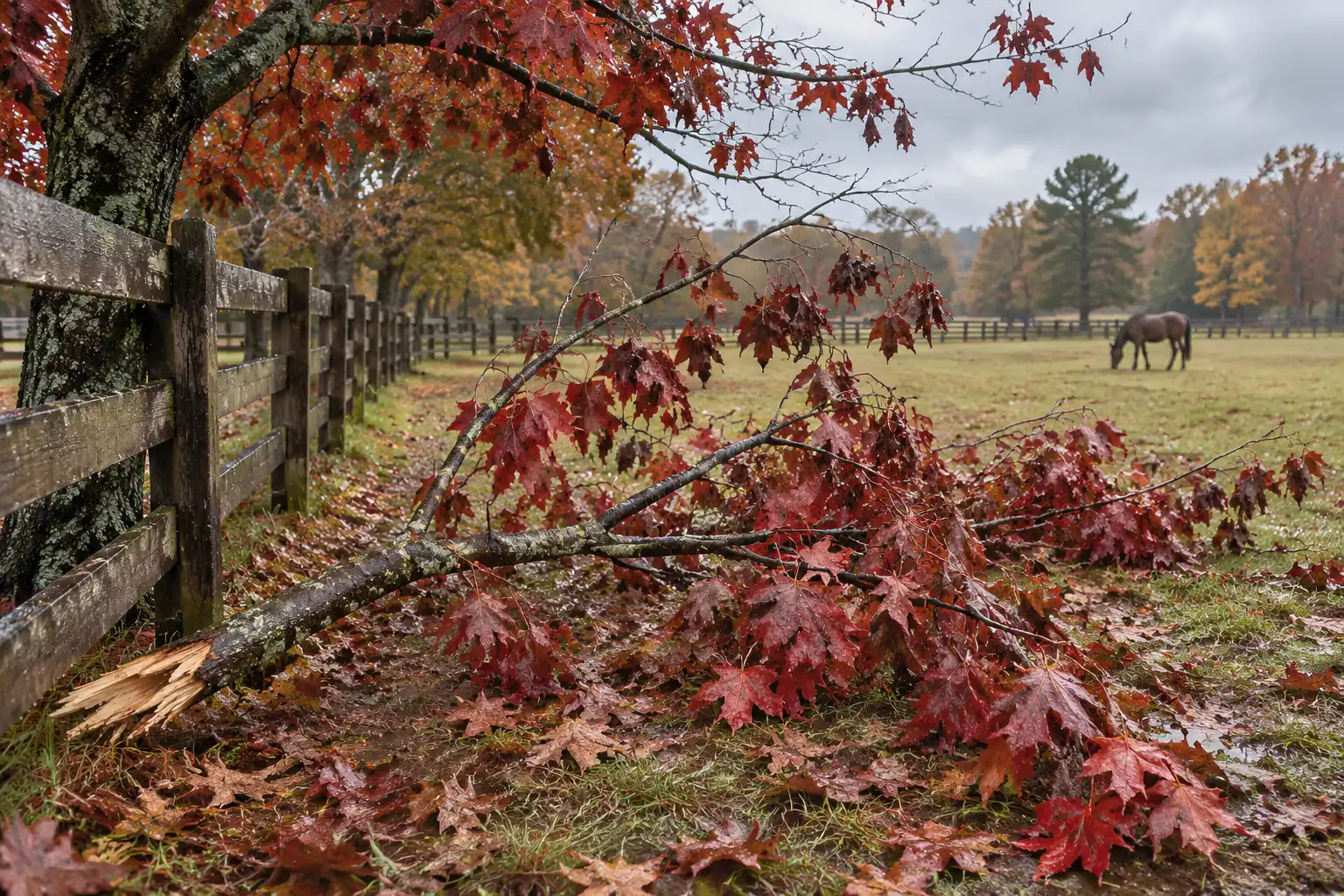
Trees are an easy hazard to miss. One storm can drop a lethal amount of leaves into a paddock. Penn State Extension rates these trees among the most dangerous for horses:
| Tree | Danger | Worst time |
|---|---|---|
| Red maple | 1.5 to 3 lb of leaves cause toxicity; destroys red blood cells | Wilted leaves; fallen autumn leaves stay toxic about 30 days |
| Box elder | Hypoglycin A; seasonal pasture myopathy is 75 to 90 percent fatal | Toxic amount unknown |
| Yew (English, Japanese) | Extreme toxicity | Leaves highest in winter |
| Wild cherry (black, pin, choke) | Cyanide | Wilted leaves |
| Oak | Kidney failure | Young leaves and green acorns |
| Black walnut | Laminitis from shavings in bedding | Any time it is in bedding |
| Buckeye, horse chestnut | Gut and nervous system signs | Spring sprouts |
Two of these deserve extra attention. Penn State states that no amount of black walnut is acceptable in bedding. So ask your shavings supplier which woods go into the bag. Yew, meanwhile, is a common landscape shrub near houses and barns, which puts it within reach of loose horses.
Walk fence lines after every storm and pick up downed branches. Penn State also advises fencing off toxic trees and keeping ornamental shrubs away from barns and pastures.
Toxic Weeds and Forages in Horse Pastures
Most healthy, well-fed horses leave toxic plants alone when good forage is available, per Penn State Extension. The risk rises when grass runs short from overgrazing, drought, or a change of season. So a grazed-down pasture carries far more poisoning risk than one with plenty of grass.
| Plant | Concern, per Penn State Extension |
|---|---|
| Poison hemlock | 4 to 5 lb can kill a 1,000-lb animal |
| Water hemlock | A walnut-size piece of root can kill a cow in 15 minutes |
| White snakeroot | Trembling and death; toxin also passes into milk |
| Common milkweed | High toxicity; seizures and death |
| Horsenettle | Stays toxic in dried hay |
| Bracken fern | Destroys vitamin B1 |
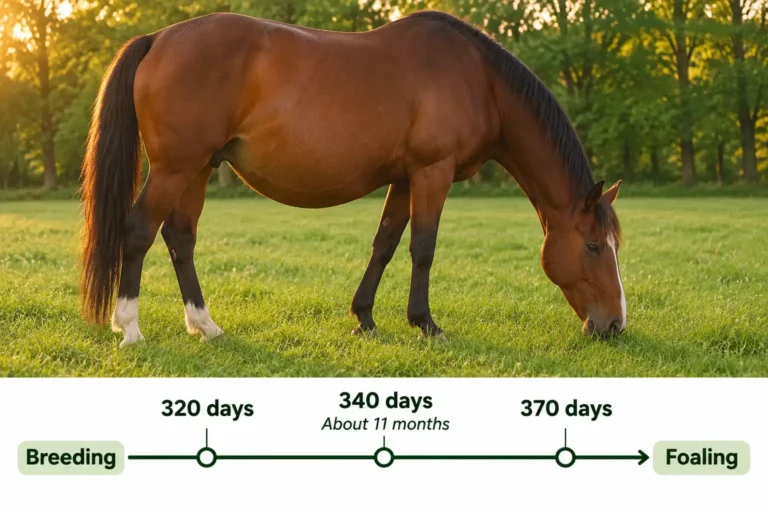
| Tall fescue (Kentucky 31) | Endophyte causes long pregnancies and abortion in mares in their last three months |
| White and red clover | Fungus on stressed plants causes heavy drooling |
| Alsike clover | Sun blistering and liver disease |
The horsenettle note matters for hay buyers. Drying does not make every toxic plant safe, so weedy hay carries risk even for a horse that never grazes.
Tall fescue needs a plan rather than panic. Its risk falls on pregnant mares, not geldings or open mares. Penn State’s warning covers the last three months of pregnancy, so plan mare pastures with your veterinarian before then.
Toxic Plant Risks by Region
Which plant or pest matters most depends on where the horse lives. Instead of one national list, we give the hazards each extension service flags for its own area.
| Region | Hazard to watch | Source |
|---|---|---|
| Northeast and Mid-Atlantic | Red maple, box elder, black walnut, yew, wild cherry | Penn State Extension |
| Southeast | Persimmon, oleander, avocado, castor bean | University of Georgia Extension |
| Texas and southern Plains | Blister beetles in summer-cut alfalfa | Texas A&M AgriLife Extension |
| Upper Midwest | Sugar buildup in cool-season grass; mold from delayed hay harvest | University of Minnesota Extension |
These lists overlap, and hay crosses state lines. Still, each one shows what local horse owners deal with most. Your county extension office keeps the full list for your area. Call before you buy or lease new ground.
Spring Grass, Sugar, and Laminitis
Grass is safe for most horses, but lush grass can trigger laminitis in horses prone to it. University of Minnesota Extension explains that cool-season grasses such as orchardgrass, bromegrass, and timothy store sugars. Rapid intake of those sugars can bring on laminitis. Horses with metabolic syndrome and horses that have foundered before carry the highest risk.
Minnesota Extension lists the riskiest grazing conditions:
- Immature grass in early spring and during regrowth
- Cool nights after warm, sunny days
- The days after a hard freeze
- Drought
For the most sensitive horses, Minnesota Extension says there is no completely safe time to graze. On the other hand, Penn State Extension notes that metabolically normal horses can graze safely if they stay at a healthy weight.
Hay can be adjusted for at-risk horses as well. Minnesota research found that soaking Minnesota-grown cool-season grass hay for 15 to 30 minutes brought sugars to 12 percent or less. That is the current dietary guideline for horses with obesity, laminitis, EMS, or Cushing’s disease.
A horse that turns sore-footed after turnout needs a veterinarian the same day. Diet changes support treatment, but they do not replace it.
How Much Hay a Horse Eats Over a Winter
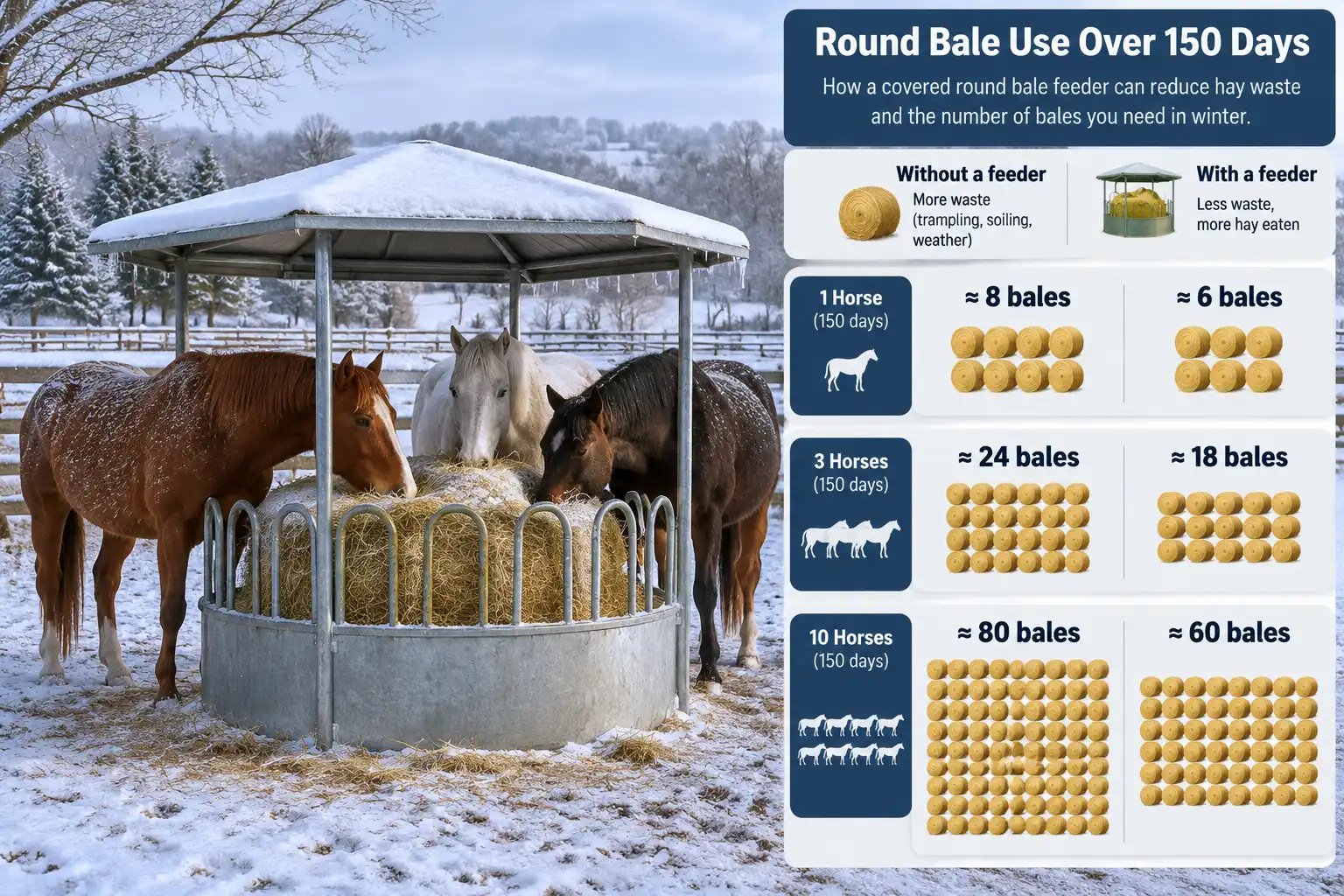
An idle 1,000-pound horse eats about 20 pounds of hay a day. Over a 150-day feeding season, that comes to roughly 3,000 pounds per horse. That 2 percent of body weight comes from University of Minnesota Extension’s feeding program for idle adult horses.
The hay you buy is more than the hay the horse eats, though. Minnesota Extension research measured 13 percent waste when small square bales were fed without a feeder. Round bales fed without a feeder wasted 57 percent.
| Horses (1,000 lb, idle) | Hay eaten in 150 days | 50-lb small squares, no feeder | 1,000-lb round bales, no feeder |
|---|---|---|---|
| 1 | 3,000 lb | 69 | 7 |
| 3 | 9,000 lb | 207 | 21 |
| 10 | 30,000 lb | 690 | 70 |
The round bale column makes the case for a feeder. Without one, a horse wastes more hay than it eats.
Bale weights vary a lot. Minnesota Extension gives 40 to 80 pounds for small squares and 800 to 1,200 pounds for rounds. Weigh a few of yours before you order. Then adjust the season length to your own winter and add a margin for a late spring. Cattle work from different intake figures, which are covered in our guide to hay budgets for cattle.
Horses That Need Extra Care With Treats
Three kinds of horses need a tighter treat policy.
Older horses. Penn State Extension notes that choke risk matters most in older horses, because their teeth decline. Cut every treat smaller for them. Tooth wear is one of several aging changes covered in our guide to horse lifespan and aging.
Metabolic horses. Penn State suggests limiting sugary and starchy treats such as animal crackers, gummy candy, and cake. For horses with metabolic issues such as laminitis, it suggests avoiding them. Peppermints and sugar cubes are mostly sugar too, so treat them the same way. Ask your veterinarian which treats fit a low-sugar plan.
Horses that bolt their feed. A horse that gulps is the one most likely to choke on a large piece. For these horses, slice treats thin and feed them one at a time.
What to Do If a Horse Eats Something Toxic
Call a large animal veterinarian first. Many poisonings begin looking like ordinary colic, and the right treatment depends on what the horse ate.
While you wait for the vet:
- Move the horse, and any herdmates, away from the source.
- Note what was eaten, roughly how much, and when.
- Save a sample: a branch, a photo of the plant, or the feed bag with its tag and lot number.
- Give no oils, drenches, or home remedies unless your veterinarian directs it.
If commercial feed caused the problem, the FDA encourages owners and veterinarians to report it. A report helps trace contaminated batches before they reach other barns.
FAQs on Horse Feeding Safety
Can horses eat bananas?
Yes, bananas are on Penn State Extension’s list of acceptable horse treats. Offer a few pieces rather than a whole fruit, and skip them for horses with laminitis or metabolic syndrome.
Can horses eat grass clippings?
No, horses should not eat lawn clippings or garden waste. Penn State Extension warns that piled clippings mold and ferment quickly, and horses tend to gulp them fast enough to choke or colic.
Can horses eat cattle feed?
No, keep horses away from cattle feed, mineral, and tubs. FDA’s Center for Veterinary Medicine warns that monensin, used in cattle and goat rations, is safe for those species but potentially lethal to horses.
Is clover safe for horses?
Mostly, but with two catches. Penn State Extension notes that a fungus on stressed white and red clover causes heavy drooling, and alsike clover can cause sun blistering and liver disease.
How many treats can a horse have?
A few pieces is plenty for most horses. Penn State Extension’s rule of thumb is one to two pieces, whatever the treat’s size, unless a commercial label gives its own amount.
Can horses eat corn?
Yes, in small amounts as a treat. Penn State Extension lists corn among acceptable horse treats, but University of Minnesota Extension warns against feeding any moldy hay or grain to horses.
Can horses eat peppermints?
Yes, Penn State Extension lists peppermints as an acceptable treat. Keep it to one or two, and skip them for horses with metabolic issues such as laminitis, since mints are mostly sugar.
Putting This Into Practice
Start with the pasture, not the treat bag. Walk fence lines for red maple, wild cherry, yew, and box elder, and clear downed branches after storms. Next, lock the feed room and keep cattle and goat rations where horses cannot reach them. Check every hay flake for mold and, with alfalfa, for beetles. Then keep treats small, sliced, and occasional.
If something has already been eaten, the first call goes to the veterinarian. For feeding, housing, and health topics beyond this list, see the rest of our horse care guides.