Can Horses Have Oranges? Safe Amounts, Peels, and Mandarins

Oranges are safe for most horses as a treat, but sugar, choke risk, and a few health conditions set the limits. Here is whether horses can have oranges, how much to offer, what to do with the peel, and how mandarins and canned fruit compare.
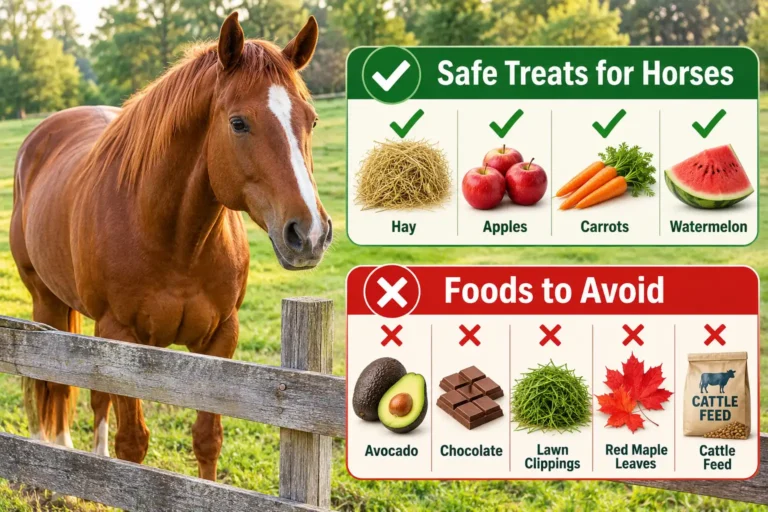
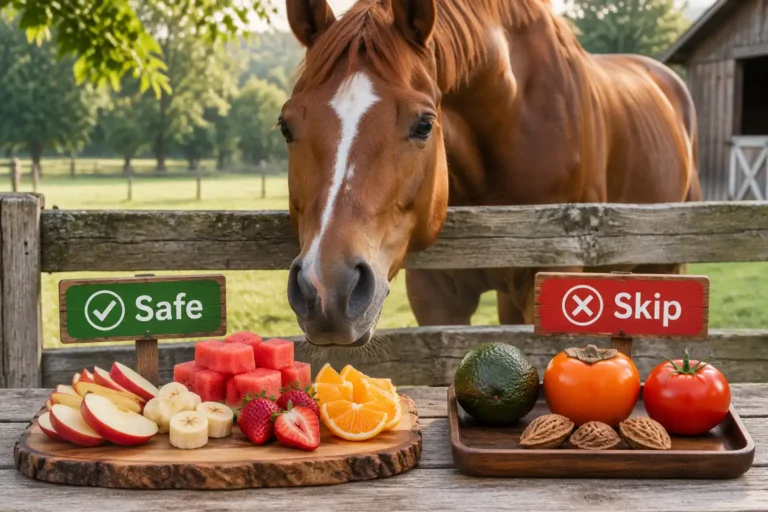
Horses can have oranges as an occasional treat. Penn State Extension lists oranges among safe fruits and suggests one or two pieces at a time, cut small to prevent choke. Peels are safe in small amounts, but horses with metabolic disease need vet approval first.
Are Oranges Safe for Horses?
Yes, fresh oranges are safe for healthy horses in small amounts. Penn State Extension lists oranges with bananas, pineapple, and watermelon as safe fruit treats for horses. The same bulletin adds that treats should stay small and never become a main part of the diet.
The fruit carries no known toxin for horses. Instead, the risks come from three places: sugar, piece size, and the horse’s own health.
A sound horse at a normal weight handles a few orange segments with no trouble. However, a horse with insulin resistance, a history of laminitis, or HYPP is a different case.
If your horse has any of those conditions, talk with your large animal veterinarian before adding fruit. The vet knows the horse’s bloodwork and can say whether treats fit the plan at all.
Read next: What Fruits Can Horses Eat? Safe Picks
What Nutrients Does an Orange Give a Horse?
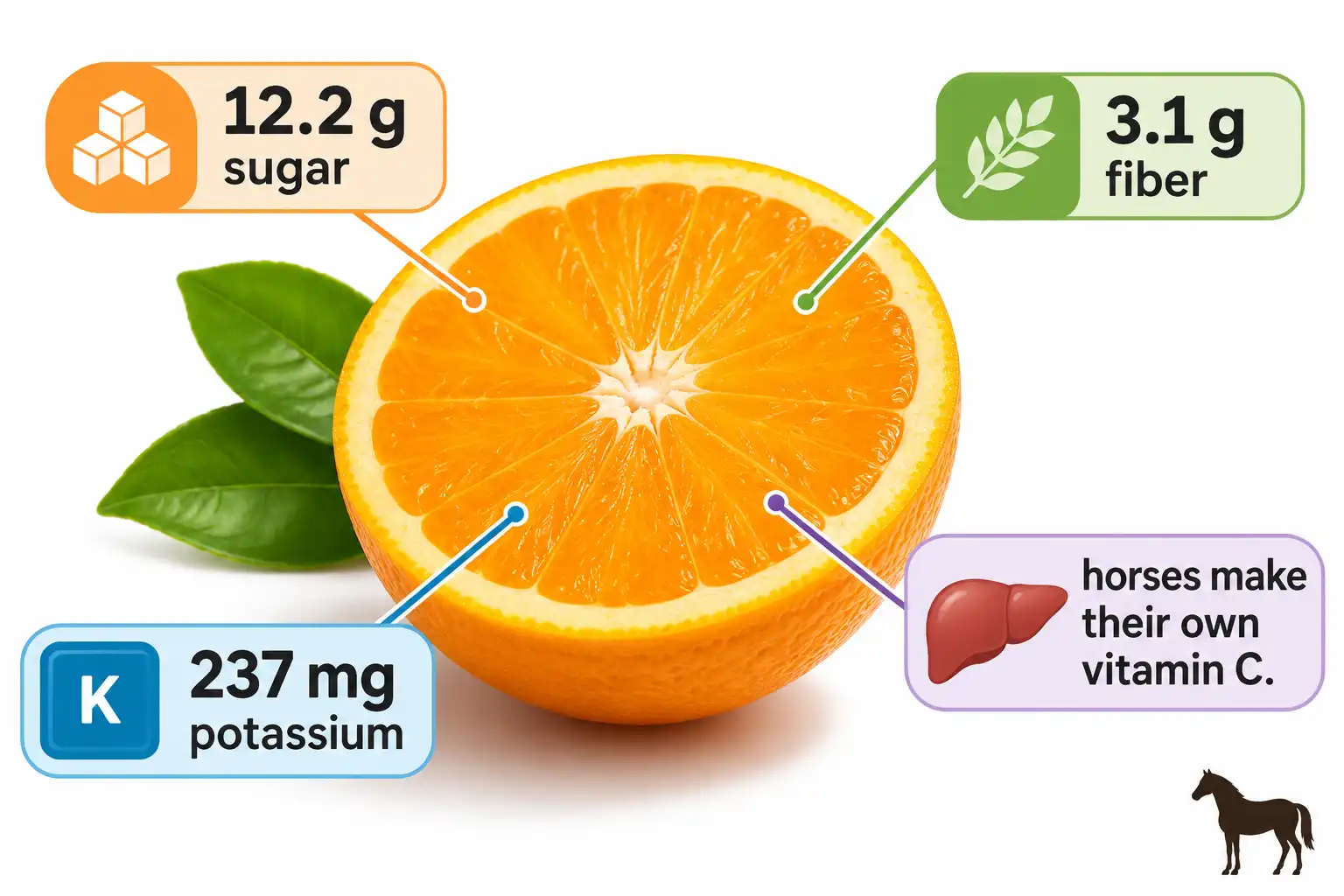
An orange gives a horse water, sugar, a little fiber, and vitamin C, but nothing the horse lacks. USDA FoodData Central puts a medium orange (about 131 grams, or 4.6 ounces) at 12.2 grams of sugar, 3.1 grams of fiber, and 237 milligrams of potassium. That is the size most owners cut up for a horse.
Vitamin C is the nutrient most owners mention, and it matters less than they expect. Unlike people, horses make their own vitamin C in the liver from glucose. So a healthy horse gets little real benefit from the vitamin C in an orange.
In short, the value of an orange is taste, variety, and a reward during handling. It is not nutrition.
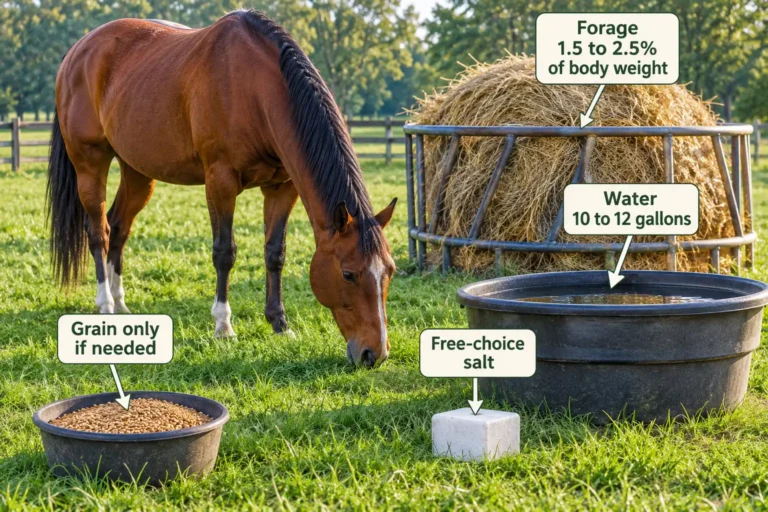
That also means an orange cannot replace anything in the ration. Forage still supplies the energy, fiber, and most minerals in a forage-first diet.
How Many Oranges Can a Horse Have?
Most horses can have one or two orange pieces in a sitting. Penn State Extension suggests one to two pieces of fruit as a general rule for a horse, adjusted for your horse’s weight and size.
For a full-size horse, that means a few segments or one quartered orange. Treat it as a reward, not a feed.
Ponies and miniature horses get less. After all, the same orange is a bigger share of a smaller diet.
What One Orange Adds to a Day’s Sugar
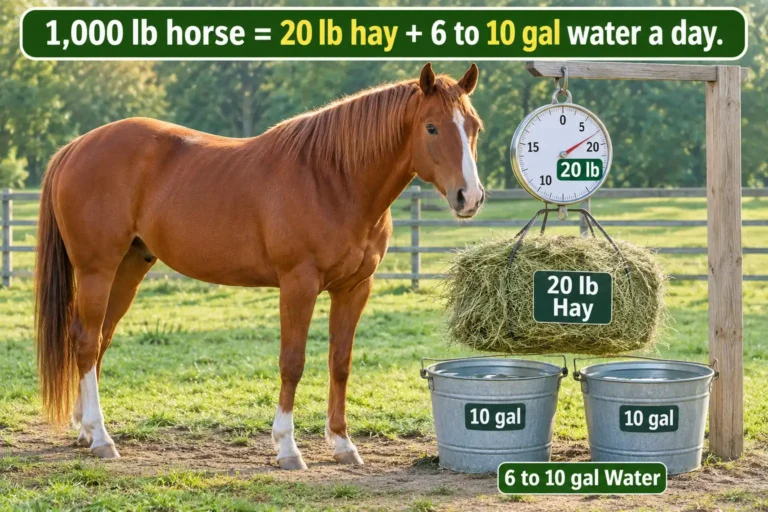
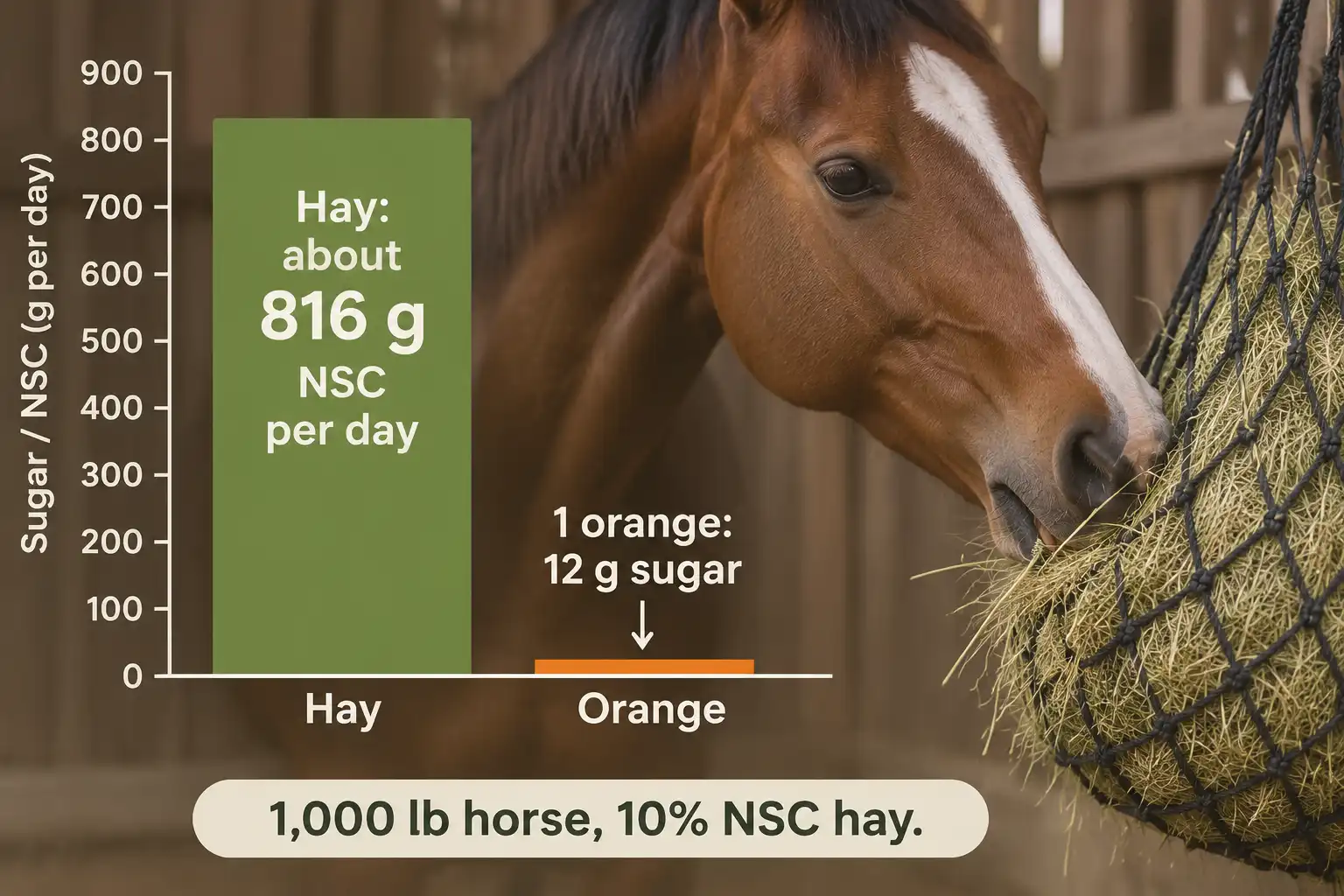
Here is the arithmetic for a 1,000 pound horse. At typical daily feed intake, that horse eats about 20 pounds of hay. Hay runs near 90 percent dry matter, so that is about 18 pounds, or 8,165 grams, of dry matter.
If the hay tests at 10 percent NSC (sugar plus starch), the horse takes in about 816 grams of NSC a day.
One medium orange adds 12.2 grams of sugar. That is about 1.5 percent of the horse’s daily NSC. Two oranges add about 3 percent. For a healthy horse, that is a small bump.
The catch is timing. Hay sugar arrives slowly over many hours. Orange sugar arrives in about a minute. University of Minnesota Extension notes that horses absorb glucose in the small intestine, which triggers an insulin response. That spike, not the daily total, is what matters for a sensitive horse.
Which Horses Should Skip Oranges?
Three groups of horses need a different plan: metabolic horses, HYPP horses, and horses at high risk of choke.
Horses With Insulin Resistance, EMS, or PPID
Horses with insulin resistance, equine metabolic syndrome, or Cushing’s disease (PPID) are the main group to hold back. University of Minnesota Extension considers forage at 10 to 12 percent NSC or less safe for these sensitive horses. It also names obesity and age over 15 as risk factors for insulin resistance.
Penn State Extension adds that owners of horses with metabolic issues, such as laminitis, may want to avoid sweet treats. So for these horses, a low-sugar swap such as cucumber slices is a common choice, with the vet’s approval.
Even a small sugar bump on an empty stomach can matter here. Let the veterinarian decide.
Horses With HYPP
An orange carries far less potassium than most HYPP owners assume. University of Minnesota Extension traces HYPP to the Quarter Horse sire Impressive. It occurs in Quarter Horses, American Paint Horses, Appaloosas, and Quarter Horse crosses.
The UC Davis Center for Equine Health advises meals under 33 grams of potassium for HYPP horses with recurrent episodes. A medium orange holds about 0.24 grams. That is under 1 percent of the meal limit for an HYPP horse. Instead, UC Davis names alfalfa hay, brome hay, soybean meal, and molasses as the feeds to avoid.
So an orange piece is rarely the HYPP problem. Still, the whole day’s potassium is what counts, and any treat should fit the plan your veterinarian set.
Horses With Worn Teeth or a Choke History
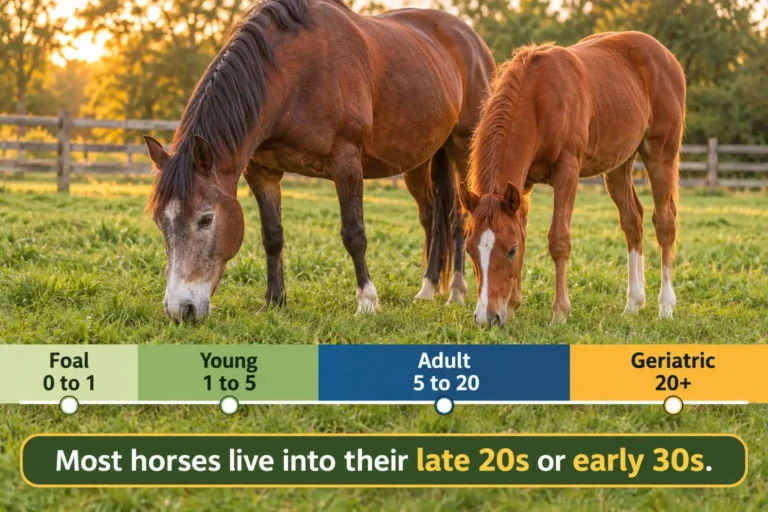
Older horses and any horse that has choked before need extra care with fruit. Penn State Extension notes that large pieces of fruit raise choke risk, and that the concern grows as teeth decline with age.
For these horses, cut oranges into thin slices or offer peeled segments only. Some owners stop fruit entirely after a choke episode. That call belongs to the vet.
How Oranges Compare With Other Horse Treats
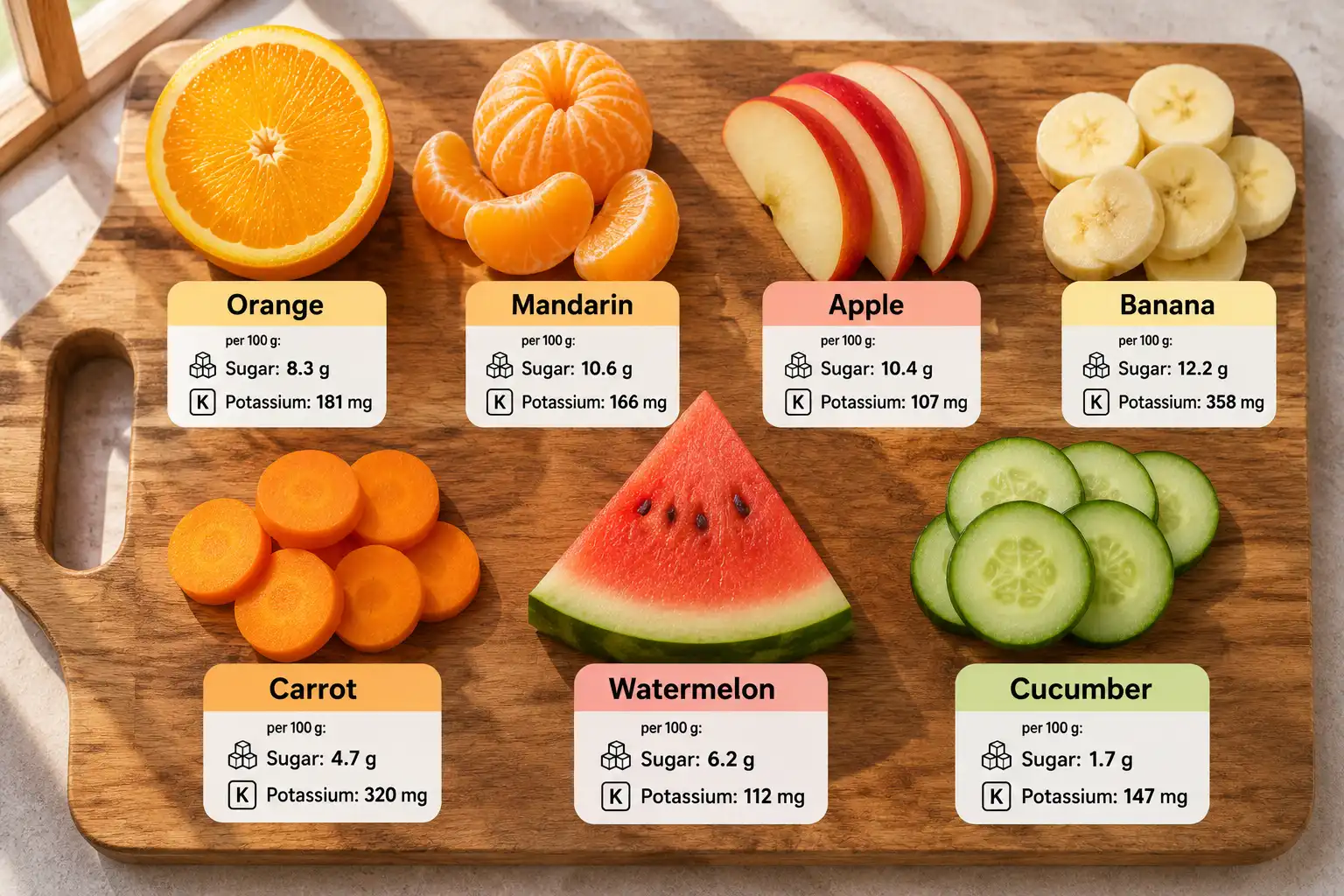
Oranges sit mid-range for sugar among common horse treats and below carrots and bananas for potassium. USDA FoodData Central gives these values per 100 grams of raw produce:
| Treat for horses (raw, per 100 g) | Sugar (g) | Potassium (mg) |
|---|---|---|
| Orange | 9.4 | 181 |
| Mandarin or tangerine | 10.6 | 166 |
| Apple | 10.4 | 107 |
| Banana | 12.2 | 358 |
| Carrot | 4.7 | 320 |
| Watermelon | 6.2 | 112 |
| Cucumber | 1.7 | 147 |
Two patterns stand out. First, bananas carry more sugar and about twice the potassium of an orange. That is why bananas come up more often in HYPP discussions.
Second, carrots are low in sugar but high in potassium. So a carrot is not automatically the safer treat for an HYPP horse, even though it suits a sugar-sensitive one better. For the full list of safe and unsafe options, see our guide to foods horses can and cannot eat.
Can Horses Have Orange Peels?
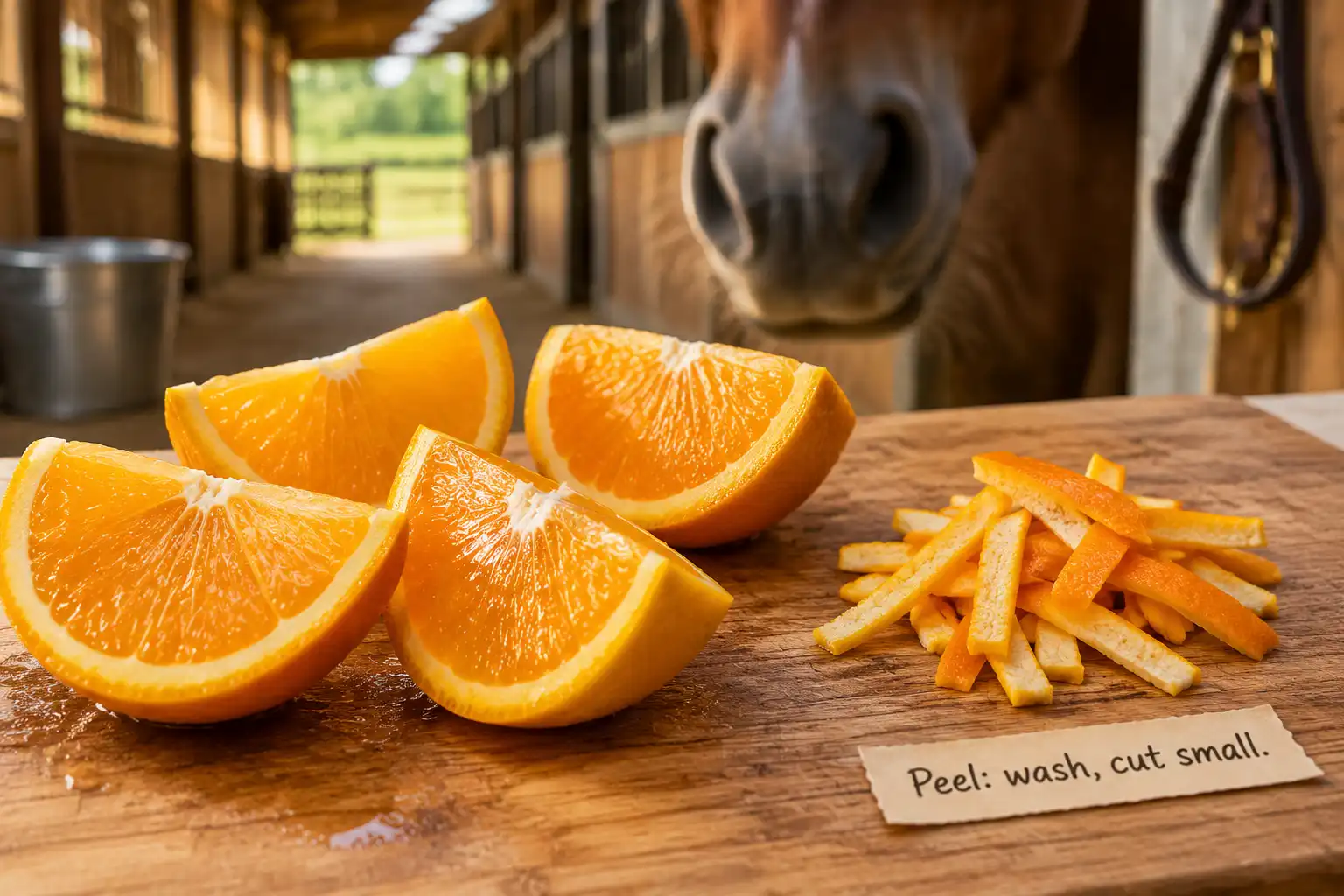
Horses can have orange peels in small amounts, but the peel needs more care than the flesh. Some horses eat a whole orange, peel and all. Others spit the peel out because it is bitter and oily.
Peel is digestible fiber. Dried citrus pulp, made mostly from peel and pulp left after juicing, has been tested as a horse feed ingredient. In a 2015 feeding trial published in Revista MVZ Córdoba, horses could tell when their concentrate contained citrus pulp and preferred feed without it. Even so, digestibility and manure consistency did not change.
Before you feed peel, do three things:
- Wash the orange, since store-bought citrus is usually waxed and may carry post-harvest treatments.
- Cut the peel into small strips, because thick rind is harder to chew than flesh.
- Start with one piece and watch whether the horse chews it or drops it.
Orange Peel and Drug Testing
Competition horses are the exception for peel. US Equestrian has relayed an FEI warning on synephrine, a stimulant on the FEI banned list that is also banned under US Equestrian drug and medication rules. The warning names the peel extract of bitter orange (Seville orange) and the leaves of citrus trees, including orange, mandarin, and lemon.
However, published data on synephrine in the peel of ordinary sweet oranges fed as treats is limited. The warning sets no safe amount.
So for a horse that competes under FEI or US Equestrian rules, take the cautious route. Feed peeled flesh only, keep the horse away from citrus trees, and check any supplement listing bitter orange. If in doubt, ask your show veterinarian.
Can Horses Have Mandarin Oranges?
Horses can have fresh mandarin oranges on the same terms as regular oranges. USDA FoodData Central groups tangerines, clementines, and satsumas under one mandarin entry. For a horse, that fruit carries about 10.6 grams of sugar per 100 grams, slightly more than a regular orange at 9.4 grams.
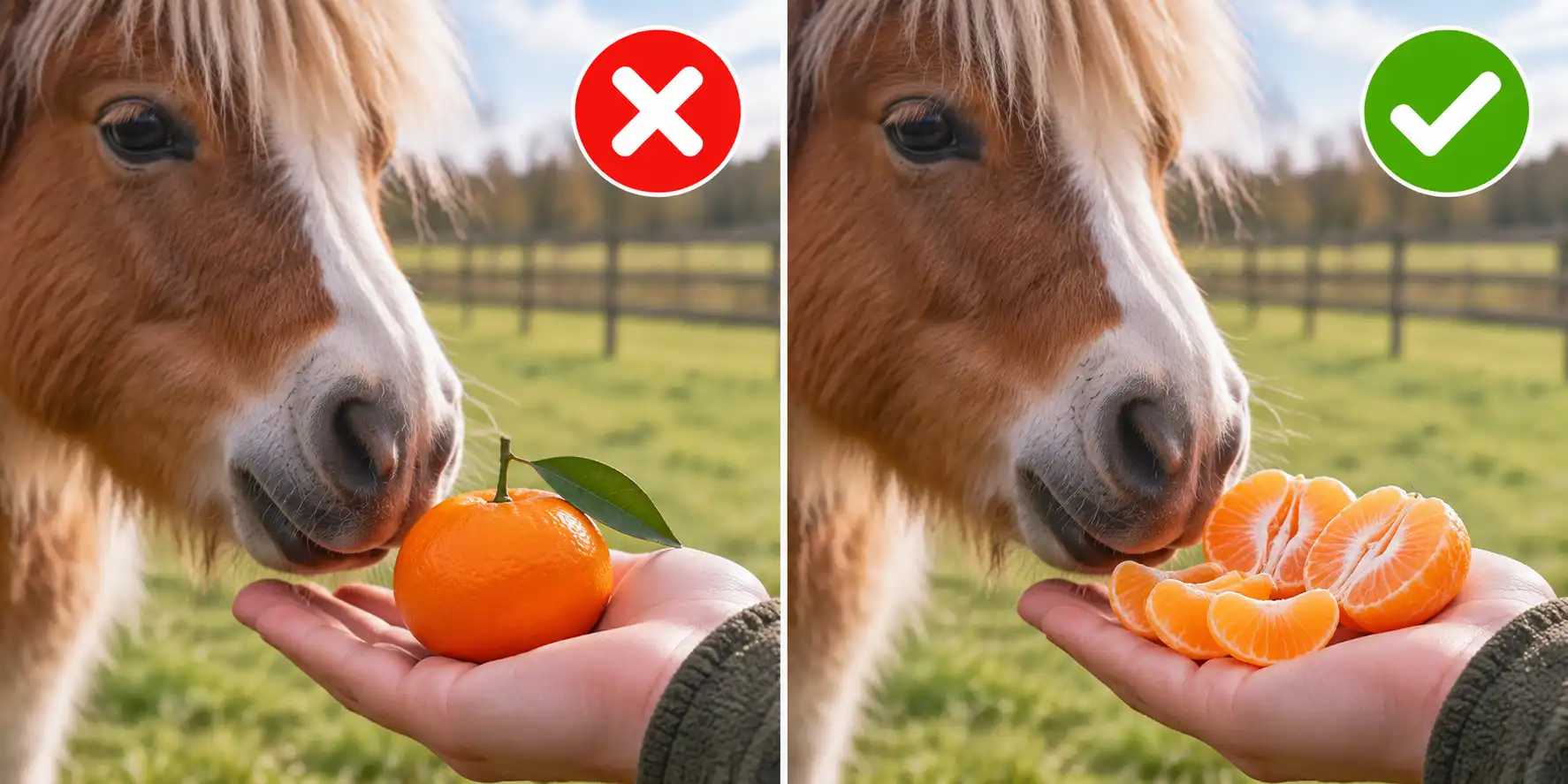
Size is the bigger issue. A small, round mandarin is close to a size a horse might try to swallow whole. Penn State Extension’s choke advice applies directly here: break the fruit up.
Offer a horse mandarins as halves or as two or three segments. Never offer the whole fruit.
Canned Mandarin Oranges
Canned mandarins are a poorer choice for horses. Per USDA FoodData Central, mandarins packed in light syrup run about 15.2 grams of sugar per 100 grams, roughly 44 percent more than fresh. Juice-packed mandarins sit closer to fresh, at about 8.9 grams.
If canned fruit is all you have, choose juice pack, drain it, and rinse the segments. Then offer a horse the same one or two pieces as fresh fruit. Never pour syrup over feed, and never let a horse eat from the can.
How to Feed Oranges to a Horse Safely
A few simple steps keep an orange treat safe for a horse:
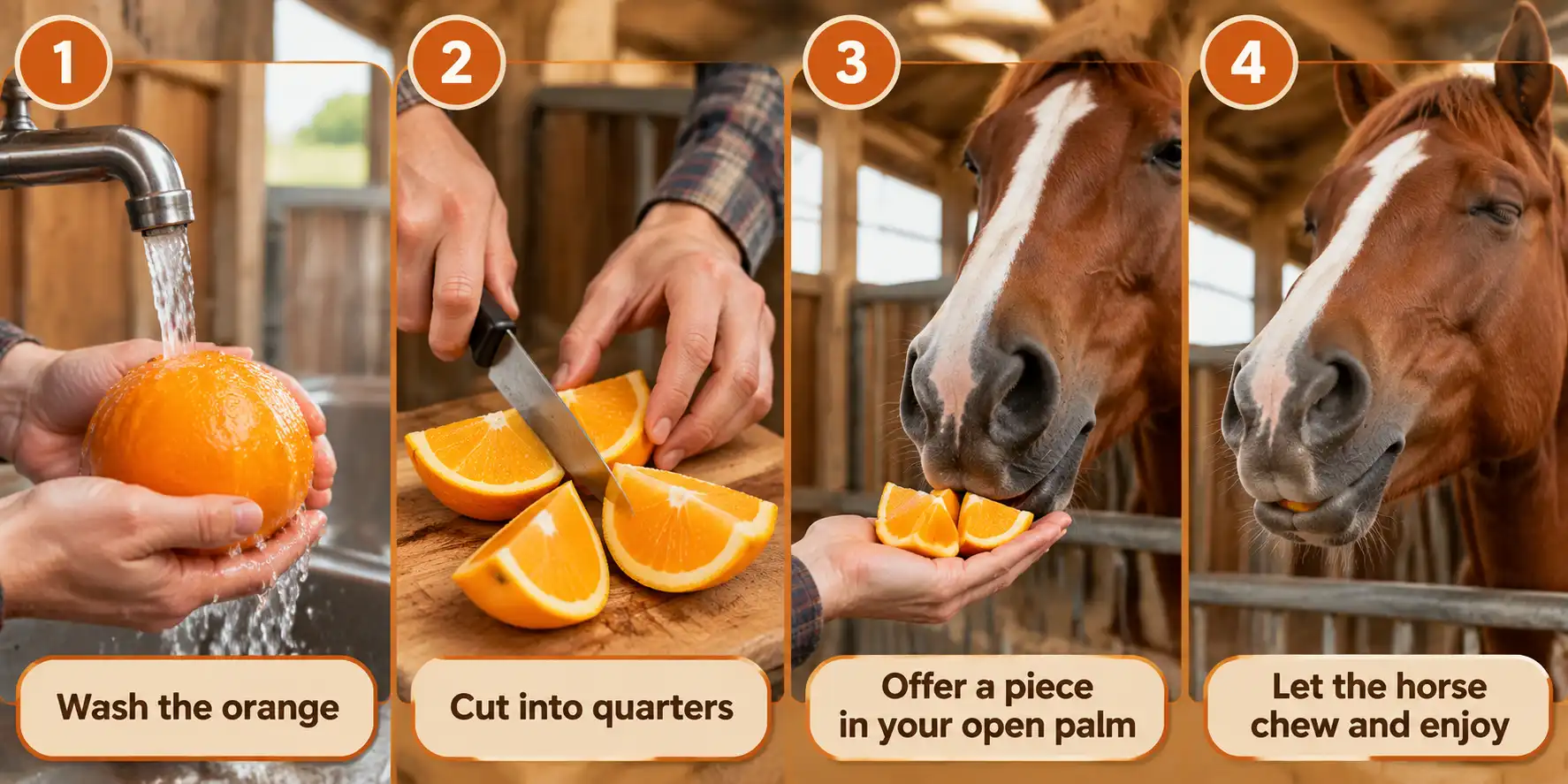
- Pick fresh, firm fruit. Skip any orange with mold, soft spots, or a fermented smell, since spoiled fruit is not worth the risk.
- Wash the skin. Do this even if you plan to peel it, so surface residue does not transfer to the flesh.
- Cut into quarters or smaller. For ponies, seniors, and horses that bolt treats, go down to segments or thin slices.
- Feed from a flat palm or the feed tub. A flat hand keeps fingers away from teeth.
- Stay and watch. Make sure the horse chews and swallows before you walk away.
- Stop at one or two pieces. That matches Penn State Extension’s general treat rule for a horse.
If a horse stretches its neck, drools, or shows feed and saliva at the nostrils after a treat, call your veterinarian right away. Those signs fit choke, but other problems look similar, so the vet makes the call. Meanwhile, remove feed and water until the vet arrives.
Citrus Trees in Horse Pastures
Citrus trees in a horse pasture create two problems, and both are common in Florida, Texas, Arizona, and California.
The first is volume. A horse with free access to dropped fruit can eat far more than one or two pieces. As a result, the sugar load climbs with every orange, and the horse decides the portion instead of you.
The second is the leaves. The FEI warning names citrus leaves as a synephrine source, which matters for any horse that competes.
So fence the trees off, or pick up fallen fruit every day. For competition horses, keep them out of the grove entirely.
FAQs
Can horses drink orange juice?
Orange juice is a poor treat for horses because it delivers the fruit’s sugar without the fiber. A few fresh orange pieces give the same taste, with fiber intact and a natural limit on how much the horse takes in.
Can a horse eat a whole orange?
A horse can bite into a whole orange, but cutting it first is safer. Round, whole fruit raises the risk of choke, so quarters or segments are the better way to offer an orange to a horse.
How often can I give my horse oranges?
Once a day at most, at one or two pieces, fits Penn State Extension’s general treat rule for horses. Many owners save orange pieces for training or grooming sessions rather than feeding them every single day.
Can oranges cause a positive drug test in horses?
The FEI synephrine warning names bitter orange peel extract and citrus tree leaves, not sweet orange flesh. For competition horses, feed peeled orange flesh only and confirm with your show veterinarian before an event.
Can horses eat dried orange slices?
Plain dried orange slices are safe for a horse in small amounts, but drying packs more sugar into each bite. Count one dried slice as a full treat for a horse, and skip any candied or sugared versions.
Can horses eat lemons, limes, or grapefruit?
Penn State Extension’s safe treat list for horses names oranges, not other citrus. Many horses refuse lemons and limes for their sour taste anyway, so sweet oranges and mandarins are the simpler choice.
Putting This Into Practice
For a healthy horse, one or two washed, cut orange pieces a day is a safe treat. Hold off for horses with insulin resistance, a laminitis history, or HYPP until your veterinarian signs off. Cut mandarins into segments, skip syrup-packed fruit, and keep competition horses away from peel and citrus leaves.