Can Horses Eat Cucumbers? Yes, Skin and All, With 3 Cautions
Cucumbers pile up fast in a summer garden, and the extras often end up in the barn. So, can horses eat cucumbers, and is the skin safe? Here is what extension research supports, plus how to cut them so they go down safely.
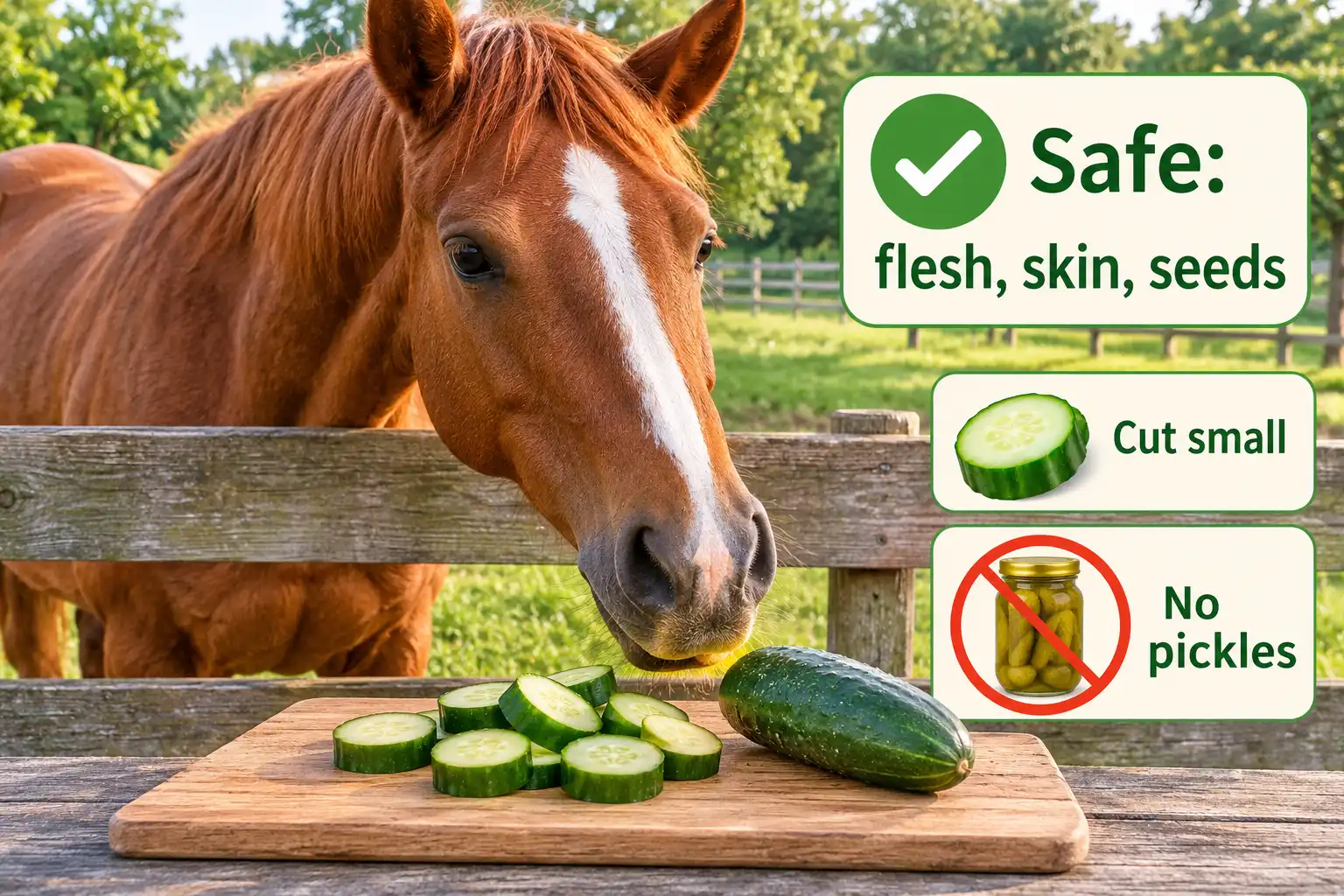
Yes. Horses can eat cucumbers, skin and seeds included, as an occasional treat. Penn State Extension lists cucumber as a safe vegetable for horses. Wash it, cut it into small pieces to prevent choke, and skip pickles and bitter fruit.
Can Horses Eat Cucumbers Safely?
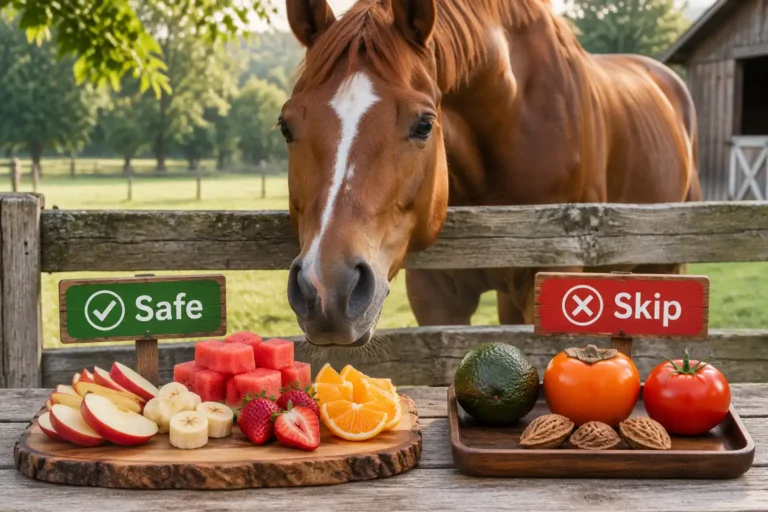
Yes, cucumbers are safe for healthy horses in small amounts. Penn State Extension lists cucumber among safe vegetable treats for horses, with carrots, pumpkin, squash, beets, and lettuce. Its one condition is that cucumber gets broken into small pieces first.
Not every vegetable makes that list. Penn State Extension tells owners not to feed horses tomatoes, potatoes, broccoli, cauliflower, avocados, or persimmons. Some are toxic, and others cause gas and digestive upset.
Cucumber lands on the safe side for three reasons. It is mostly water. It carries very little sugar. And modern varieties hold only small amounts of the bitter compound found in wild cucumbers, which is covered below.
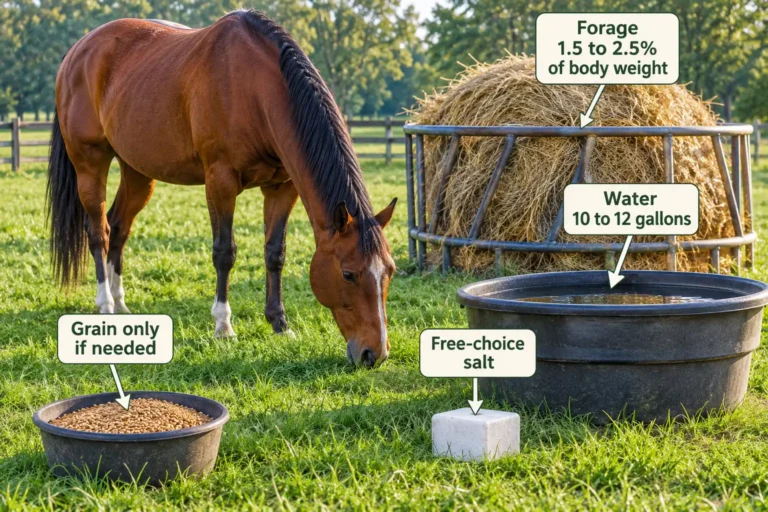
Still, a treat is not feed. Penn State Extension notes that forage and concentrate should supply a horse’s vitamins and minerals. Treats should never make up the bulk of the diet. Cucumber works as a reward, not as nutrition. The core ration, from hay to water to body condition, is covered across our horse care guides.
Read next: Horse Feeding Safety
Can Horses Eat Cucumber Skin?
Yes, horses can eat cucumber skin. There is no need to peel it for a healthy adult horse. Still, the skin deserves a quick look for two reasons.
Wax and residue. Grocery cucumbers often carry a thin food-grade wax that slows moisture loss. It is not a known hazard. Even so, a scrub under running water removes wax, soil, and spray residue in one step. Garden cucumbers just need a rinse.
Bitterness. The bitter compound in cucumbers, cucurbitacin, collects in the skin. University of Nebraska-Lincoln Extension notes that it concentrates in the darker green areas of the skin. It also runs higher in misshapen fruit. So overgrown, oddly shaped garden cucumbers are the ones to check.
For a horse with worn or missing teeth, peeling makes sense. Thick skin takes more chewing, and a horse that cannot grind well tends to swallow pieces whole.
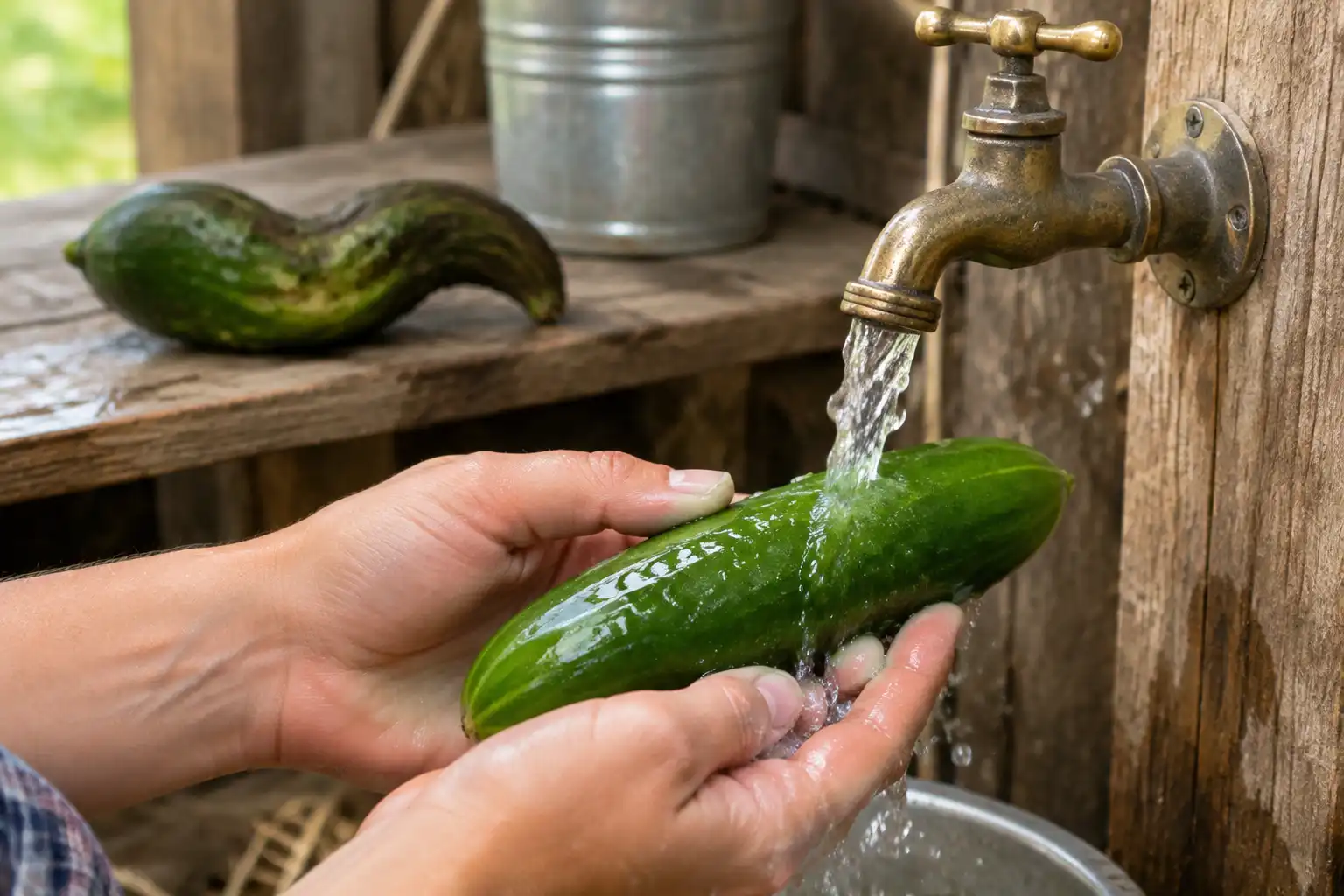
Bitter Cucumbers: Taste One Slice First
A bitter cucumber should not go to a horse. Cucurbitacin is the plant’s natural defense. Nebraska Extension explains that wild cucumbers carry large amounts, while modern hybrids were bred to carry far less.
Stress raises the level again. Hot, dry weather and cool, wet spells both push garden cucumbers toward bitterness. That is why late summer fruit from a struggling vine is the most likely to be bitter.
Published research on cucurbitacin in horses is thin. No extension service gives a safe level for horses. Nebraska Extension tells gardeners to discard extremely bitter fruit rather than eat it. The same caution makes sense for a horse.
So the practical rule is simple. Cut a thin slice from each cucumber and taste it. If it is bitter, it goes to the compost.
What Nutrition Does a Cucumber Give a Horse?
Very little, which is what makes it a good treat. USDA FoodData Central lists raw cucumber with peel at about 95 percent water. Each 100 grams carries roughly 15 calories, 1.7 grams of sugar, and 147 milligrams of potassium.
Those figures mean more at horse scale. A whole 8-inch cucumber weighs about 300 grams, or two-thirds of a pound. Fed to a horse, that one cucumber supplies:
- About 5 grams of sugar
- About 0.44 grams of potassium
- About half an ounce of dry matter
- About 10 fluid ounces of water
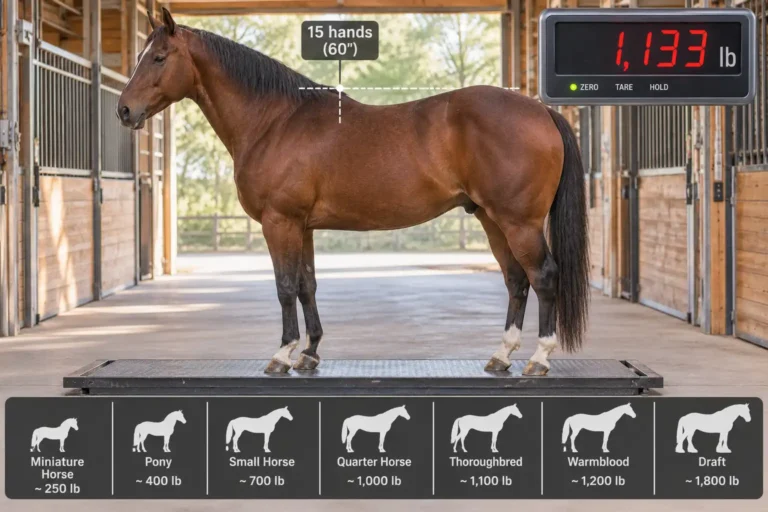
Now set that against the daily ration. University of Minnesota Extension recommends most mature horses eat 1.5 to 2.5 percent of body weight in forage each day. For an 1,100-pound horse, that means roughly 16 to 28 pounds of hay. Half an ounce of cucumber dry matter barely registers.
Do Cucumbers Hydrate a Horse?
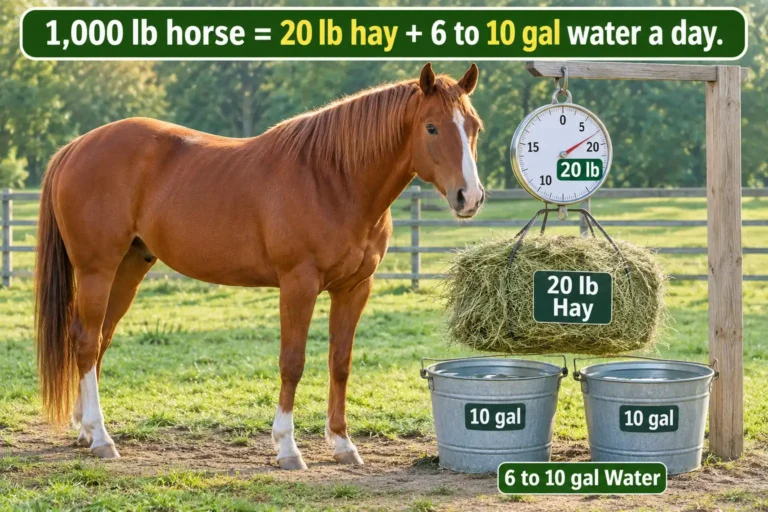
No, not in any amount that matters. Oklahoma State Extension puts a 1,000-pound horse near 10 gallons of water a day. A whole cucumber holds under a tenth of a gallon, which is less than 1 percent of that.
So cucumbers do not rehydrate a horse in summer heat. Clean, free-choice water does that job, which is why water supply planning matters far more than any treat.
Cucumber Sugar Compared With Common Horse Treats
Cucumber is one of the lowest-sugar produce treats a horse can get. Here is how it compares, using USDA FoodData Central figures.
| Treat | Sugar per 100 g | Typical piece | Sugar per piece |
|---|---|---|---|
| Cucumber, with peel | 1.7 g | One 8-inch cucumber, about 300 g | About 5 g |
| Carrot | 4.7 g | One medium carrot, 61 g | About 2.9 g |
| Banana | 12.2 g | One medium banana, 118 g | About 14.4 g |
| Apple, with skin | 10.4 g | One medium apple, 182 g | About 19 g |
By weight, cucumber has about a third of the sugar in carrot and a sixth of the sugar in apple. In fact, a whole cucumber carries about the same sugar as a quarter of a medium apple.
Low sugar does not mean unlimited, though. A whole cucumber still carries more sugar than one carrot, simply because it weighs about five times as much. Piece size, not just the food, sets the sugar a horse gets.

How Much Cucumber Can a Horse Eat?
A sensible serving for a healthy adult horse is a few small handfuls, up to about half a cucumber. No published study sets a cucumber limit for horses. So that figure is our reading of general treat guidance, not a tested number.
Here is the reasoning. Penn State Extension’s general rule for carrots or apples is one to two pieces, with the horse’s size in mind. Half an 8-inch cucumber carries about 2.5 grams of sugar, which is less than one medium carrot. That puts half a cucumber inside the same range.
Then scale it to the animal. A pony or miniature horse gets less, roughly in proportion to your horse’s body weight. A 500-pound pony gets about half of what a 1,000-pound horse would.
Start small the first time. Offer two or three pieces and see whether the horse eats them and how the manure looks the next day. A new food in small amounts avoids a sudden change in the gut.
Finally, count it. A cucumber fed every day is part of the ration, not a treat.
How to Prepare Cucumbers for Horses
Preparation is mostly about preventing choke. Follow these steps in order.
- Taste a slice. Bitter fruit carries more cucurbitacin, so it goes to the compost.
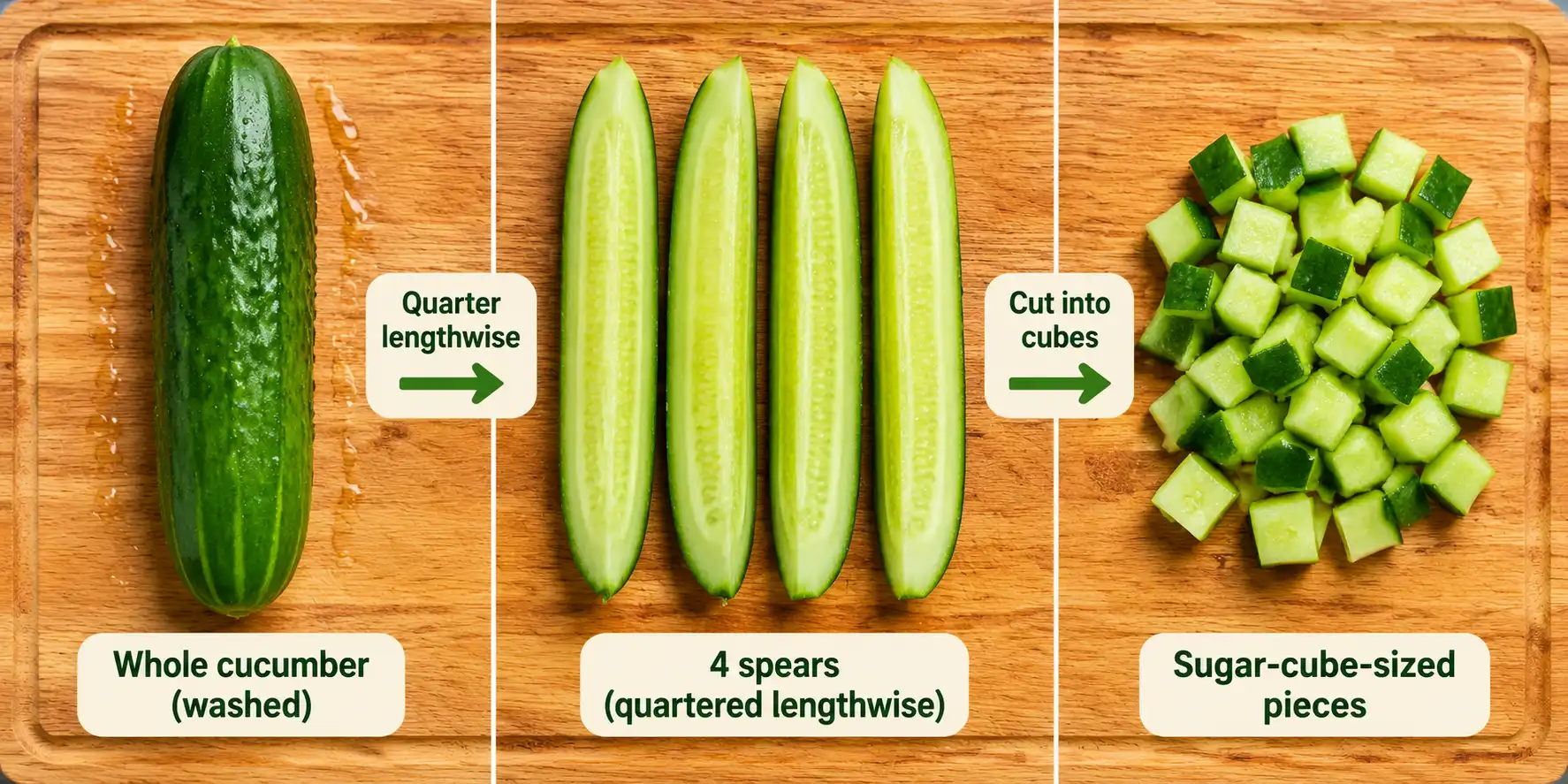
- Wash the cucumber. Scrub grocery cucumbers to remove wax and residue. Rinse garden ones.
- Trim both ends. The ends hold dirt and the tough stem.
- Quarter it lengthwise. Four long spears remove the round shape that can plug an esophagus.
- Cut the spears into small pieces. Aim for pieces about the size of a sugar cube.
- Feed from a flat palm or in the feed tub. Mixing pieces into regular feed slows a horse that gulps.
- Clear out leftovers. Cut cucumber turns soft and slimy fast in summer heat, so don’t leave it in the tub.
Skip whole cucumbers and thick round coins entirely. Both are easy for an eager horse to swallow without chewing.
Choke Is the Main Risk
A cucumber will not poison a healthy horse, but a large chunk can lodge in the throat. Penn State Extension describes choke as an obstruction in the esophagus and lists excessive coughing as one sign. It also notes that most horses chew treats, while some try to swallow large pieces whole.
Those gulpers are the horses to cut small for. Round coins about an inch across are the shape most like a plug, and quartering first removes that shape.
Older horses carry more risk. Penn State Extension points to declining teeth as a reason for extra care with treats in older horses. Horses that reach their senior years often chew less thoroughly, so peel and cut smaller for them.
If a horse coughs repeatedly, stops eating, or seems distressed after a treat, call a large animal veterinarian. Choke and several other conditions look alike, and only the vet can tell them apart. Don’t try to clear the throat yourself.
Horses That Need Extra Caution
Some horses need a vet’s approval before any treat goes in, cucumber included. Three groups stand out.
Insulin Resistance, EMS, and Laminitis History
Cucumber is among the lowest-sugar produce options, but it is still a treat for these horses. University of Minnesota Extension explains that horses absorb glucose in the small intestine, which triggers an insulin response. As a result, diets high in simple sugars are a poor fit for insulin resistant horses.
Penn State Extension also advises avoiding or limiting high-sugar and high-starch treats for horses with metabolic issues such as laminitis.
At about 1.7 grams of sugar per 100 grams, cucumber sits far below apple or banana. Even so, whether any treat fits a horse with equine metabolic syndrome (EMS) is the treating veterinarian’s call. Management differs from case to case, so ask before feeding.
HYPP
Horses with hyperkalemic periodic paralysis (HYPP), a genetic muscle disorder, need low-potassium diets. UC Davis Center for Equine Health recommends meals under 33 grams of potassium for horses with recurring HYPP episodes.
A whole 8-inch cucumber carries about 0.44 grams of potassium. That is under 2 percent of the per-meal cap for a horse with HYPP. So a few cucumber pieces are unlikely to tip the balance on their own. Still, the HYPP diet belongs to the vet, so clear it first.
Horses With Poor Teeth
Missing or worn teeth make any firm treat harder to chew. For these horses, peel the cucumber, cut pieces smaller than usual, or skip the treat. Your veterinarian or equine dentist can say how well a particular horse grinds feed.
Cucumber Parts and Products to Skip
The fresh fruit is fine. Several related items are not.
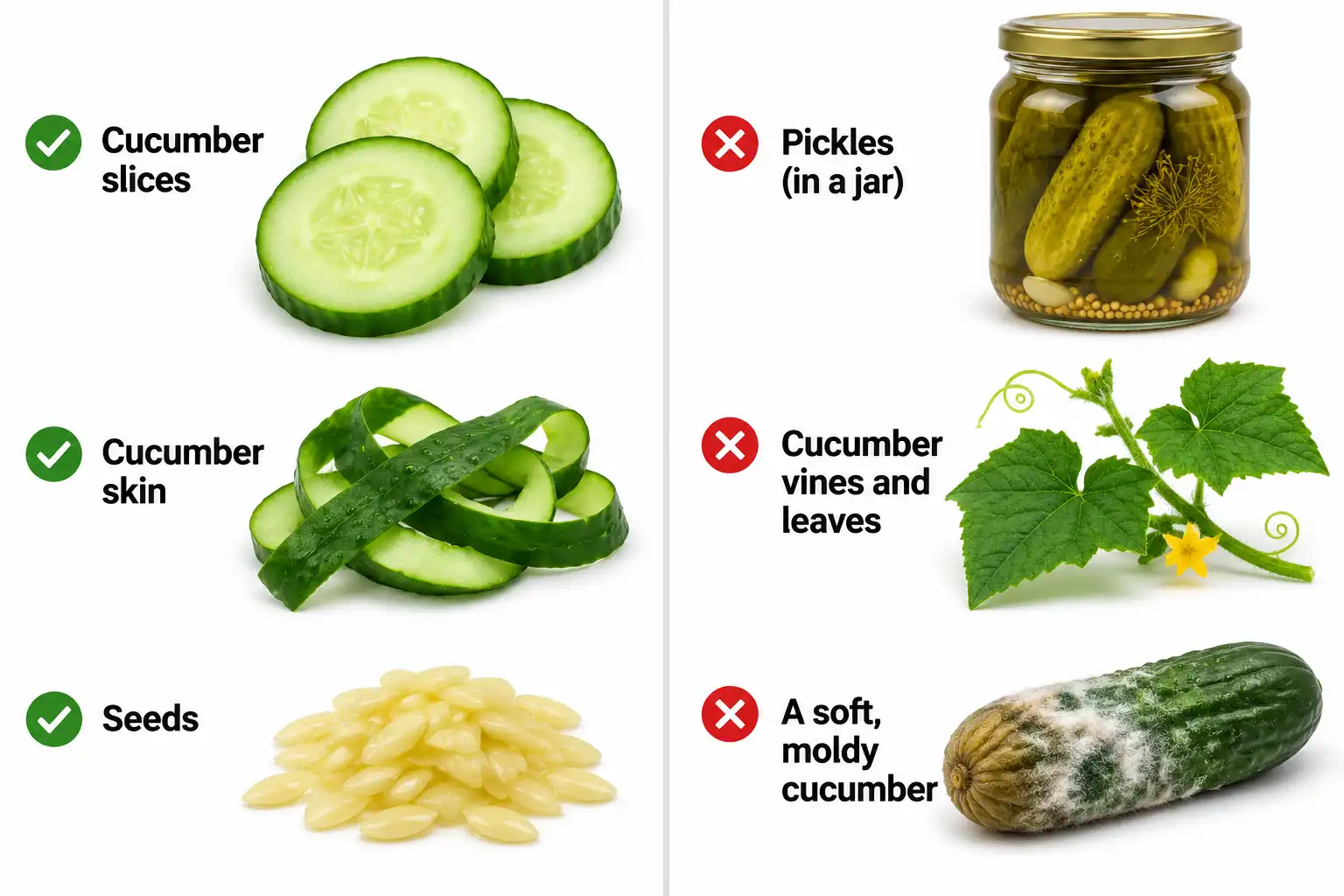
| Part or form | Feed to a horse? | Why |
|---|---|---|
| Fresh flesh | Yes | Low sugar, mostly water |
| Skin | Yes, washed | Safe once wax and residue are gone |
| Seeds | Yes | Soft and eaten with the flesh |
| Bitter cucumbers | No | High cucurbitacin |
| Pickles | No | Salt brine, vinegar, and spices |
| Vines and leaves | No | Not studied as horse feed |
| Soft, slimy, or moldy cucumbers | No | Spoilage and mold |
Pickles. Pickles are cucumbers soaked in salt brine and vinegar, often with garlic and spices. A horse already regulates its own salt from a salt block or loose salt. A pickle adds salt the horse did not choose and offers nothing a fresh cucumber lacks.
Vines and leaves. Nebraska Extension notes that wild cucumber relatives carry high levels of cucurbitacin. No extension publication rates cucumber vines as horse forage. Keep garden vines out of the paddock. Penn State Extension also warns that piled lawn clippings mold and ferment. Pulled vines can do the same.
Spoiled fruit. University of Minnesota Extension warns against feeding horses moldy hay. Moldy or slimy cucumbers deserve the same caution.
FAQs on Feeding Cucumbers to Horses
Can horses eat cucumber seeds?
Yes, horses can eat cucumber seeds. Fresh cucumber seeds are soft and go down with the flesh, so only overgrown fruit with hard, yellowed seeds needs them scooped out.
Can horses eat pickles?
No, pickles are not a good treat for horses. The salt brine, vinegar, and spices add nothing a fresh cucumber lacks, and a salt block already lets the horse control its own salt intake.
Are cucumbers good for horses in hot weather?
Cucumbers make a fine summer treat, but they do little for hydration. A whole cucumber holds under a tenth of a gallon of water, while a 1,000-pound horse drinks about 10 gallons a day, per Oklahoma State Extension.
Can horses with Cushing’s disease or EMS eat cucumber?
Possibly, but only with the treating veterinarian’s approval. Cucumber carries far less sugar than apples or carrots by weight, yet horses with insulin problems have tightly managed diets where every treat counts toward the total.
Can horses eat cucumber leaves or vines?
Keep horses away from cucumber vines and leaves. Their safety as horse feed has not been studied, the plant carries bitter cucurbitacins, and pulled vines left in a pile can mold before anyone notices.
Do horses like cucumbers?
Many horses take to cucumbers quickly, though some refuse them after one sniff. Offer two or three small pieces the first time, and if the horse spits them out, treat that as a preference, not a problem.
Can ponies and miniature horses eat cucumbers?
Yes, ponies and miniature horses can eat cucumber in smaller amounts. Scale the serving to body weight, cut the pieces small, and check with the vet first if the pony is on a sugar-restricted diet.
Putting This Into Practice
Cucumber is a safe, low-sugar treat for most horses, skin and seeds included. Taste one slice for bitterness, wash it, then quarter and cut it small. Keep servings to a few handfuls for a full-size horse, less for a pony. And before feeding any treat to a horse with EMS, laminitis history, or HYPP, get the vet’s approval first.