What Do Horses Eat? A Complete Horse Diet Guide
A horse is built to graze for most of the day, so forage comes first. Below, extension figures become pounds of hay, grain, and water per horse, along with the feeds that cause colic or founder.
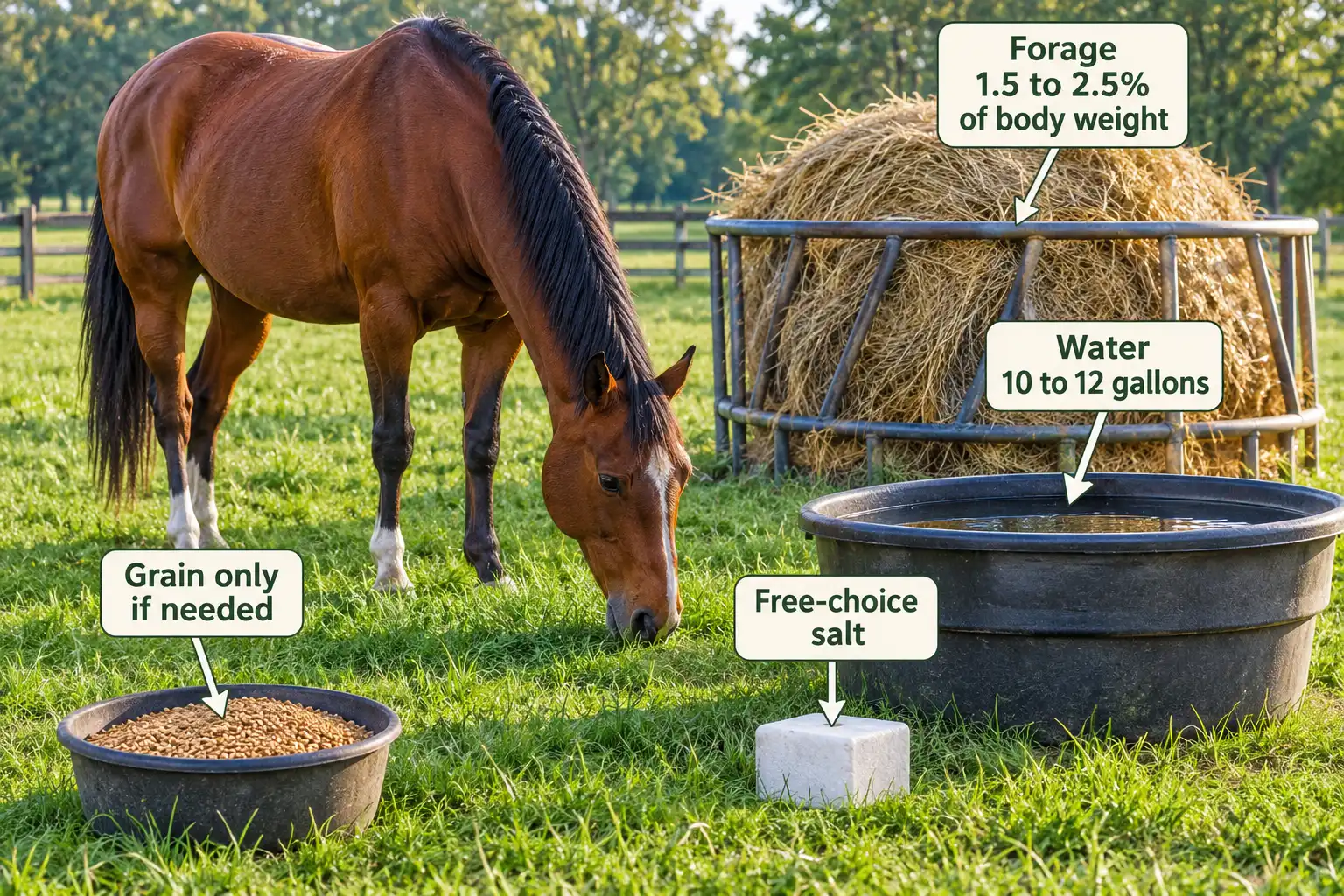
Horses eat mostly pasture or hay. University of Minnesota Extension puts forage at 1.5 to 2.5 percent of body weight daily, or 15 to 25 pounds for a 1,000-pound horse. Add water and salt, and grain only if needed.
Why Forage Comes First in a Horse Diet
Forage is the base of every horse diet because the horse’s gut runs on fiber. Microbes in the cecum and large intestine ferment grass and hay into energy. Grain is different. Oklahoma State Extension notes that the bigger the grain meal, the more starch passes into that hindgut, where microbes ferment it fast. That is why extension feeding guides start with hay or pasture and add grain last.
In practice, a horse diet has four parts:
- Forage: pasture, hay, hay cubes, or hay pellets
- Water: clean, unlimited, and not icy
- Salt and minerals: free-choice salt, plus a vitamin and mineral supplement when forage falls short
- Concentrates: grain, commercial feed, or added fat, only when forage cannot meet the horse’s energy needs
University of Minnesota Extension says forage should make up at least 50 percent of the daily ration for every class of horse. In fact, Minnesota adds that good grass hay alone can meet the needs of an idle adult horse. So many backyard horses need nothing more than hay, water, and salt.
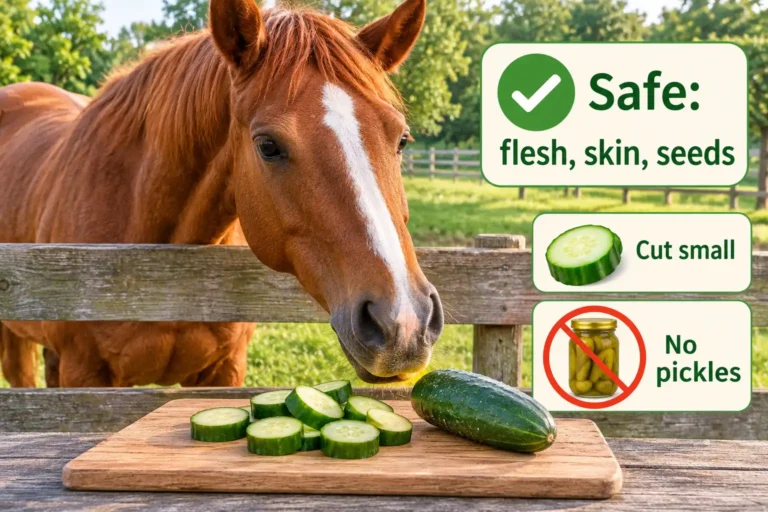
Read next: Feeding Cucumbers to Horses
How Much Should a Horse Eat Per Day?
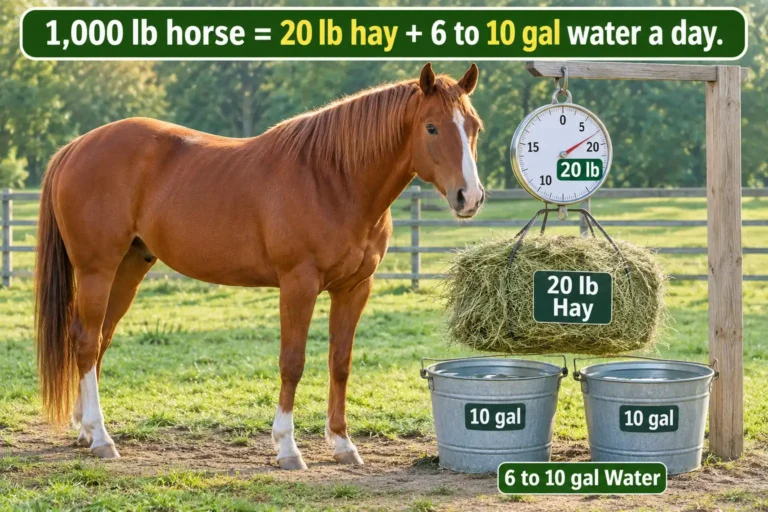
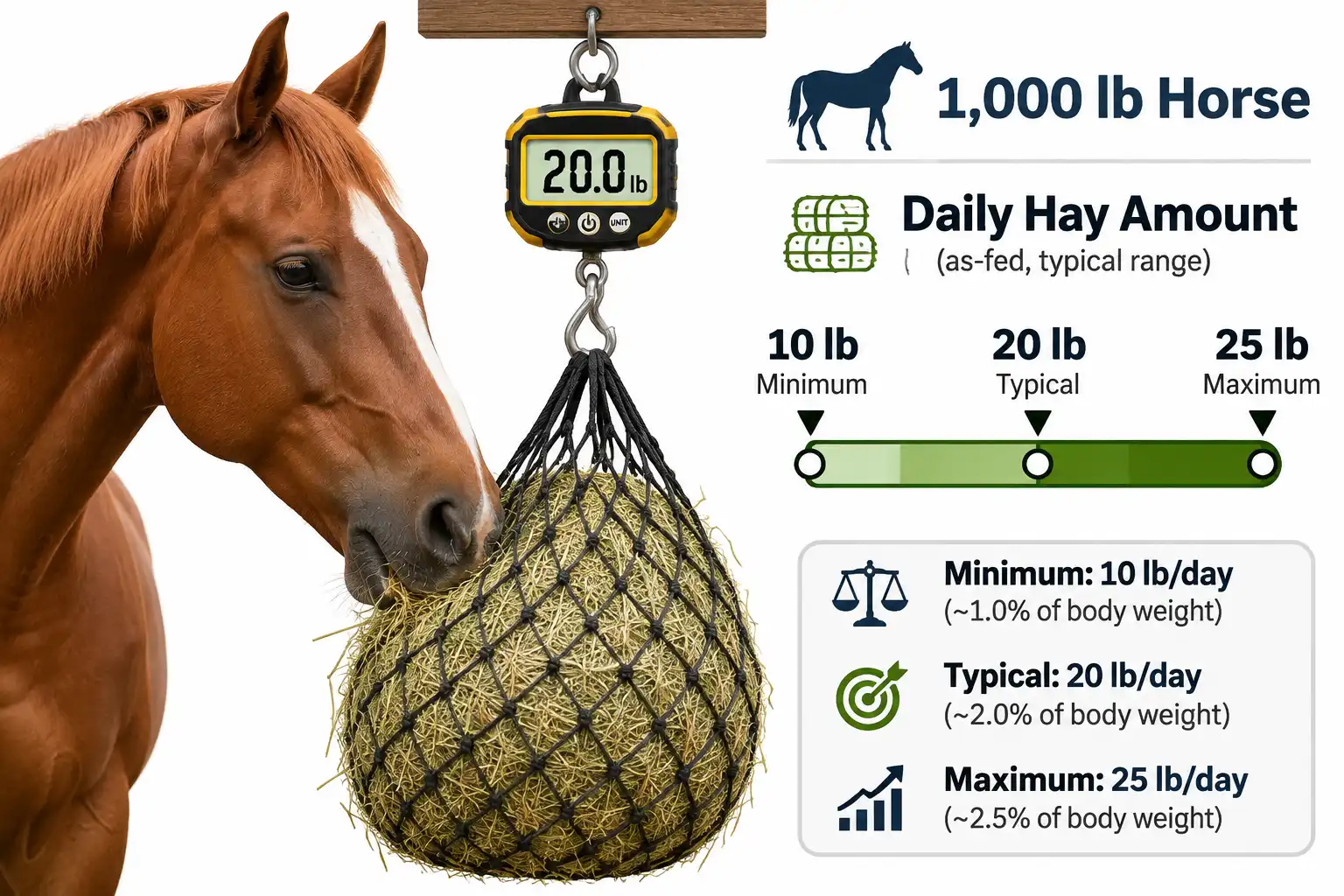
A mature horse eats 1.5 to 2.5 percent of its body weight in forage each day, per University of Minnesota Extension. For a 1,000-pound horse, that is 15 to 25 pounds of hay. Most horses land near 2 percent, or about 20 pounds.
The floor matters as much as the target. Minnesota sets a minimum of 1 percent of body weight in forage, so 10 pounds a day for a 1,000-pound horse. At the other end, 2.5 percent is close to the most a horse will willingly eat.
Every figure here starts with body weight, so get that number first. A weight tape or the heart girth formula in our guide to horse weight by breed and build gets you close enough to feed by.
Then weigh the feed itself. University of Nebraska-Lincoln Extension points out that a coffee can of corn weighs more than the same can of oats. As a result, swapping one for the other can roughly double the energy fed. A hanging fish or luggage scale settles the question. Weigh a few flakes of hay too, because flake weight changes from bale to bale.
Feed Amounts by Class of Horse
Total intake rises with work, late pregnancy, and milk production. University of Nebraska-Lincoln Extension publishes daily intake as a percent of body weight for each class of horse. The table below turns those percentages into pounds for a 1,000-pound horse, on an air-dry feed basis.
| Class of horse (1,000 lb) | Forage, lb/day | Concentrate, lb/day | Total, lb/day |
|---|---|---|---|
| Maintenance, idle adult | 15 to 20 | 0 to 5 | 15 to 20 |
| Mare, late gestation | 10 to 15 | 5 to 10 | 15 to 20 |
| Mare, early lactation | 10 to 20 | 10 to 20 | 20 to 30 |
| Mare, late lactation | 10 to 20 | 5 to 15 | 20 to 25 |
| Light work (pleasure riding, equitation) | 10 to 20 | 5 to 10 | 15 to 25 |
| Moderate work (ranch work, roping, jumping) | 10 to 20 | 7.5 to 15 | 17.5 to 25 |
| Intense work (race training, polo) | 8 to 15 | 10 to 20 | 20 to 30 |
Read the concentrate column against the per-meal grain limit covered below. For example, a mare in early lactation may need 10 to 20 pounds of concentrate a day. At 5 pounds per meal, that means two to four feedings.
Growing horses eat more per pound of body weight. Nebraska puts a weanling at 2 to 3 percent of body weight in total feed and a yearling at 1.8 to 3 percent. Also, more of a young horse’s ration comes from concentrate than an adult’s does. For a 700-pound yearling, University of Minnesota Extension’s example ration is 14 pounds a day: 10.5 pounds of hay and 3.5 pounds of concentrate. Feed young stock on their current weight, and recheck that weight monthly.
How Much Pasture Does a Horse Need?
University of Minnesota Extension recommends 2 acres per 1,000-pound horse when pasture must supply most of the diet in the growing season. On fertile, well-managed ground used mostly for exercise, 1 acre may do. On poor soil with little management, the figure climbs to 5 acres.
Penn State Extension reports that one horse per 2 to 3 acres is common in Pennsylvania. It also advises at least 1 acre of good pasture per horse. The two services land close together because both work with humid, cool-season pasture. In drier regions, carrying capacity drops sharply, so ask your county extension office for a local figure.
By the Minnesota figure, four horses on pasture alone need about 8 acres. With less ground, plan on feeding hay through part of the grazing season. Rotation stretches what you have. For instance, Minnesota suggests about 2 weeks of rest per paddock in spring, 6 weeks in summer or drought, and 4 weeks in fall. The same arithmetic used for cattle works for horses, and our guide to calculating stocking rate walks through it step by step.
Spring grass needs its own caution. Lush, fast-growing pasture is high in sugars, which raises founder risk in some horses. The section on easy keepers below covers that.
Hay for Horses: Types, Testing, and a Winter Budget
Good grass hay alone can meet the needs of an idle adult horse, per University of Minnesota Extension. Alfalfa is higher than grass in digestible energy, amino acids, and calcium. So it suits growing horses, lactating mares, and hard keepers better than idle ones. Mixed grass and alfalfa hay sits in between.
Leafy, early-cut hay carries more nutrients than mature, stemmy hay. Still, looks tell only part of the story. Minnesota calls a lab test the best way to judge hay quality, and it is the only way to learn sugar content for a founder-prone horse.
Here is the winter math for one 1,000-pound horse eating 2 percent of body weight, or 20 pounds a day, over a 150-day winter:
- Hay eaten: 3,000 pounds
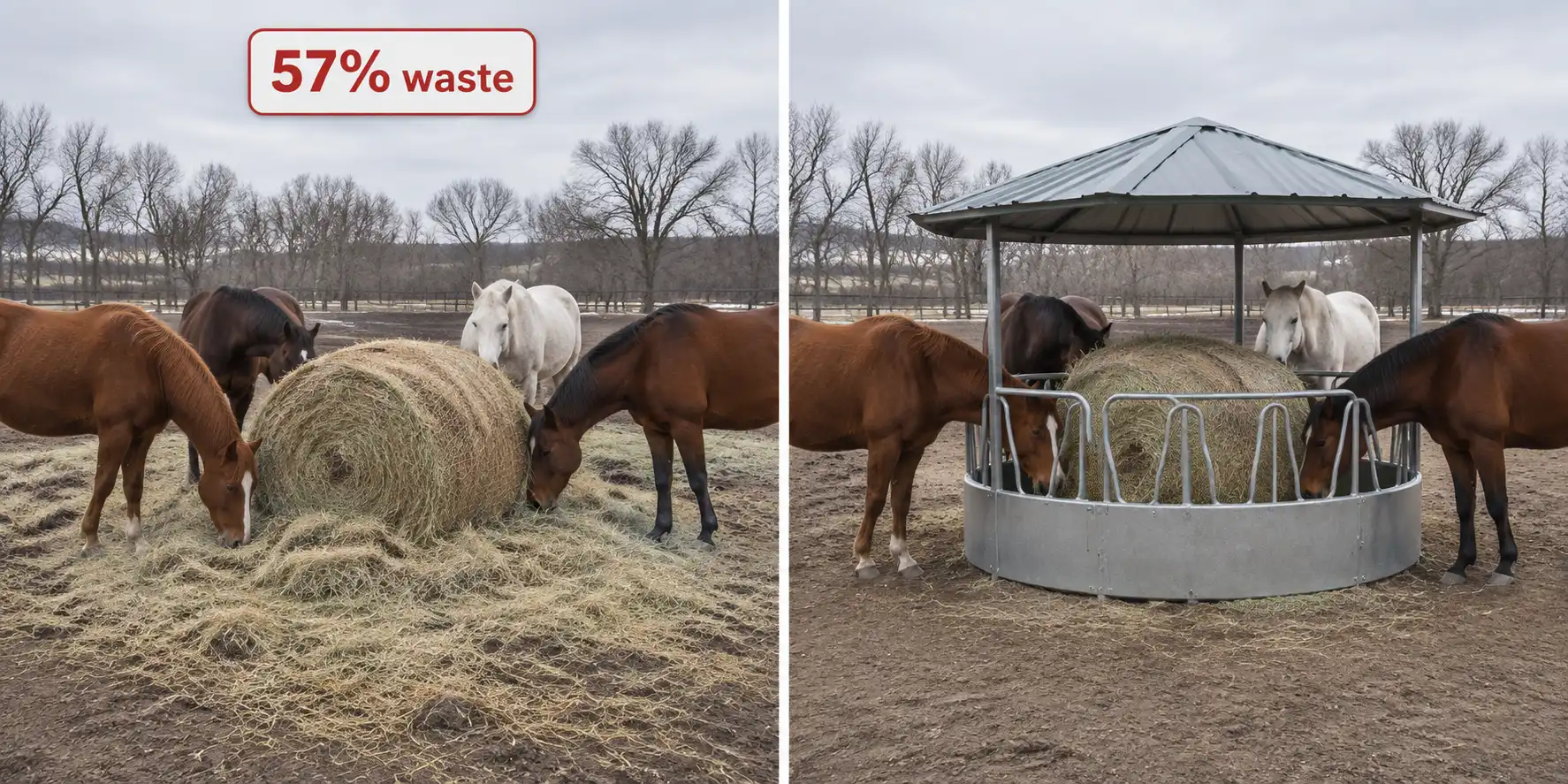
- Small squares fed on the ground: about 3,450 pounds bought, since University of Minnesota research measured 13 percent waste without a feeder
- Round bales fed on the ground: about 7,000 pounds bought, since the same research measured 57 percent waste
At that rate, a round-bale feeder pays for itself quickly. Our section on hay feeders and feeding equipment compares the options. Next, weigh a few of your own bales and divide to get a bale count, since bale weights vary widely.
Grain and Concentrates: When a Horse Needs Them
A horse needs grain or commercial feed only when forage cannot supply enough energy. That usually means hard work, late pregnancy, lactation, growth, or a hard keeper losing condition.
The safe amount per meal is where extension services differ, so here is the range:
- 0.5 percent of body weight per meal: University of Nebraska-Lincoln and Oklahoma State Extension both use this cap. That is 5 pounds of concentrate for a 1,000-pound horse and 6 pounds for a 1,200-pound horse.
- 0.3 to 0.4 percent per feeding: University of Minnesota Extension’s guide to feeding the mature horse uses this tighter figure for cereal grain, or 3 to 4 pounds for a 1,000-pound horse. Its carbohydrate guide uses 0.5 percent.
The stricter figure is the safer start for a horse new to grain. Either way, the reason is the same. A big starch meal overflows into the hindgut, which raises the risk of colic and laminitis. So when a horse needs more concentrate, split it into more meals rather than bigger ones.
Fat is a lower-starch way to add calories. Minnesota notes that horses can use diets up to 20 percent fat. The most common method is top-dressing feed with corn or soybean oil. Introduce any concentrate slowly, as covered in the feeding schedule section.
Salt, Minerals, and Vitamins for Horses
Every horse needs salt, and free choice is the standard approach. University of Minnesota Extension recommends offering salt free choice because horses regulate their own intake. Expect a horse to take more in hot weather and heavy work, when sweat losses rise.
Mineral needs depend on what the horse eats:
- Calcium to phosphorus: For horses, Minnesota sets the minimum ratio at 1:1 and the ideal near 2:1. Phosphorus should never exceed calcium in a horse’s diet.
- Straight oats or corn: A horse fed plain grain needs most trace minerals supplemented. By contrast, a commercial horse feed fed at label rates usually covers them.
- Selenium: Horses in selenium-deficient areas may need a supplement, often paired with vitamin E. Your county extension office can tell you whether your area is low.
- Vitamins: Hay for horses that is mature, rained on, or stored a long time may run short on vitamins, per Minnesota.
For an easy keeper on hay alone, a ration balancer made for horses fills these gaps without adding many calories.
One warning belongs here too. Mineral mixes and lick tubs made for cattle, sheep, or goats are not formulated for horses. Worse, some cattle and goat products contain ionophores, which kill horses, as the section on feeds to avoid explains. Buy only minerals labeled for horses.
How Much Water Does a Horse Drink?
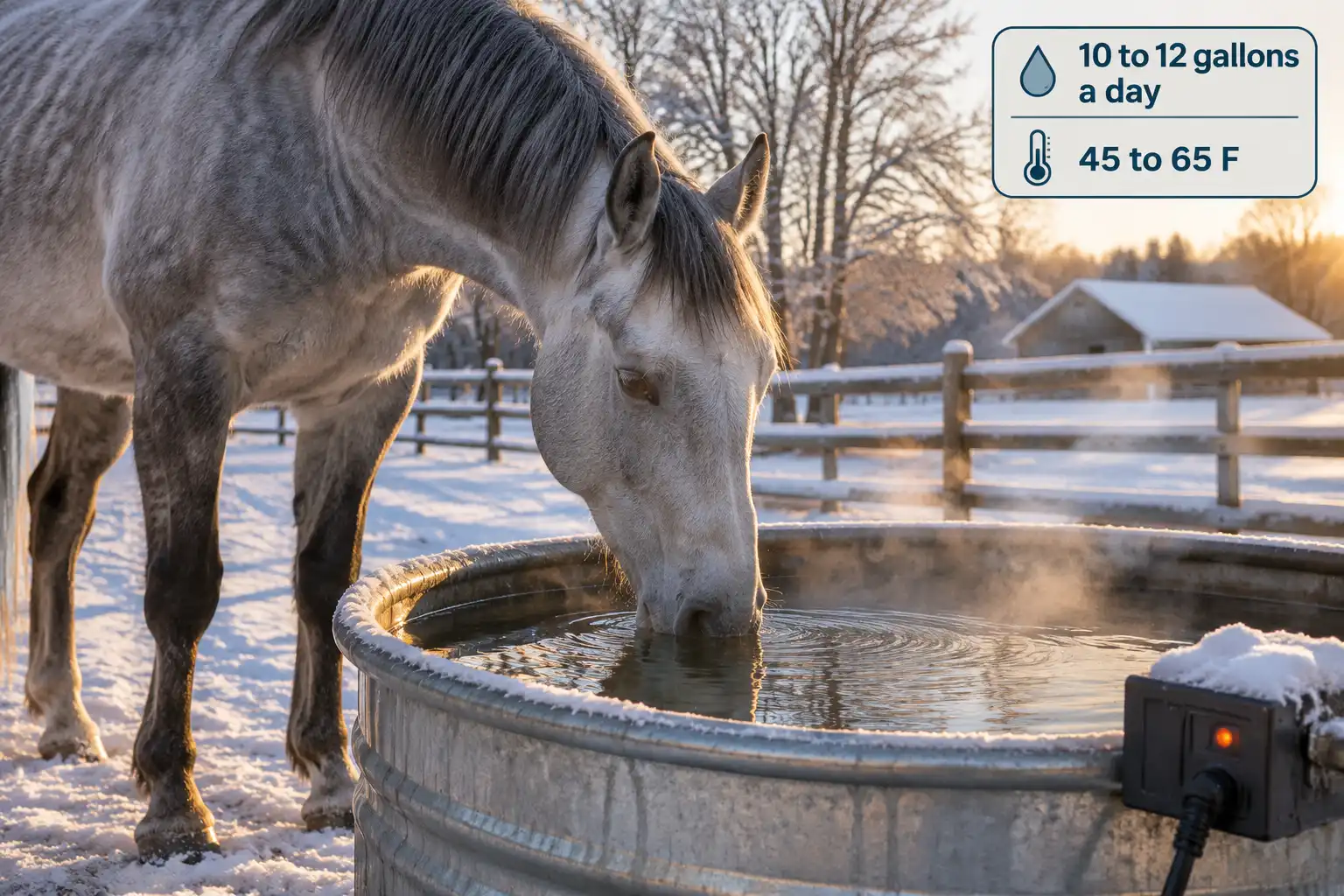
A 1,000-pound horse drinks 10 to 12 gallons of water a day, per University of Minnesota Extension. Working in summer heat on fresh grass, the same horse can drink 12 to 16 gallons. Also, a horse on dry hay drinks more than one on pasture.
Now scale that to your setup. Three idle horses drink 30 to 36 gallons a day, so a 100-gallon tank lasts just under three days in mild weather. In summer it runs dry sooner, so check it daily.
Winter is when intake usually falls. Minnesota recommends keeping water between 45 and 65 degrees F, because horses drink less when it nears freezing. It also warns that too little water can lead to colic and dehydration. A tank heater or heated bucket helps here. Finally, clean troughs and buckets weekly, even in winter, and keep them out of direct sun. Our feed and water management section has more on watering systems.
Treats: What Horses Can Have in Small Amounts
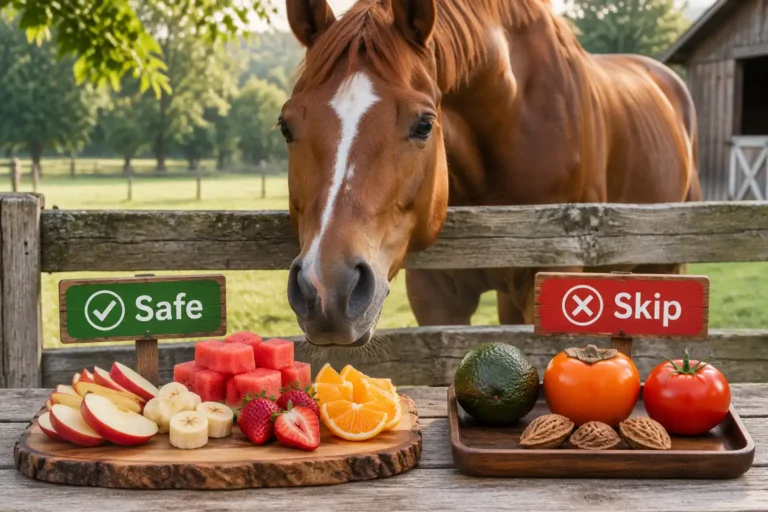
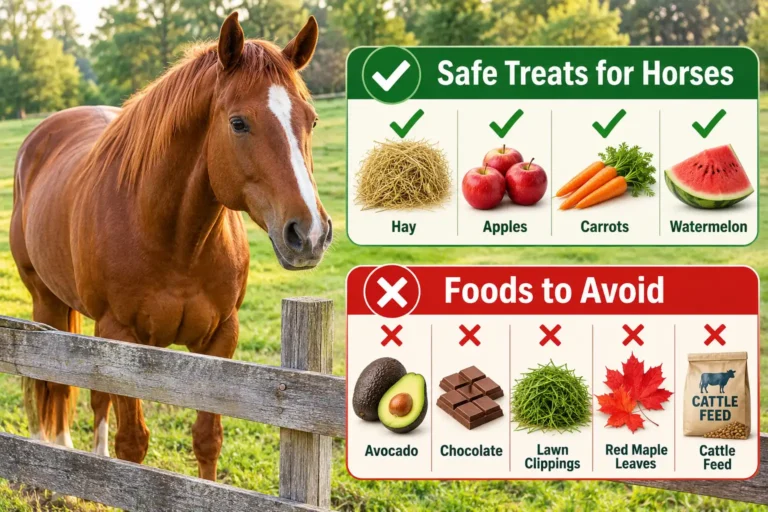
Horses can have apples, carrots, and commercial horse treats in small amounts. A few pieces a day adds little to the diet. Slice apples and carrots into thin pieces rather than feeding them whole, because round chunks can lodge in the throat.
Two limits apply. First, treats are sugar. For a horse with insulin resistance or a history of founder, ask your veterinarian before feeding any. Second, hand-feeding can teach a horse to nip, so many owners drop treats in a feed tub instead.
Skip lawn clippings entirely. Clippings heat and ferment quickly in a pile, and a horse can bolt a large mouthful at once. Likewise, bread, sweets, and kitchen scraps add sugar and starch a horse does not need.
What Horses Should Never Eat
Some feeds and plants kill horses in small amounts. If you suspect a horse has eaten any of these, call your veterinarian right away rather than waiting for signs.
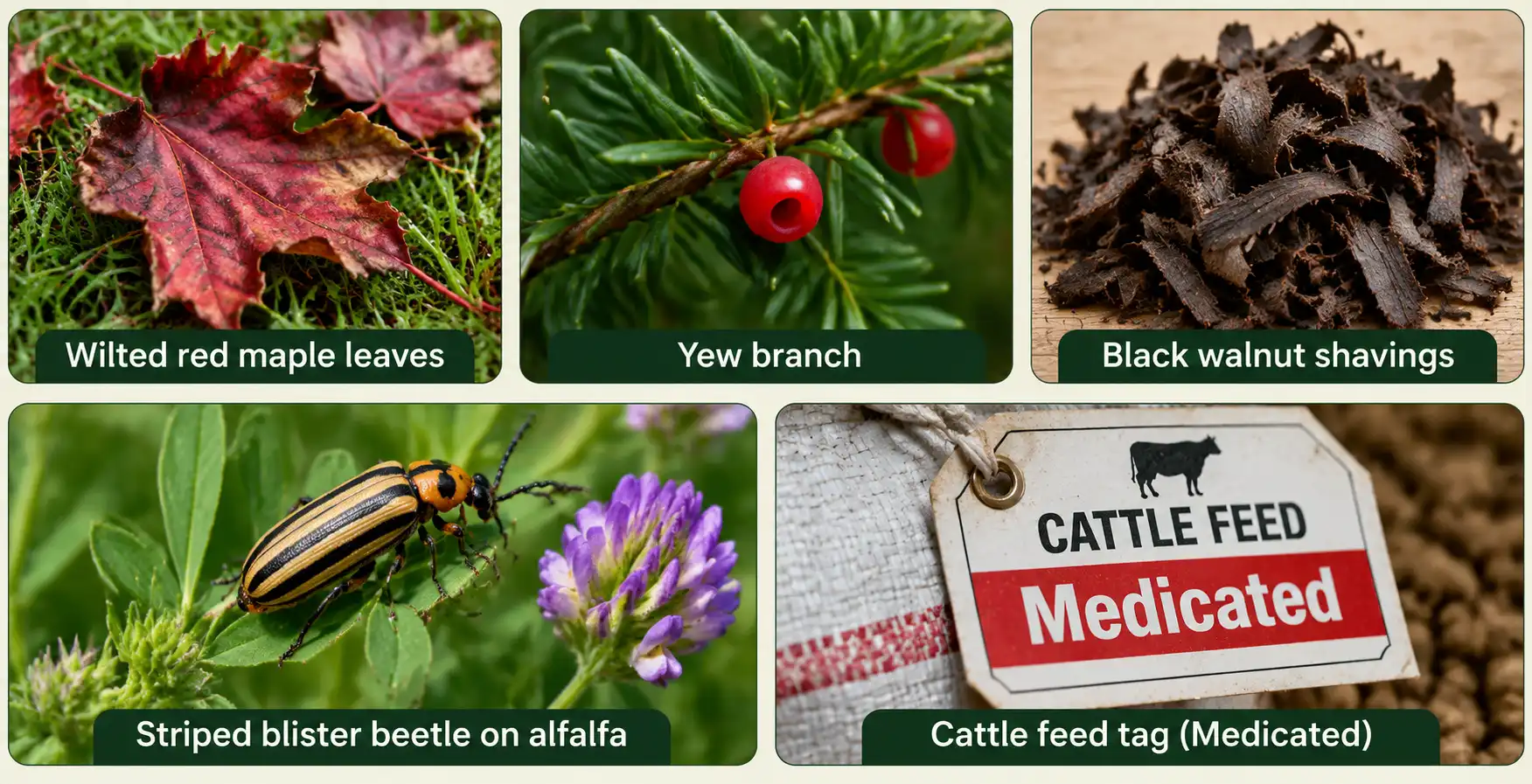
- Feed with ionophores: Ionophores such as monensin go into some cattle, goat, and poultry feeds. University of Arizona Cooperative Extension reports that less than a tenth of the amount cattle eat safely can kill a horse. Check every label for the word “medicated,” and keep horses out of cattle feeders.
- Alfalfa with blister beetles: Beetles crushed into alfalfa hay carry a toxin called cantharidin. Texas A&M AgriLife Extension reports that West Texas outbreaks run worst from early June through August, and that hay ships across the state and beyond. Oklahoma State Extension advises checking small-square flakes as you feed, since no alfalfa hay is guaranteed beetle free.
- Wilted red maple leaves: Penn State Extension rates red maple as extremely toxic to horses, with 1.5 to 3 pounds of wilted leaves enough to poison one.
- Black walnut shavings: Bedding that contains black walnut causes laminitis in horses that stand on it. Penn State says no amount is acceptable.
- Yew and moldy hay: Ornamental yew is deadly to horses, and moldy or dusty hay causes colic and breathing problems.
- Infected tall fescue, for late-pregnant mares: Penn State recommends moving pregnant mares off endophyte-infected fescue 60 to 90 days before foaling. So far, no harm has been shown in non-breeding horses.
Feeding Easy Keepers and Horses Prone to Founder
Easy keepers hold weight on forage alone and gain fast on lush grass or grain. For these horses, sugar and starch matter as much as calories. If a horse has had laminitis or has a diagnosis such as equine metabolic syndrome, your veterinarian should set the diet.
University of Minnesota Extension considers horse forage with 10 to 12 percent or less nonstructural carbohydrates (NSC) safe for sensitive horses. A hay test gives you that figure. Cool-season grasses common in the upper Midwest, such as timothy and orchardgrass, can run higher in sugars and fructans.
Minnesota’s research and guidance point to four practical steps:
- Soak hay for 15 to 60 minutes to cut its carbohydrate content, then drain it and feed it.
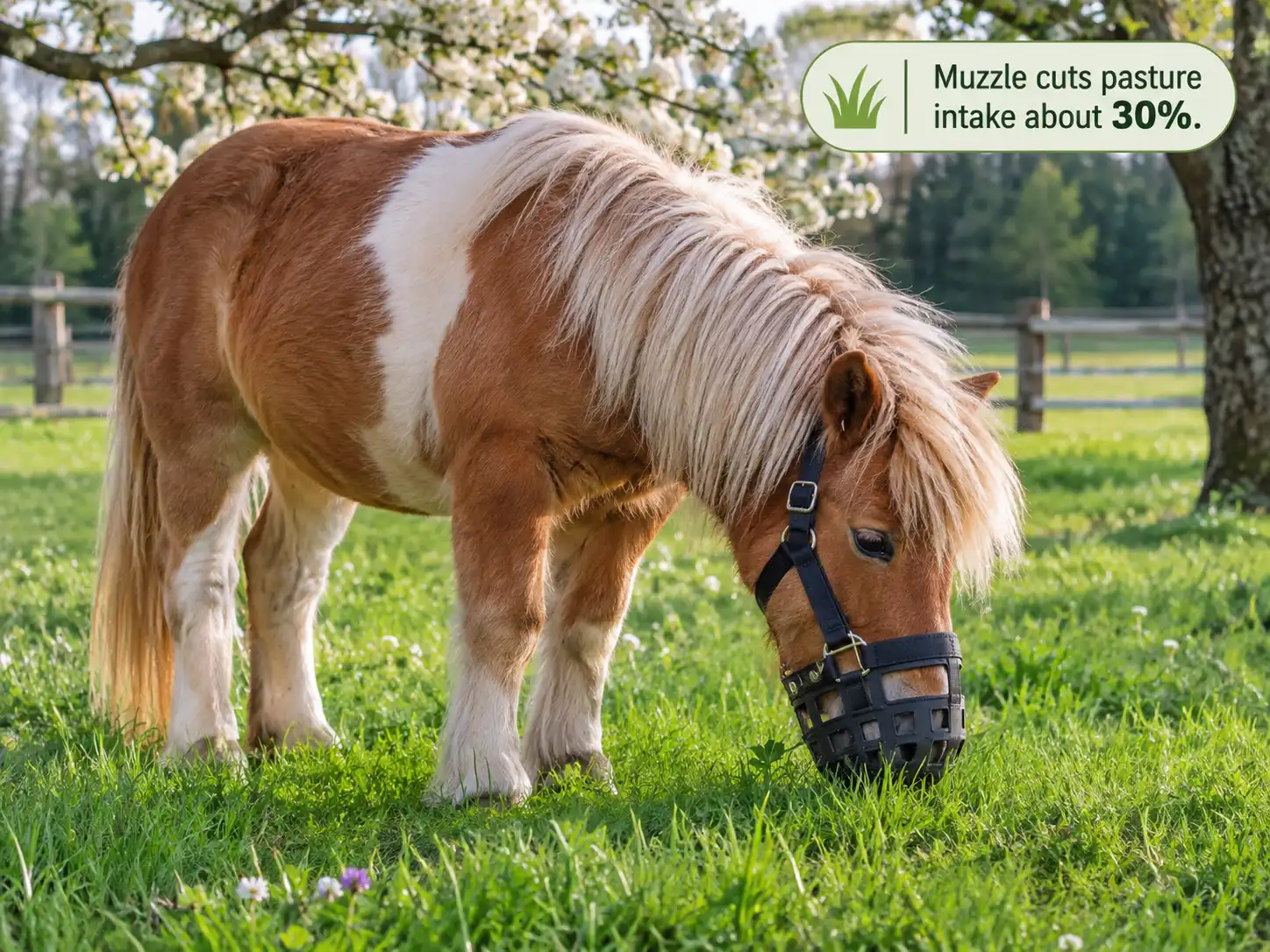
- Fit a grazing muzzle, which cut horses’ pasture intake by about 30 percent in Minnesota trials.
- Feed hay from a slow-feed net. Overweight horses on restricted hay had lower insulin peaks eating from nets than from the floor.
- Use a ration balancer instead of grain to cover vitamins and minerals.
While cutting calories, keep the forage floor in place. Even a horse on a diet needs at least 1 percent of body weight in forage daily, per Minnesota.
Feeding Senior Horses and Horses With Poor Teeth
Older horses often lose weight because worn or missing teeth stop them from chewing hay well. Dropping wads of half-chewed hay, called quidding, is a common sign. Routine dental floating keeps most horses chewing longer, and your veterinarian sets the schedule.
When hay stops working, change the form of the forage, not the fiber:
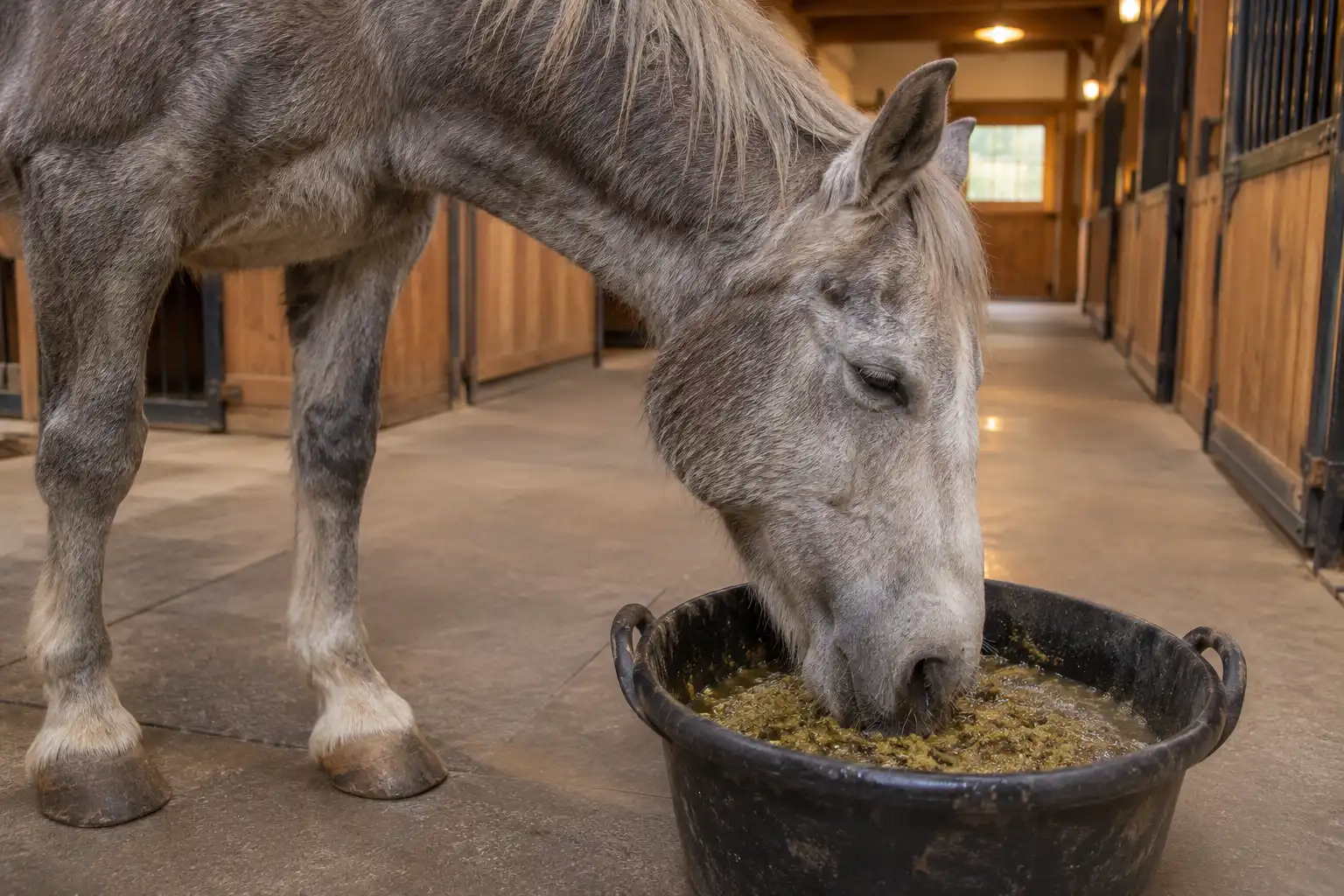
- Soaked hay cubes or pellets, mixed into a mash for horses with very poor teeth
- Chopped hay for horses that can still chew short pieces
- A complete senior feed, which University of Minnesota Extension says can serve as the sole feed when teeth are too worn for hay
Oklahoma State Extension notes that processing hay into cubes, pellets, or chop has little effect on digestibility, as long as the horse can chew it. However, pellets disappear faster than long hay. Split them into several meals to cut the idle hours between feedings.
Because a complete senior feed replaces hay, it is fed in larger amounts than an ordinary grain mix. Follow the label rate for the horse’s weight, measured on a scale. For what to expect as horses reach their later years, see our article on horse lifespan.
How Often to Feed a Horse and How to Change Feeds
Horses do best with forage available most of the day and concentrate split into regular meals. University of Nebraska-Lincoln Extension says mature idle horses can get concentrate once daily if they have steady access to long-stem roughage. By contrast, growing horses, lactating mares, and horses in moderate work generally need two equal concentrate feedings a day, about 12 hours apart.
Change any part of the diet gradually. University of Minnesota Extension suggests replacing 20 to 25 percent of the current feed with the new one every other day. That way, a full switch takes a week or more. Use the same patience for:
- A new load of hay, especially a move from grass to alfalfa
- Spring turnout, starting with short grazing periods
- Any new grain, ration balancer, or senior feed
Sudden changes upset the hindgut microbes that digest fiber. That disruption is a common route to colic and laminitis.
Signs a Horse’s Diet Needs Adjusting
These signs often point to a feeding problem. However, several medical conditions look the same, so have a veterinarian examine the horse before you change the diet.
- Losing weight on full feed: check teeth first, then hay quality and parasite control.
- Gaining weight, or fat building on the neck and tailhead: cut calories and test hay for NSC.
- Dropping feed or eating slowly: often a dental issue.
- Pawing, rolling, or looking at the flank: possible colic, so call a vet now.
- Rocking back on the heels or reluctance to walk: possible laminitis, so call a vet now.
- Dry manure and low water intake in winter: check water temperature and access.
Track body condition score every month. University of Minnesota Extension puts the ideal range at 4 to 6 on the 1-to-9 scale, checked by hand over the ribs, neck, and tailhead. A weight tape reading taken the same way each time adds a second check.
FAQs on Horse Diet Basics
Can horses live on grass alone?
Many idle adult horses can, if pasture is adequate and they have water and salt. University of Minnesota Extension figures about 2 acres of managed pasture per 1,000-pound horse for grazing to supply most of the diet.
Do horses need grain every day?
No, most idle adult horses meet their energy needs on good hay or pasture alone, per University of Minnesota Extension. Grain is for horses whose forage cannot hold their condition, and a ration balancer covers vitamins and minerals.
How many flakes of hay does a horse need a day?
Count by weight, not flakes, because flake weight varies widely between bales. A 1,000-pound horse needs about 20 pounds a day at Minnesota’s 2 percent guideline, so weigh several flakes and divide.
Can horses eat cattle feed?
No, because many cattle feeds and mineral mixes contain ionophores such as monensin, which are toxic to horses at a fraction of the level cattle eat safely. Read labels for “medicated” and keep horses out of cattle feeders.
Is alfalfa good for horses?
Yes, for horses that need more energy, protein, or calcium, such as growing horses, lactating mares, and hard keepers. For idle easy keepers it often adds unneeded calories, and summer cuttings should be checked for blister beetles.
How much water does a horse need in winter?
A 1,000-pound horse still needs about 10 to 12 gallons a day in winter, per University of Minnesota Extension. Horses drink less when water nears freezing, so keep it between 45 and 65 degrees F.
Why is my horse losing weight on good hay?
Teeth are the first place to check, since a horse that cannot chew hay cannot digest it well. Parasites, cold weather, and illness also burn condition, so have a veterinarian examine the horse before raising feed.
Putting This Into Practice
Start with the horse’s weight. Then build the diet in order: forage near 2 percent of body weight, unlimited clean water, and free-choice salt. Add a ration balancer if your hay runs short on vitamins and minerals. Add grain or fat only when body condition slips, and keep each meal within the per-meal limits above.
After that, weigh feed, change it slowly, and score body condition monthly. For local pasture and hay figures, call your county extension office. More guides on breeds, care, and management are in our horses section.