Can Horses Have Bananas? Safe Amounts, Peels, and Who Should Skip Them
Bananas rank among the safer fruit treats for horses, provided the portion stays small and the horse has no sugar or muscle disorder. Whether horses can have bananas depends more on the horse than the fruit. The peel is a separate question with thin research behind it.
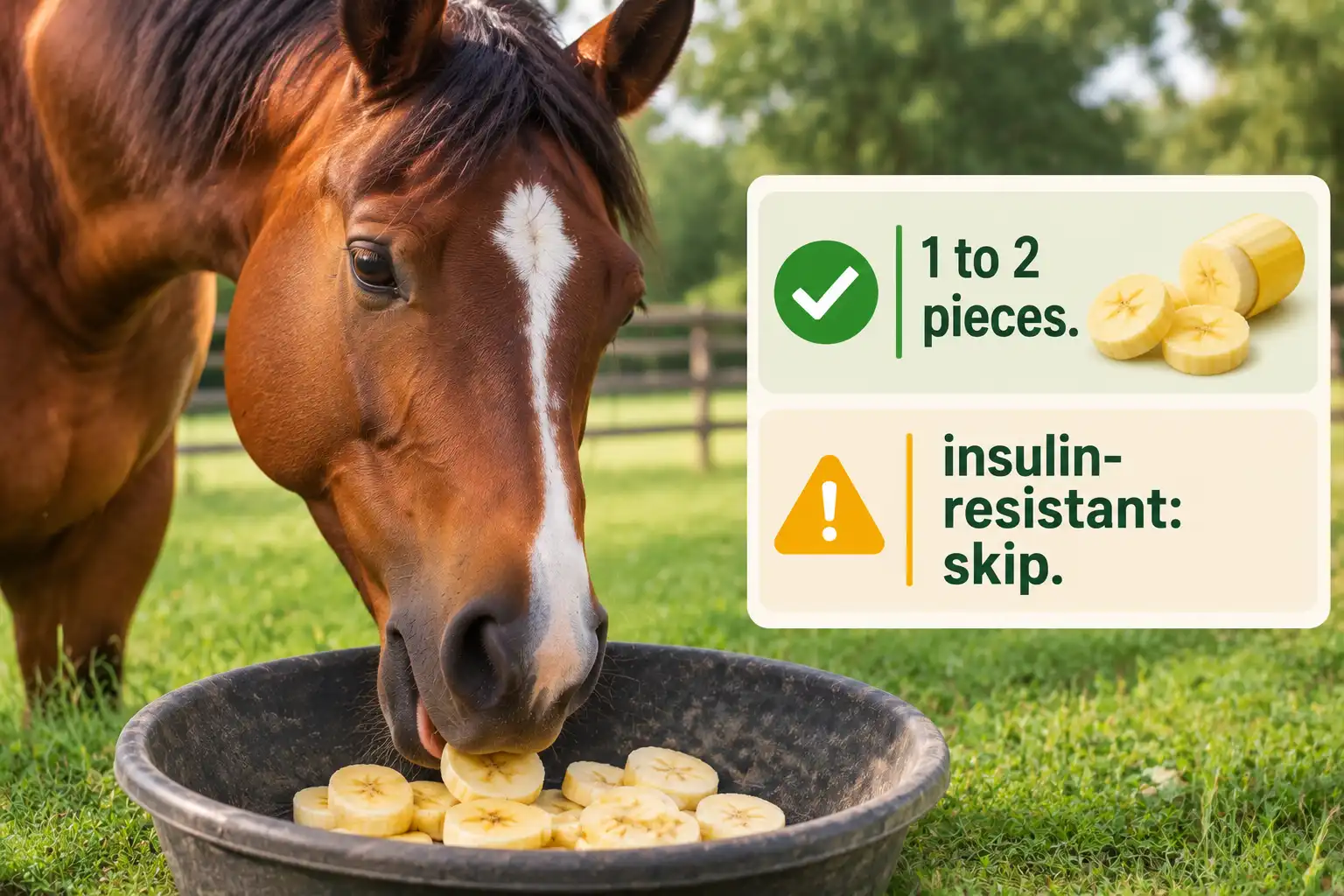
Yes. Healthy horses can eat bananas as an occasional treat, broken into small chunks, at one or two pieces per session per Penn State Extension. Skip them for insulin-resistant horses, and check with your veterinarian first for HYPP-positive horses.
Are Bananas Safe for Horses?
Yes, bananas are safe for most healthy horses. Penn State Extension lists bananas among the fruits horses can be given, alongside pears, watermelon, and blueberries. Rutgers Equine Science Center also puts bananas in its “perfectly acceptable treats” group.
Safe does not mean nutritious, though. A banana adds flavor, some sugar, and a little potassium. It is a reward, not a feed. Instead, a horse’s nutrition comes from a forage-based diet of pasture and hay.
So three things decide whether a banana suits a particular horse:
- Metabolic status, because sugar is the main concern for insulin-resistant horses
- Genetics, because HYPP-positive horses run on a potassium-limited diet
- Teeth and eating habits, because a gulped chunk can cause choke
For fruits, vegetables, and plants that do not belong in the feed pan, the guide to foods horses can and cannot eat covers the full list.
Read next: Can Horses Have Oranges? Safe Amounts
What a Banana Adds to a Horse’s Diet
A medium banana weighs about 118 grams (roughly 4 ounces) and is mostly water and sugar, per USDA FoodData Central. Its potassium and fiber are modest.
| Nutrient, one medium banana (118 g) | Amount |
|---|---|
| Calories | 105 kcal |
| Total carbohydrate | about 27 g |
| Sugars | 14.4 g |
| Fiber | about 3 g |
| Potassium | 422 mg (0.42 g) |
| Water | about three-quarters of its weight |
How Much Sugar Is One Banana for a Horse?
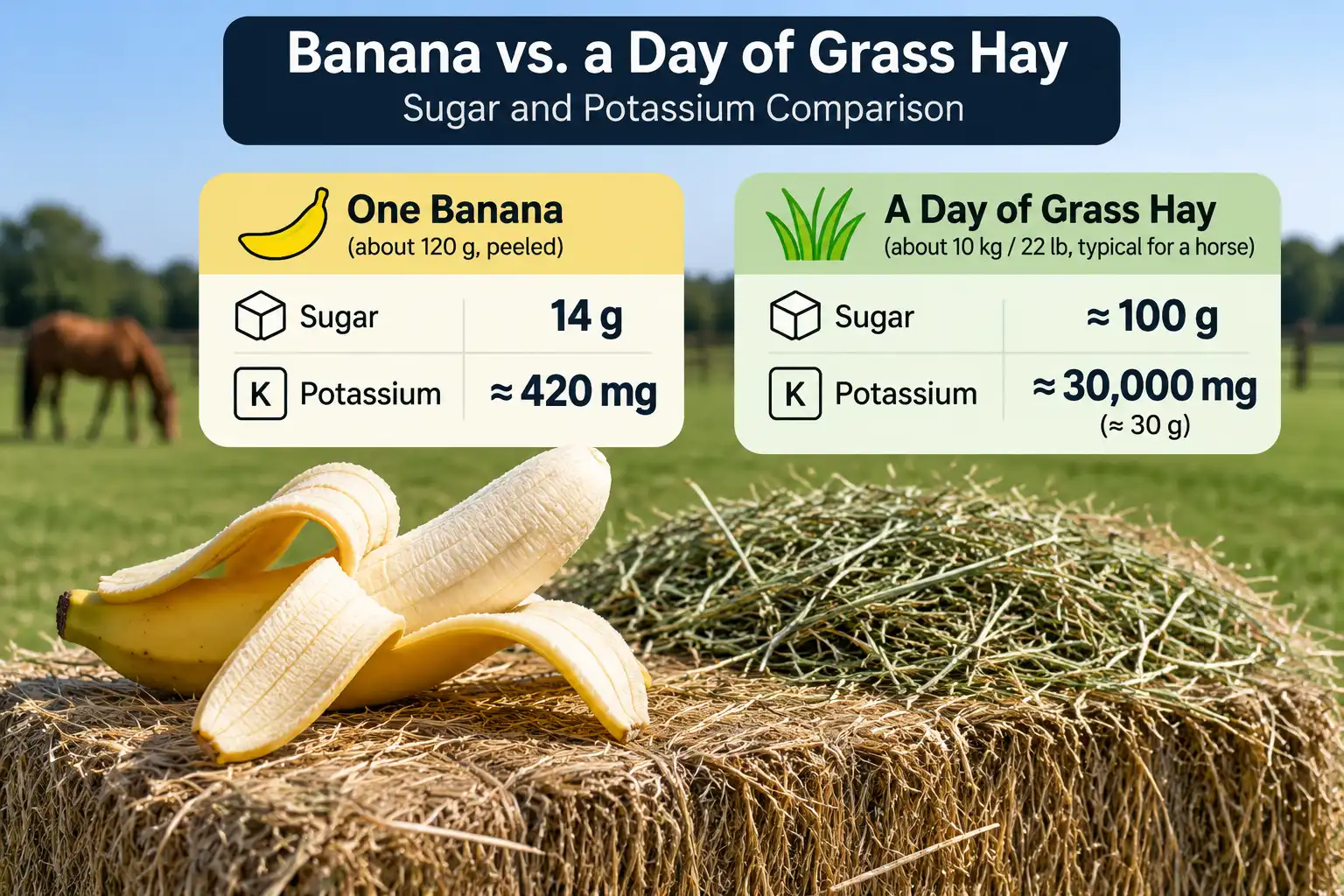
One medium banana is a small sugar load for a healthy horse. Take a 1,000 pound horse eating about 20 pounds of hay a day, a typical figure for a horse’s daily ration. Even hay at 10 percent sugar, the level where UConn Extension starts recommending soaking for insulin-resistant horses, carries about 2 pounds of sugar a day. That is roughly 900 grams. So a banana’s 14.4 grams adds under 2 percent.
However, the sugar arrives differently. Hay sugar trickles in over hours of chewing. A banana delivers its sugar in a few bites. For a healthy horse, that quick hit is minor. For an insulin-resistant horse, it is exactly what the diet tries to prevent.
Does Ripeness Matter?
Yes, a little. As a banana ripens, its starch turns to sugar, so a spotted banana is sweeter than a green-tipped one. Either is fine for a healthy horse.
Texture matters more. A firm, underripe banana is harder to break into small pieces. A soft, brown-spotted one mashes easily for an older horse. Moldy or fermented fruit goes in the compost, never the feed pan.
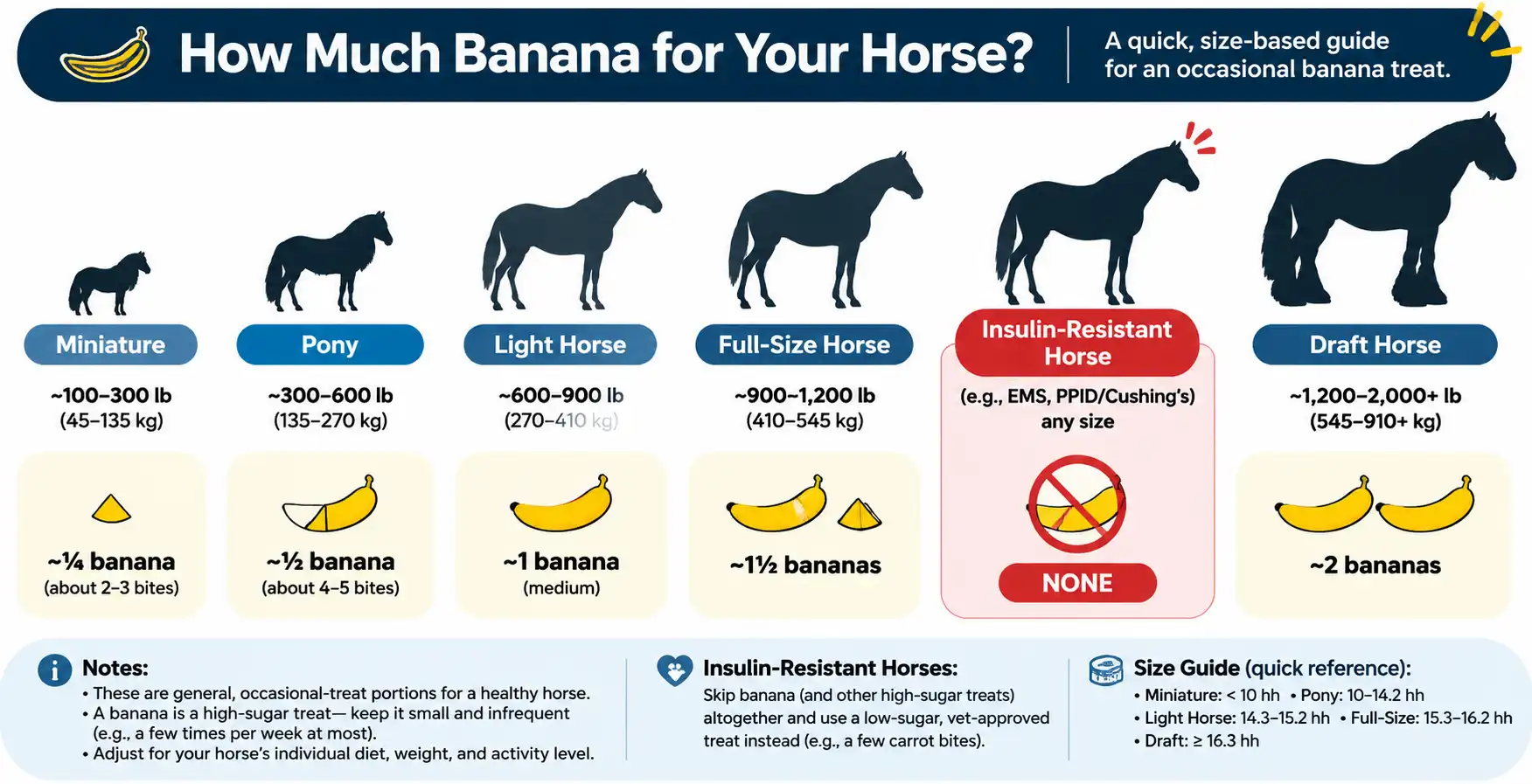
How Many Bananas Can a Horse Have?
One or two pieces per treat session is the safe starting point. Two extension sources set the limit differently, though, so the range is worth seeing.
Penn State Extension gives a rule of thumb of one to two pieces of any treat, whatever its size. Rutgers Equine Science Center sets a looser ceiling: acceptable treats, bananas included, at under 1 to 2 pounds per feeding. At about a quarter pound per medium banana, the Rutgers ceiling works out to four to eight bananas at once.
The two figures answer different questions. Penn State describes good treat practice. Rutgers marks the point where a treat starts acting like a meal. For that reason, most owners should stay much closer to the Penn State number.
| Horse | Practical banana portion | Why |
|---|---|---|
| Healthy adult horse, 1,000 lb or more | Half to one banana, in chunks, a few times a week | Well inside both extension limits |
| Pony or miniature horse | A few thin slices, occasionally | Ponies show more insulin resistance, per UConn Extension |
| Easy keeper or overweight horse | One or two slices, rarely, or none | Prone to insulin resistance even when not obese, per UConn Extension |
| Insulin-resistant, EMS, or laminitis history | None | UConn Extension advises against fruit treats |
| HYPP-positive (N/H or H/H) | Only with your veterinarian’s approval | Potassium-limited diet, set case by case |
| Senior with worn teeth | Small amounts, mashed or in thin coins | Choke risk rises as teeth decline, per Penn State Extension |
The portion column is a starting point. Your veterinarian’s advice for a specific horse always comes first.
Can Horses Have Banana Peels?
Yes, horses can eat banana peels, but nobody has studied peels as horse feed. We found no extension or university trial on them. Banana peel does not appear on the toxic lists in the extension fact sheets reviewed for this article. Still, there is no published evidence that peels do a horse any good either.
Three practical issues set the peel apart from the fruit:
- Texture. The peel is tough and fibrous, so a large piece is harder to chew and swallow.
- Taste. Many horses spit the peel out, especially from a green banana.
- Residue. Conventional bananas get a fungicide treatment after harvest, and that treatment goes on the outside.
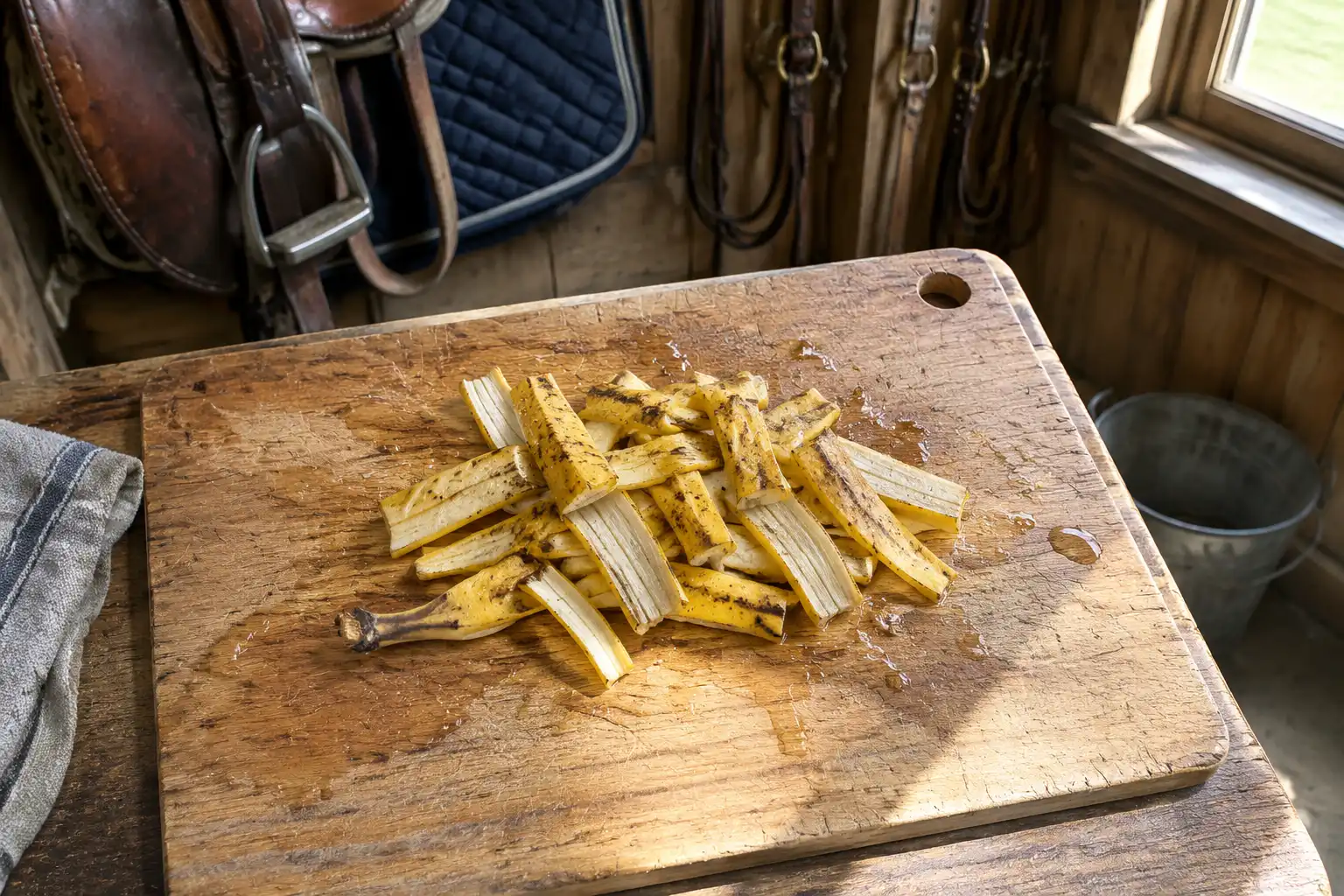
So a few washed peel pieces are a reasonable extra for a healthy horse that likes them. However, peels are a poor choice for a horse that bolts treats or has dental trouble.
Washing and Pesticide Residue
The EPA sets a postharvest residue tolerance for thiabendazole on bananas. Packers use this fungicide to keep fruit from rotting in transit. Because postharvest treatments coat the outside of the fruit, the peel carries what the pulp mostly escapes. In other words, a horse eating the peel gets the part people throw away.
No published research measures what those residues mean for a horse at treat-sized amounts. Rinse the banana under running water before feeding the peel, which may lower surface residue. If peels become a regular treat, organic bananas skip synthetic postharvest fungicides altogether.
How to Prepare Banana Peels
- Wash the whole banana before you peel it, so residue stays off the fruit too.
- Cut off the hard stem end, which is the toughest part to chew.
- Slice the peel into strips about a finger wide, then into short pieces.
- Offer one or two pieces first, since many horses refuse the bitter taste.
- Skip the peel for any horse with worn teeth or a history of choke.
Which Horses Should Not Have Bananas?
Insulin-resistant horses should not have bananas, and HYPP-positive horses need a veterinarian’s approval first. Senior horses can have them with extra care in preparation.
Insulin-Resistant Horses, EMS, and Laminitis History
UConn Extension advises against feeding fruit treats to insulin-resistant horses. The same publication flags ponies, Morgans, and easy keepers as more prone to the condition, along with horses that developed laminitis without an obvious cause. It also notes that horses over 20 are more prone, often alongside pituitary dysfunction (PPID, or Cushing’s disease). Equine metabolic syndrome (EMS) falls in the same group.
For these horses, a banana delivers its sugar fast and all at once. Because laminitis is the risk, the answer is no. If your horse needs a reward, ask your veterinarian about lower-sugar options. A slice of cucumber is one choice owners often consider.
HYPP-Positive Horses
HYPP (hyperkalemic periodic paralysis) is an inherited muscle disease. UC Davis Center for Equine Health ties it to descendants of the stallion Impressive, and the UC Davis genetic test is offered for Quarter Horses and related breeds. Signs include muscle tremors, weakness, and collapse.
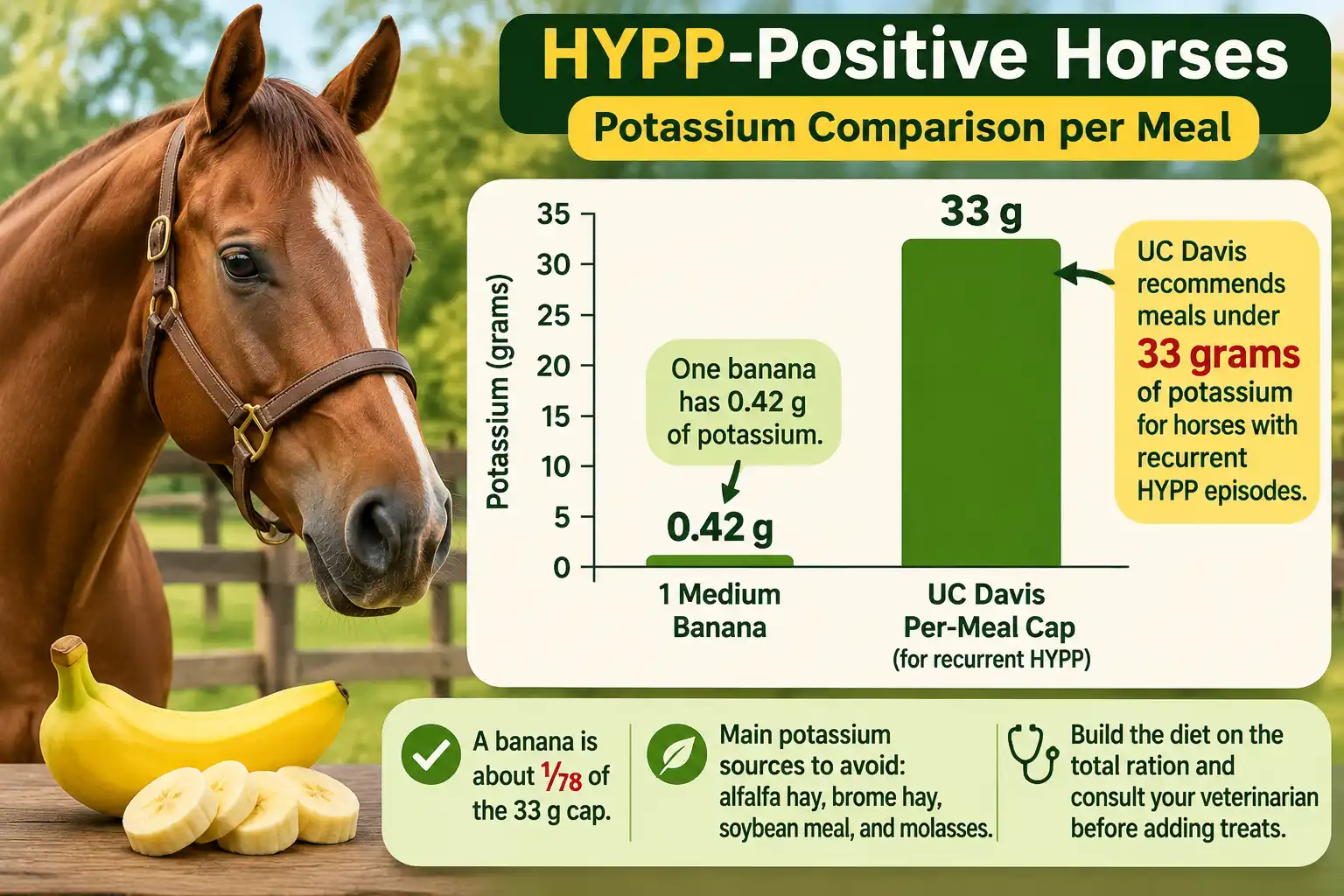
UC Davis recommends meals under 33 grams of potassium for horses with recurrent episodes. One medium banana carries 0.42 grams, about one-eightieth of that cap. So a banana is rarely the main potassium problem. Instead, UC Davis names alfalfa hay, brome hay, soybean meal, and molasses as the feeds to avoid.
That said, an HYPP horse’s diet is built around its whole ration, so ask your veterinarian before adding any treat. Also avoid banana-flavored commercial treats made with molasses.
Senior Horses and Poor Teeth
Penn State Extension stresses breaking treats into smaller pieces, especially for older horses whose teeth have declined. So mash a ripe banana or cut it into thin coins, and leave the peel out entirely.
How to Feed Bananas to a Horse
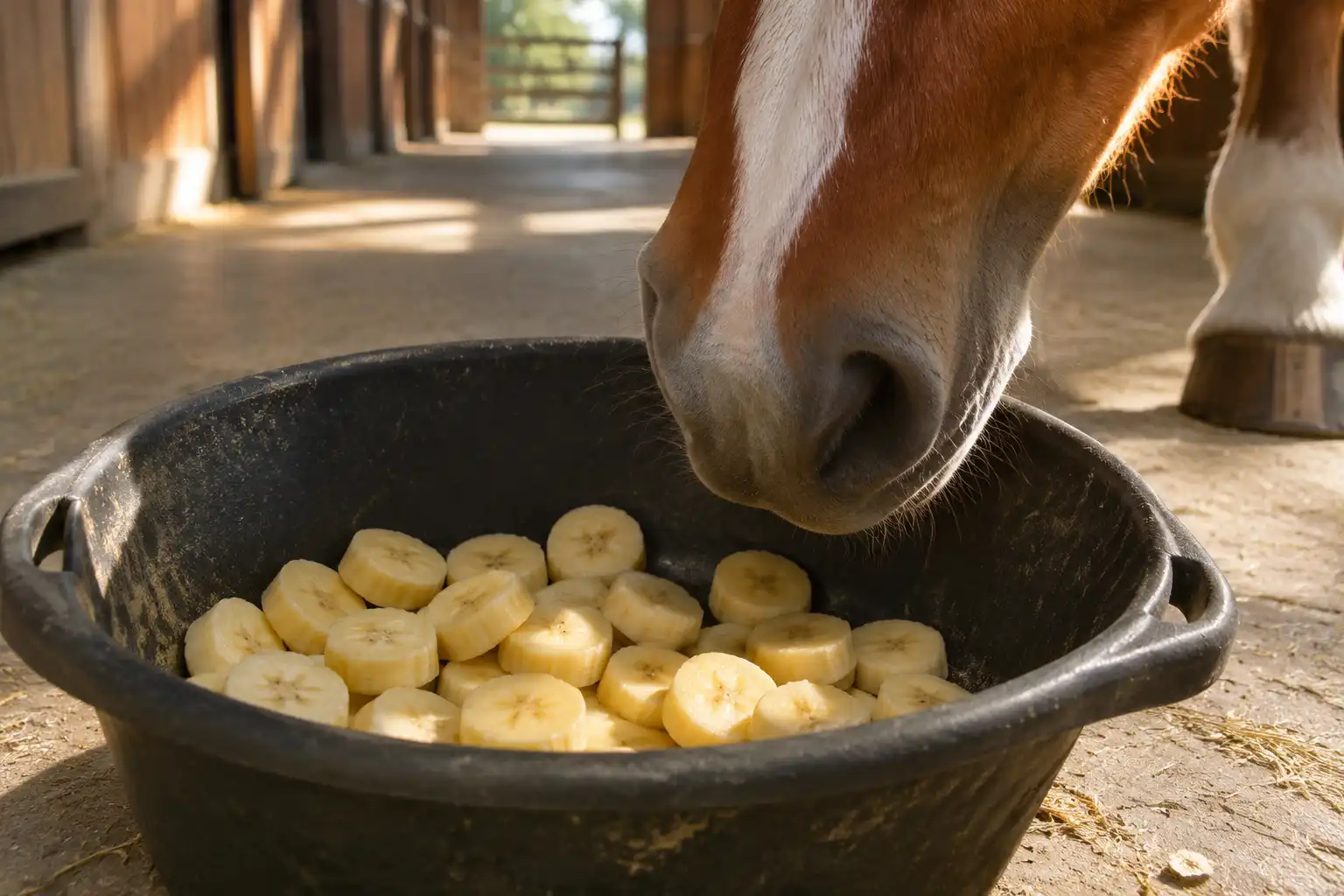
Feed a ripe banana in small pieces, a few at a time, from a pan or a flat hand.
- Pick a ripe banana. Yellow fruit breaks cleanly and chews easily.
- Wash it if the peel goes in. Postharvest fungicide sits on the outside.
- Break it into chunks. Penn State Extension advises small chunks so the horse does not choke. Coins about half an inch thick suit most horses.
- Start with one or two pieces. A sudden load of a new food can upset the hindgut, so build up slowly.
- Use a pan or a flat palm. Penn State Extension warns that hand treats can build bad habits, and a pan keeps the reward away from your pockets.
- Watch the first bites. A horse that gulps instead of chewing needs smaller pieces or no banana.
In summer, frozen banana coins make a cooling treat. Cut them small before freezing, then let them soften for a few minutes so they are not rock hard.
Banana Chips, Banana Bread, and Other Banana Foods
Fresh banana is the safest form. Processed banana foods pack more sugar per bite, and some carry ingredients a horse should not get.
- Dried banana and banana chips. Drying removes the water, so each chip holds the sugar of a much larger piece of fresh fruit. Many commercial chips are also fried and sweetened.
- Banana bread and muffins. These add flour, sugar, and fat. Penn State Extension cautions that processed human foods tend to run high in sugar and starch.
- Banana-flavored horse treats. Read the ingredient list first. Many use molasses or cereal grains as the base, which matters for insulin-resistant and HYPP-positive horses.
Do Bananas Have Health Benefits for Horses?
Not many at treat-sized amounts. A banana’s potassium and vitamins are tiny next to what hay and pasture already supply.
Claims that bananas replace electrolytes or soothe gastric ulcers in horses come up often. We found no controlled equine trials supporting either one. Also, a working horse that sweats heavily needs an electrolyte plan from your veterinarian, not fruit.
The real benefit is palatability. Most horses like bananas, so a piece makes a handy reward during training. Likewise, a soft, mashed banana lets a senior horse with poor teeth still enjoy a treat.
Choke and Colic: Signs to Watch For
Call a large animal veterinarian right away if a horse shows trouble after a treat. Several conditions look alike, so this section describes signs only and does not replace an exam.
Choke is a blockage in the esophagus, usually from feed swallowed in a large piece. Signs include saliva and chewed feed draining from the nostrils, repeated attempts to swallow, coughing, and an outstretched neck. The horse can usually still breathe. Even so, the blockage can injure the esophagus, and inhaled feed can lead to pneumonia.
Colic means abdominal pain. A large or sudden load of sugary fruit can upset the hindgut. Signs include pawing, rolling, looking back at the flank, sweating, and fewer manure piles than usual.
While you wait for the vet, take away all feed. Do not give anything by mouth unless your veterinarian tells you to.
Frequently Asked Questions
Can a horse eat a whole banana?
A horse can eat a whole banana, but breaking it into chunks is safer. Penn State Extension advises small pieces to prevent choke, and a whole fruit with the peel on makes a large, slippery mouthful.
Can horses eat banana peels every day?
Daily peels are a poor habit, because no published research covers regular peel feeding in horses. Keep peels occasional, washed, and cut into short strips, and skip them for horses with dental trouble.
Can ponies and miniature horses have bananas?
Yes, but in smaller portions than a full-size horse gets. Ponies show more insulin resistance, per UConn Extension, so a few thin slices on occasion is plenty, and none for a pony with a laminitis history.
Can foals have bananas?
Foals do not need treats while nursing or newly weaned. Once a foal eats solid feed well, ask your veterinarian before starting fruit, since published guidance on treats for foals is thin.
Are bananas good for horses with ulcers?
We found no controlled equine trials showing that bananas help gastric ulcers. Ulcers need a veterinary diagnosis and a management plan, so keep bananas as a reward only and ask your vet before changing the diet.
Can horses eat frozen bananas?
Yes, frozen banana coins make a cooling summer treat for healthy horses. Cut them small before freezing and let them soften for a few minutes, since rock-hard chunks are tough to chew.
Do bananas cause colic in horses?
A few pieces are unlikely to cause colic in a healthy horse. Large or sudden amounts of sugary fruit can upset the hindgut, though, so introduce bananas slowly and call your veterinarian at the first sign of colic.
Putting This Into Practice
Bananas make a fine occasional treat for most healthy horses. Break them into small chunks, keep it to one or two pieces, and wash the fruit if the peel goes in too. Leave bananas out entirely for insulin-resistant horses, and clear them with your veterinarian first for HYPP-positive horses. For the rest of the feed room, the horse care guides cover forage, water, and condition scoring.