What Fruits Can Horses Eat? Safe Picks, Prep, and 4 to Avoid
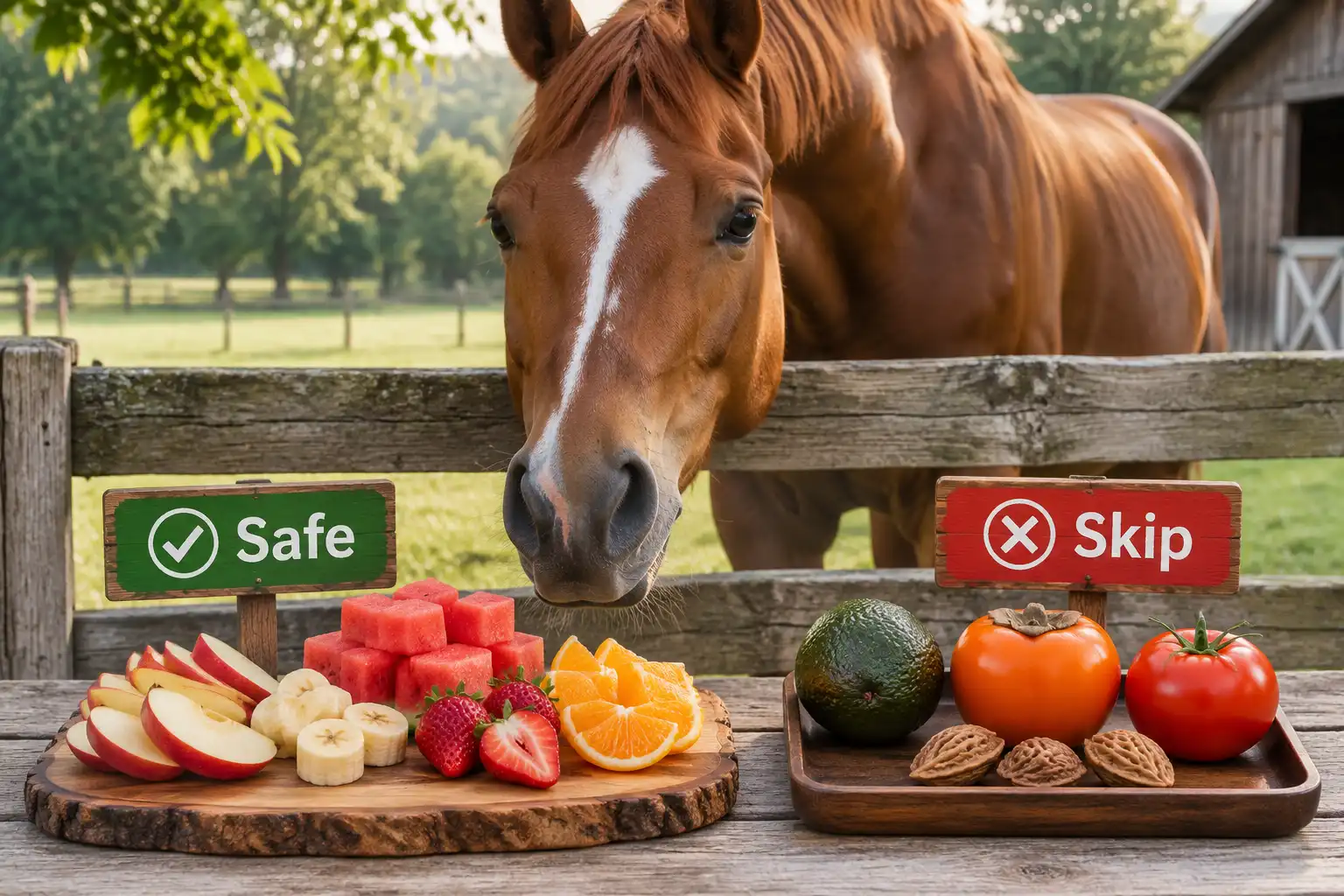
Most fresh fruit is a safe treat for a healthy horse when you slice it, pit it, and feed it sparingly. Knowing what fruits horses can eat also means knowing the four that cause real harm. Some horses should skip sugary treats altogether.
Apples, pears, bananas, watermelon, oranges, pineapple, strawberries, blueberries, peaches, and apricots are safe horse treats, per Penn State Extension. Slice them small, remove pits, stop at one or two pieces, and never feed avocado, persimmon, or tomato.
Which Fruits Are Safe for Horses?
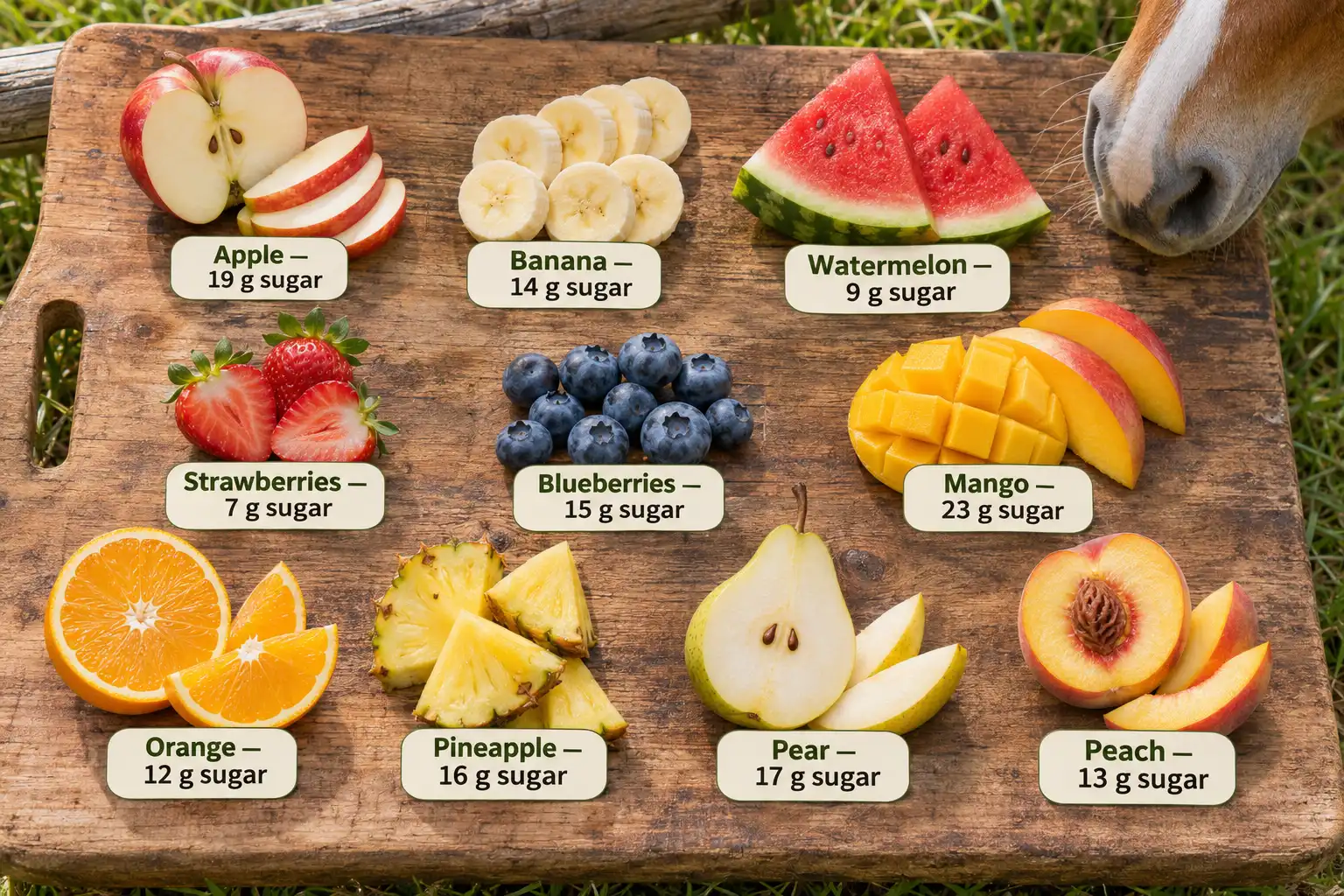
Most common grocery and orchard fruits are safe for a healthy horse in small amounts. Penn State Extension lists apples, bananas, oranges, pineapple, pears, strawberries, watermelon, blueberries, peaches, and apricots as safe treats. The table adds how to prepare each one. It also shows the sugar in a typical serving, using USDA FoodData Central values.
| Fruit | Prep before feeding | Sugar per serving |
|---|---|---|
| Apple | Slice into thin wedges | About 19 g per medium apple |
| Pear | Slice into thin wedges | About 17 g per medium pear |
| Banana | Break into chunks | About 14 g per medium banana |
| Watermelon | Cut flesh into cubes | About 9 g per cup |
| Orange | Separate into segments | About 12 g per medium orange |
| Pineapple | Peel, core, and cube | About 16 g per cup |
| Strawberries | Feed whole | About 7 g per cup |
| Blueberries | Feed whole | About 15 g per cup |
| Peach | Remove pit, then slice | About 13 g per medium peach |
| Apricot | Remove pit, then halve | About 3 g per apricot |
Several other fruits are fed often but sit outside that list. Cantaloupe, honeydew, raspberries, blackberries, mango, plums, nectarines, and cherries are examples. None of the extension sources checked for this guide flag them as toxic to horses. Still, none list them as tested treats either. So treat them by the same rules: pits out, small pieces, and small amounts.
Read next: How Long Do Pigs Live? Pet, Market Hog, Sow
How to Prepare Fruit So Your Horse Does Not Choke
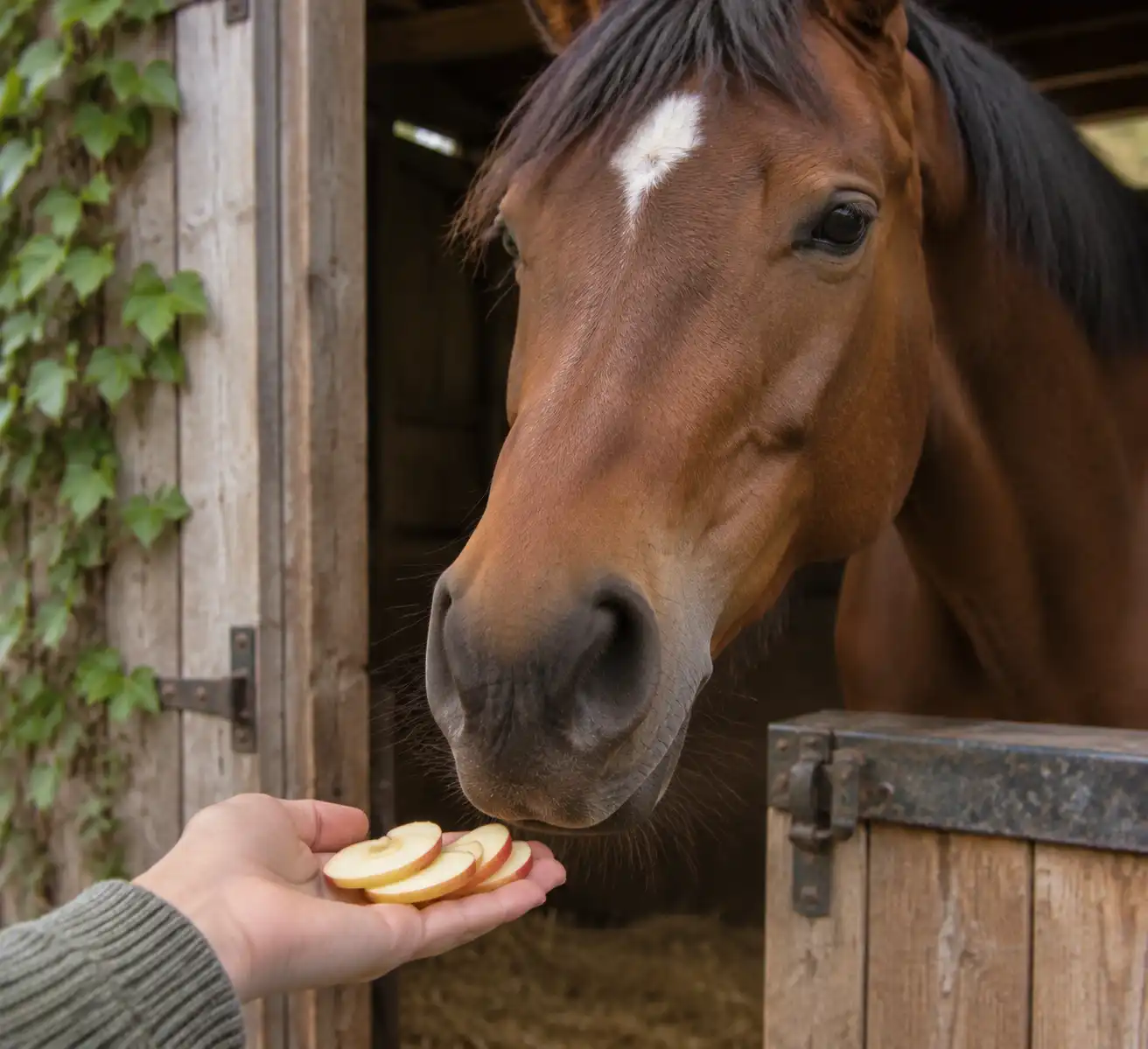
Cut fruit into small pieces before you offer it, because large chunks can lodge in the esophagus. Penn State Extension describes choke as partially chewed food blocking the esophagus, with heavy coughing as a common sign. Older horses face higher risk as their teeth decline. Choke is an emergency, so call your veterinarian right away if a horse coughs hard or drools after a treat.
Follow these steps each time:
- Wash the fruit. This removes dirt and spray residue from the skin.
- Remove every pit and stone. Penn State Extension flags peach and apricot pits as a choking hazard.
- Slice firm fruit thin. Apples and pears break into wedges. Bananas break into chunks.
- Cut smaller for seniors. Horses with worn or missing teeth need pieces they can manage.
- Throw out moldy or fermented fruit. Penn State Extension advises discarding any moldy treat.
- Offer from a flat palm or a bucket. This reduces nipping, per Penn State Extension.
- Watch the horse chew and swallow. Stay until the piece is gone.
How Much Fruit Can a Horse Eat in a Day?
One or two pieces a day is the general treat guideline from Penn State Extension. For apples and carrots, the same source says to scale the portion to the horse’s weight. A pony gets less than a draft horse. Knowing your horse’s body weight makes that call easier.
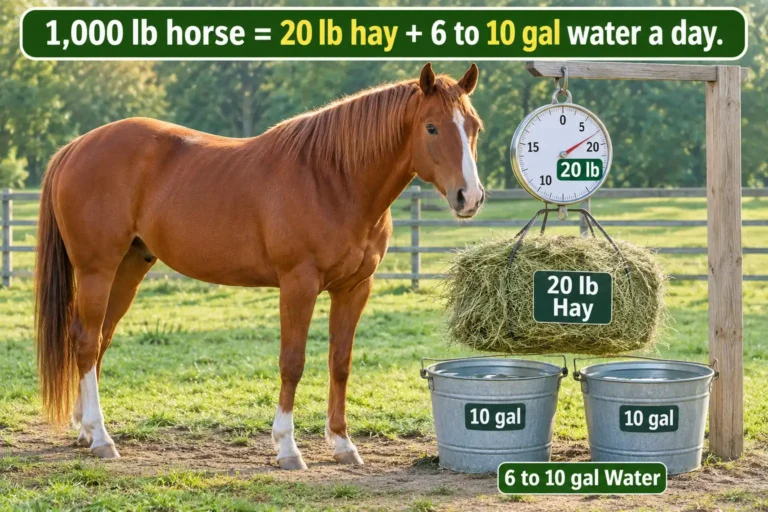
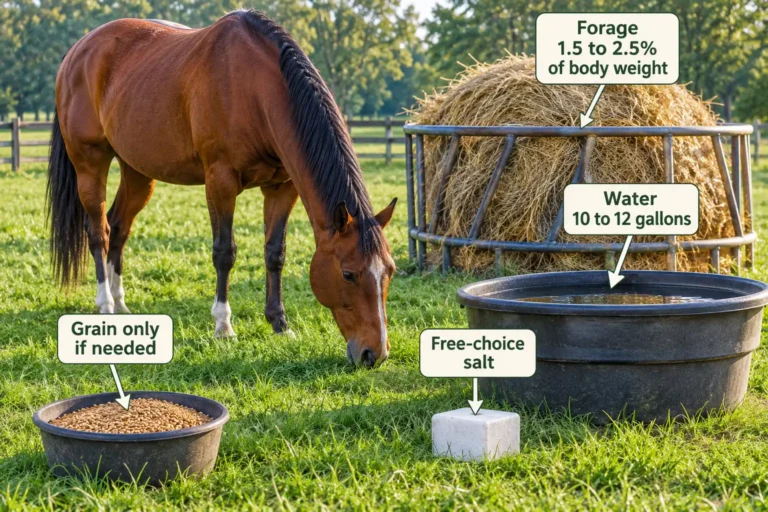
Fruit is also a small slice of the day’s feed. University of Minnesota Extension puts daily intake near 2 percent of body weight, mostly as forage. For a 1,000 pound horse, that means about 20 pounds of hay. In comparison, one medium apple weighs about 0.4 pounds. That is roughly 2 percent of the day’s feed by weight. So a single apple rarely matters for a healthy horse.
Problems start when treats become a habit. Penn State Extension says treats should not make up the bulk of the diet. Instead, use fruit as a reward right after the behavior you want. The same source recommends treats this way in training. The daily ration should still come from hay and pasture.
How Much Sugar Does Fruit Add to a Horse’s Diet?
One apple barely moves a healthy horse’s sugar intake, but five can push a sensitive horse to its limit. University of Minnesota Extension considers forage at 10 to 12 percent nonstructural carbohydrate (NSC) or less to be safe for sensitive horses. Fruit sugar counts toward that same total.
Here is how the arithmetic runs for a 1,000 pound horse eating 20 pounds of hay a day. At about 90 percent dry matter, that hay supplies roughly 18 pounds, or 8,165 grams, of dry matter. If a hay test shows 9 percent NSC, the hay carries about 735 grams of sugar and starch. Each medium apple then adds about 19 grams of sugar, per USDA FoodData Central.
| Apples added | Sugar added | Whole-diet NSC |
|---|---|---|
| None | 0 g | 9.0% |
| 1 | 19 g | 9.2% |
| 3 | 57 g | 9.6% |
| 5 | 95 g | 10.0% |
In short, five apples take a horse on 9 percent hay to the bottom of the safe range. Swap in your own hay test result to run it for your horse. Lower-sugar choices help too. A cup of strawberries carries about 7 grams of sugar, while a cup of grapes carries about 23.
Which Horses Should Skip Fruit?
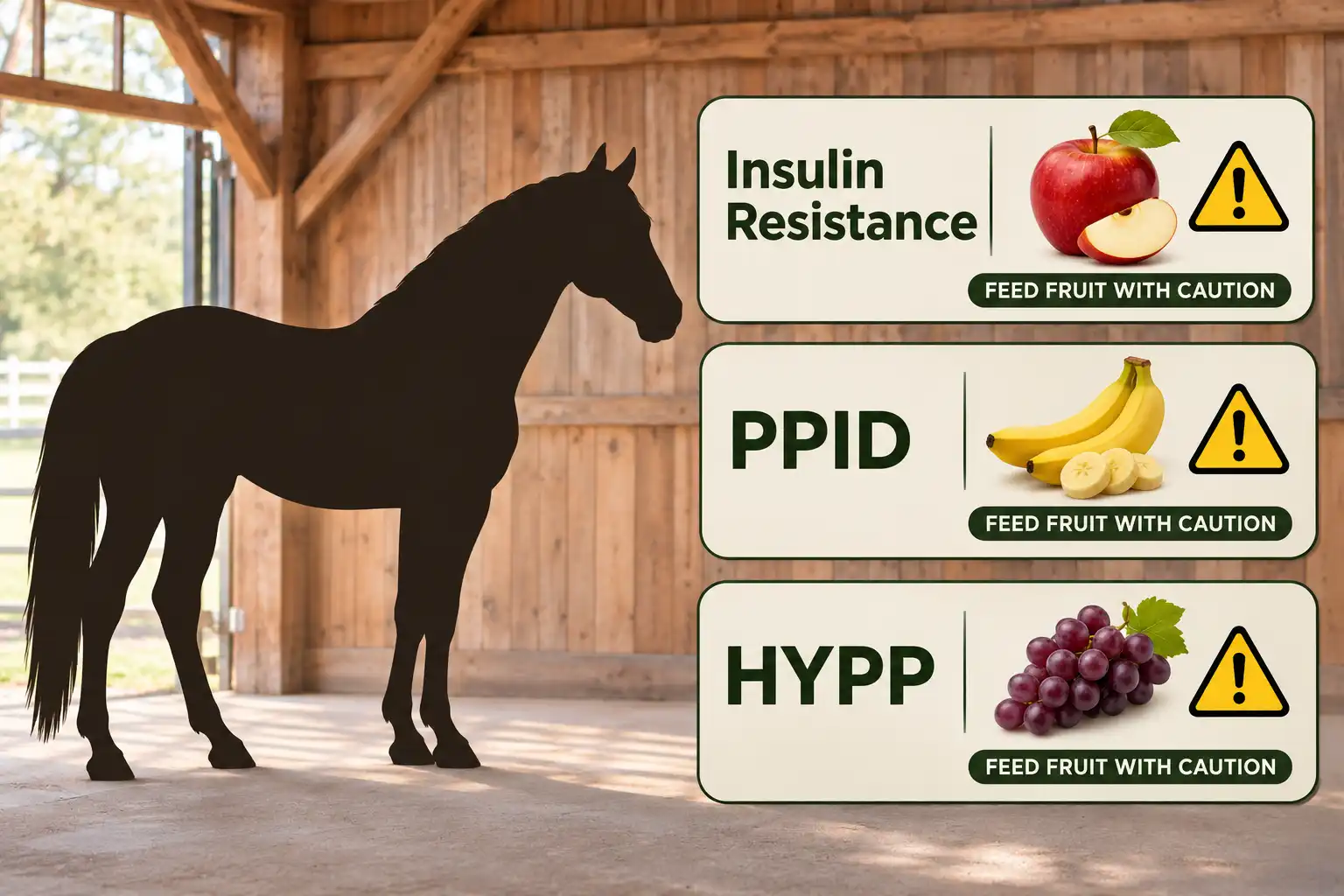
Horses with insulin resistance, EMS, PPID, laminitis, or HYPP need a veterinarian’s plan before any fruit. Diagnosing these conditions, including PPID (Cushing’s), and setting the diet is your veterinarian’s job.
Insulin resistance and equine metabolic syndrome (EMS). UConn Extension lists cutting out fruit treats among the feeding steps for insulin-resistant horses. The same source notes that overweight horses and easy keepers tend toward insulin resistance, even when they are not obese.
HYPP. University of Minnesota Extension traces hyperkalemic periodic paralysis to the Quarter Horse sire Impressive. It affects Quarter Horses, American Paint Horses, Appaloosas, and Quarter Horse crosses. About 4.4 percent of Quarter Horses may be affected. Management centers on limiting potassium. Notably, that guidance names alfalfa, molasses, soybean products, and canola oil as feeds to limit. It does not single out fruit.
Even so, two fruits stand out for potassium. A medium banana carries about 420 milligrams and a cup of cantaloupe about 430, per USDA FoodData Central. Forage supplies far more potassium than any treat. Still, these two are the easiest items to drop, so ask your veterinarian before feeding them to an HYPP horse.
Which Fruits Are Toxic to Horses?
Avocado, American persimmon, tomato, and cherry pits, leaves, and bark are the fruit hazards to keep away from horses. If a horse eats any of them, call your veterinarian before signs appear.
| Fruit | Problem parts | What it can cause |
|---|---|---|
| Avocado | Leaves, bark, seeds, fruit skin | Swelling of lips, head, and neck; labored breathing; colic |
| American persimmon | Skin, flesh, seeds | Stomach mass, ulcers, impaction colic, possible stomach rupture |
| Black cherry and chokecherry | Seeds, leaves, bark, shoots | Cyanide poisoning, often fatal |
| Tomato | Fruit | Nightshade family; Penn State Extension lists it to avoid |
UGA Extension supplies the avocado, persimmon, and cherry entries. It rates wilted cherry leaves and new growth as the most toxic parts. For persimmons, eXtension, the national Cooperative Extension horse site, explains that fruit tannins form a sticky stomach mass. Signs are vague and come and go, so persimmon trouble is hard to spot.
Peaches, plums, and apricots are also Prunus species. That is one more reason the pit always comes out before you feed the fruit.
Can Horses Graze Under Fruit Trees?
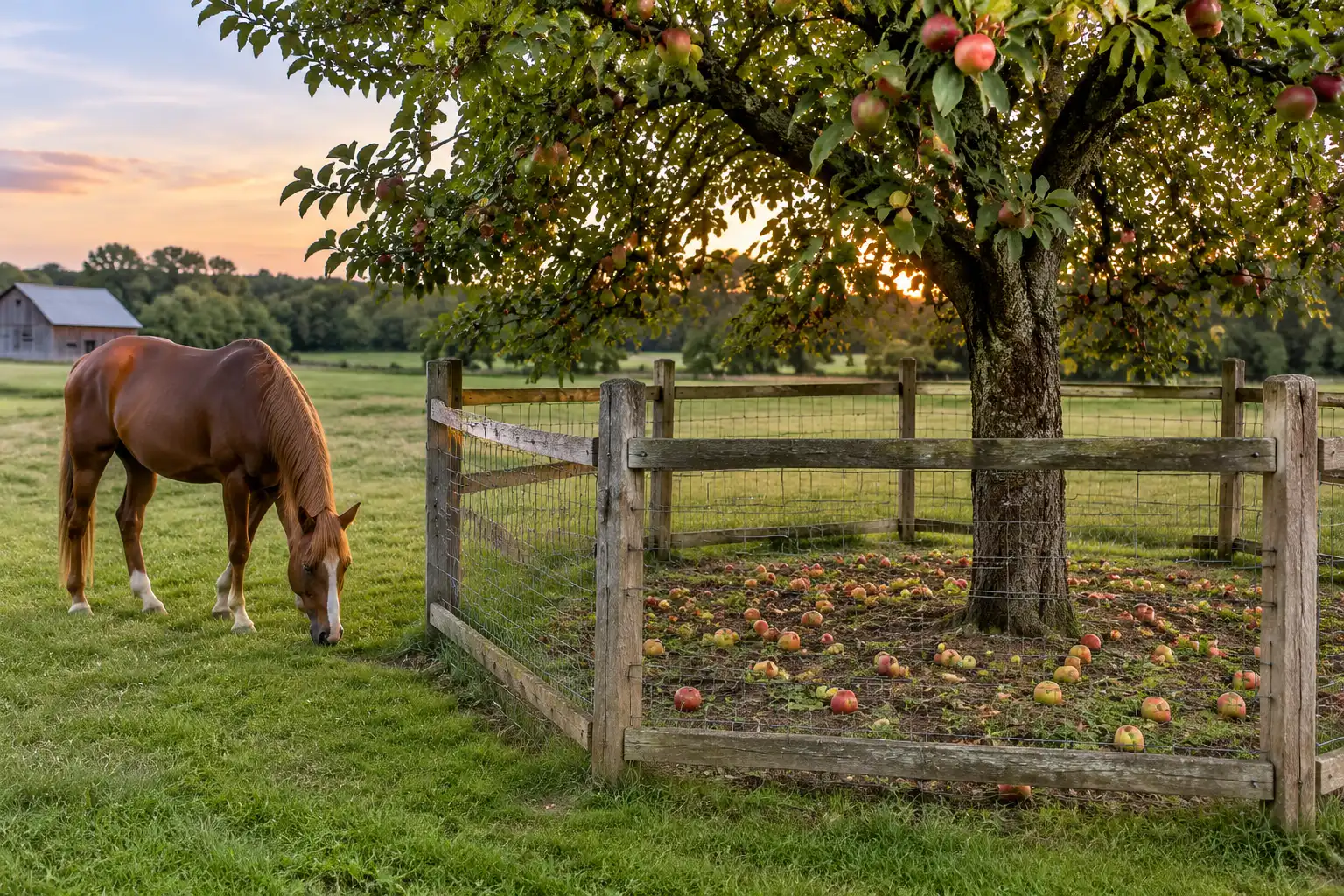
Not safely during fruit drop. Fence trees off past the edge of the canopy, or pick up fallen fruit every day.
Volume is the main risk. A horse that finds 30 windfall apples takes in about 570 grams of sugar, per USDA FoodData Central values. That nearly matches the 735 grams in a full day of 9 percent hay, eaten in one sitting. Seeds are a smaller worry. An Ask Extension specialist estimated a horse would need about a cup of apple seeds to feel toxic effects.
Other orchard hazards stack on top of the sugar:
- Fermented or moldy fruit. Penn State Extension advises throwing out moldy treats, and fallen fruit spoils fast.
- Persimmons in fall. eXtension recommends keeping horses and persimmon trees separated.
- Storm damage. Downed cherry branches leave wilted leaves, the most toxic part per UGA Extension.
If a horse breaks into an orchard or eats an unknown amount of fruit, call your veterinarian before signs appear.
What Fruits and Vegetables Can Horses Eat?
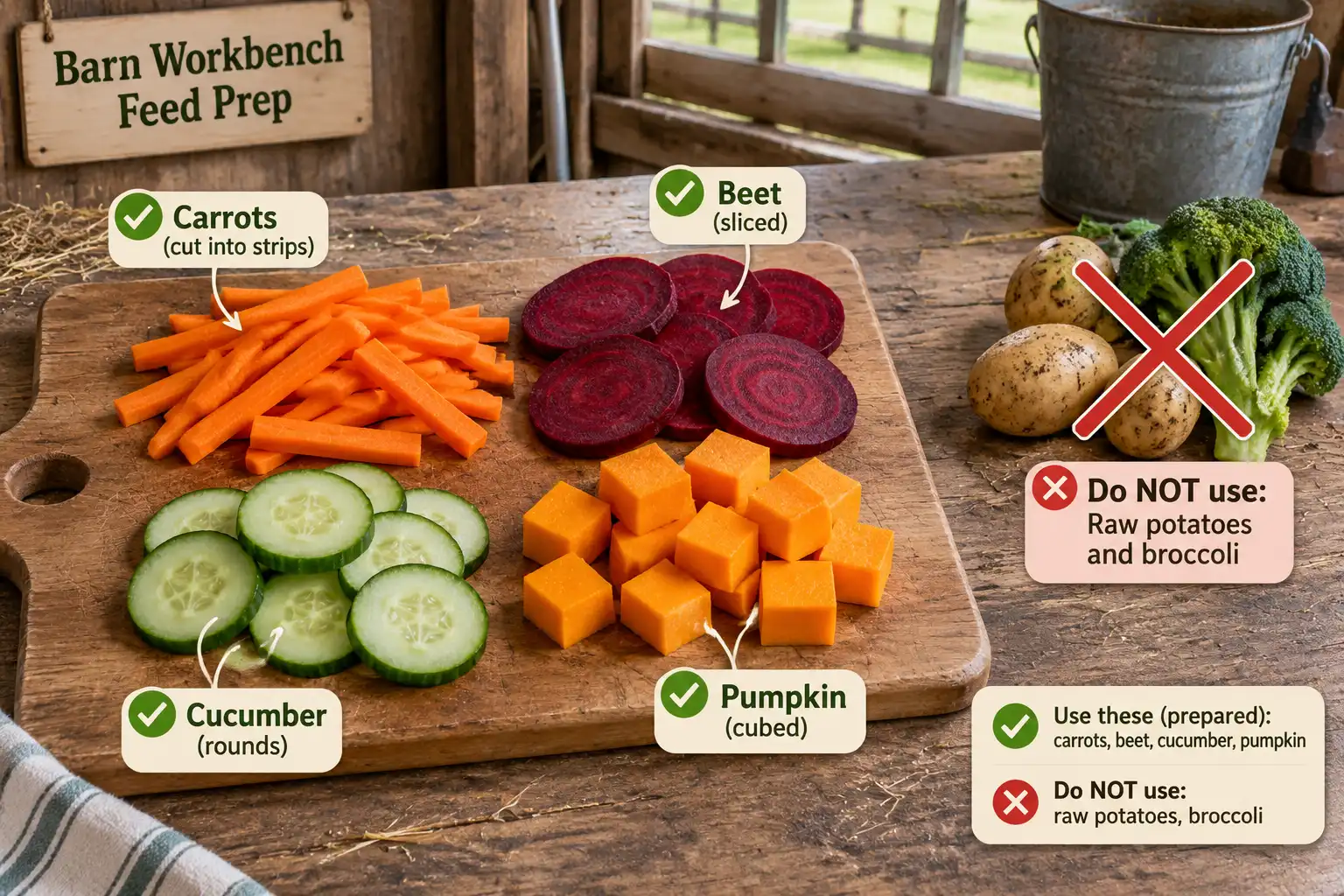
Carrots, beets, cucumber, pumpkin, squash, lettuce, turnips, and corn join the safe fruit list as vegetables, per Penn State Extension. Prepare them the same way: wash, cut small, and feed one or two pieces.
Carrots are lower in sugar than most fruit, at about 3 grams per medium carrot per USDA FoodData Central. Even so, break large carrots into pieces, since Penn State Extension flags big chunks as a choking risk. For a low-sugar option, cucumbers as a treat are worth a look.
Penn State Extension lists these vegetables to avoid:
- Raw potatoes, which belong to the nightshade family with tomatoes
- Broccoli and cauliflower, which can cause gas
For the wider list, including grains, kitchen scraps, and plants, see the foods horses can and can’t eat. Fruit and vegetables stay treats on top of a forage-based diet for horses.
FAQs on Fruits can horses eat
Can horses eat grapes?
Probably, in small numbers, though published evidence is thin. No extension source checked here flags grapes for horses, and USDA FoodData Central puts a cup at about 23 grams of sugar.
Are apple seeds and cores dangerous for horses?
Seeds from a few apple slices are not the concern. An Ask Extension specialist put the toxic amount near a cup of seeds, so cores matter mostly as a choking risk.
Can ponies and miniature horses eat fruit?
Yes, but in smaller portions scaled to body weight, per Penn State Extension. A miniature horse might get a slice or two where a 1,000 pound horse gets a whole apple.
Can horses eat cherries?
The flesh is fine in small amounts once every pit is out. Cherries are Prunus trees, and UGA Extension lists Prunus seeds, leaves, and bark as a cause of cyanide poisoning in horses.
Are ripe persimmons safe for horses?
No, ripeness does not help. UGA Extension lists American persimmon skin, flesh, and seeds as toxic to horses, with no exception for ripe fruit. Fallen fruit in autumn is the usual source.
Do horses need fruit in their diet?
No, forage is the foundation of a horse’s diet. Treats should not make up the bulk of the diet, per Penn State Extension. Fruit works best as a training reward.
Putting This Into Practice
Pick fruit from the safe list, slice it thin, and pull every pit. Keep the portion to one or two pieces, scaled to the horse’s size. Check with your veterinarian first for any horse with insulin resistance, PPID, laminitis, or HYPP. Finally, fence off fruit trees before the fall drop, and walk the pasture for persimmons and downed cherry branches.