How Much Does a Horse Eat a Day? Hay, Grain, and Water by Weight
Body weight sets a horse’s daily ration, and workload, pasture, and life stage adjust it from there. Knowing how much a horse eats a day lets you feed by the pound. From there, the daily figure becomes a winter hay order you can actually buy.
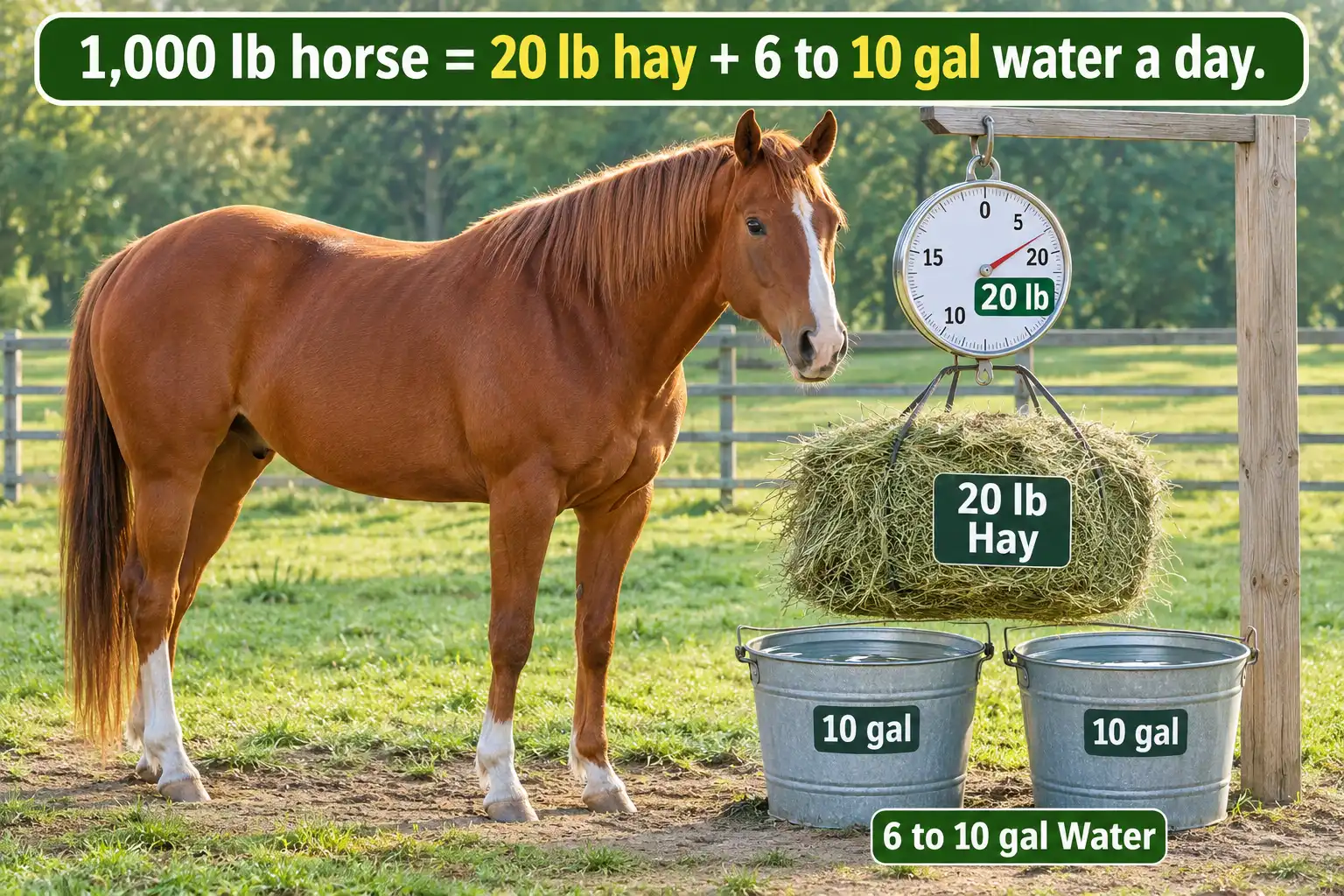
A horse needs about 2 percent of its body weight in feed daily, mostly as forage, per University of Minnesota Extension. For a 1,000 pound horse, that means about 20 pounds of hay and 6 to 10 gallons of water.
How Much Does a Horse Eat a Day by Body Weight?
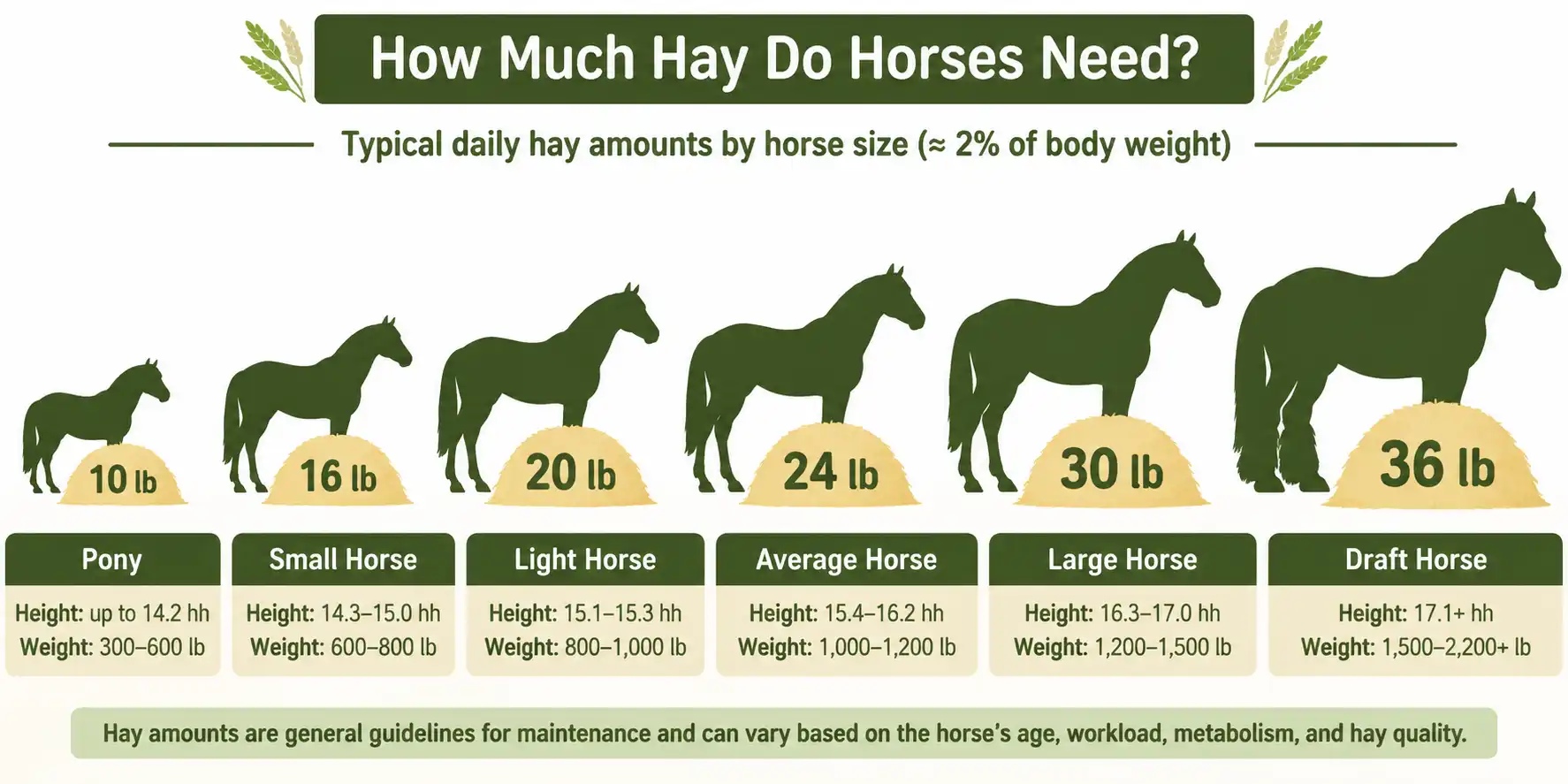
A horse eats about 1.5 to 2.5 percent of its body weight in feed each day. University of Minnesota Extension uses 2 percent as the working figure for most horses. It also notes that a horse with free access to hay will eat 2 to 2.5 percent on its own.
These percentages are on a dry matter basis. Hay holds about 10 percent moisture, per Alabama Cooperative Extension. So the hay you actually pitch weighs roughly a tenth more than the table shows.
Find the row closest to your horse’s weight.
| Horse body weight | Minimum forage (1%) | Typical day (2%) | Free-choice upper end (2.5%) |
|---|---|---|---|
| 500 lb | 5 lb | 10 lb | 12.5 lb |
| 800 lb | 8 lb | 16 lb | 20 lb |
| 1,000 lb | 10 lb | 20 lb | 25 lb |
| 1,200 lb | 12 lb | 24 lb | 30 lb |
| 1,500 lb | 15 lb | 30 lb | 37.5 lb |
| 1,800 lb | 18 lb | 36 lb | 45 lb |
Daily horse feed intake, pounds of dry matter. Percentages from University of Minnesota Extension.
Treat the 2 percent column as a starting point, not a fixed ration. Body condition, workload, and hay quality all move it. Start there, then adjust every few weeks based on what the horse’s ribs and topline tell you.
Read next: Apples for Goats
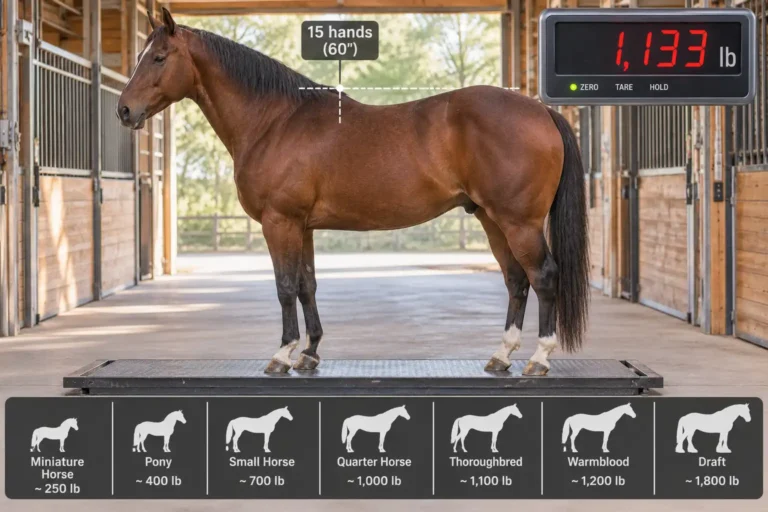
Start With an Accurate Body Weight
Every figure in a horse diet depends on body weight. A guess that runs 200 pounds light shorts a 2 percent ration by 4 pounds of hay a day.
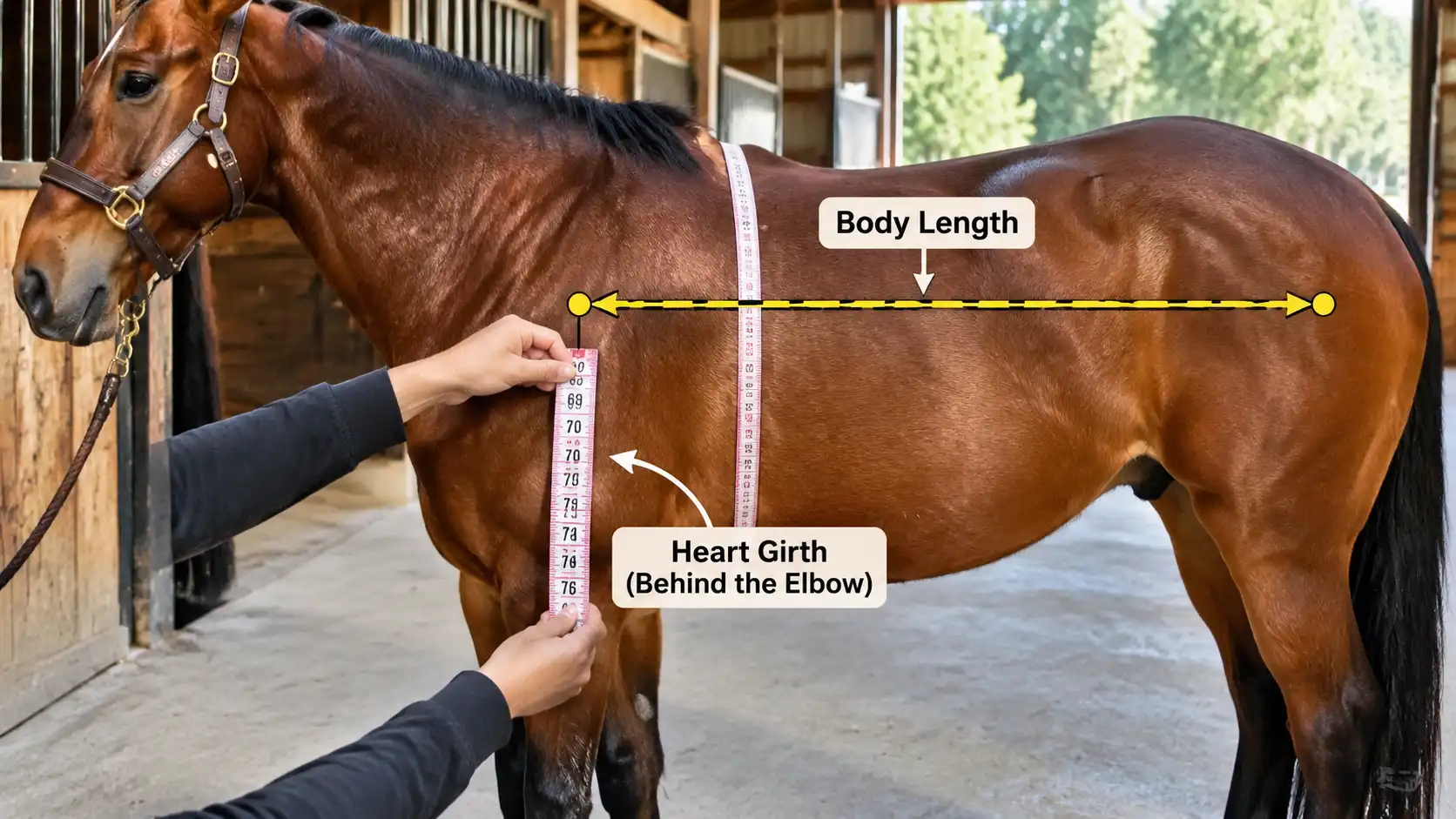
University of Nebraska-Lincoln Extension gives a tape and formula method that needs no livestock scale:
- Measure heart girth in inches, around the barrel just behind the elbows.
- Measure body length in inches, from the point of the shoulder to the point of the buttock.
- Multiply heart girth by itself, multiply that by body length, and divide by 330.
In the Nebraska example, a 70 inch heart girth and a 69 inch body length give about 1,024 pounds. Then run the percentages. At 2 percent, that horse needs about 20.5 pounds of feed a day.
Next, check body condition. Body condition scoring rates fat cover on a 1 to 9 scale. Alabama Cooperative Extension says most horses do best at a score of 5 or 6.
Weight tells you how much to feed. Condition tells you whether that amount is working, and both belong in routine horse care. Breed averages and weight tape accuracy are covered in more depth in our guide to estimating a horse’s body weight.
Forage Comes First in Every Equine Diet
Forage is the base of every equine diet. That means pasture, hay, or another long-stem roughage, fed before grain enters the picture.
University of Minnesota Extension sets the daily floor for a horse at 1 percent of body weight in forage. Its ideal range is 1.5 to 2.5 percent. For a 1,000 pound horse, the floor is 10 pounds of hay. University of Nebraska-Lincoln Extension puts that same horse’s minimum at 8 to 10 pounds.
Why hold the floor? Minnesota Extension notes that forage keeps the gut working and keeps the horse occupied. That second point matters for a stalled horse with long hours to fill.
Good grass hay alone can meet the needs of an idle adult horse, per University of Minnesota Extension. So grain is an add-on for work, growth, or lactation. It is not a default.
Grass Hay or Legume Hay?
Grass hays include timothy, orchardgrass, brome, and bermudagrass. Legume hay, mainly alfalfa, carries more protein and calcium. Many horses do well on a grass and alfalfa mix.
Looks can mislead, though. Minnesota Extension recommends having hay lab tested to find nutrient gaps. A test costs far less than a winter of the wrong hay, and it tells you whether grain is needed at all.
How Workload Changes the Ration
Work raises a horse’s energy needs. Total intake often stays near 2 percent, but more of it shifts to concentrate. University of Minnesota Extension lays out two rations for a 1,000 pound horse:
| 1,000 lb horse | Total feed | Hay | Concentrate |
|---|---|---|---|
| Idle adult | 20 lb | 20 lb (100%) | 0 lb |
| Moderate work, 3 to 5 hours a week | 20 lb | 15 lb (75%) | 5 lb (25%) |
Even for heavy work, Minnesota Extension keeps forage at 50 percent of the horse’s ration or more.
University of Nebraska-Lincoln Extension frames it as ranges. A light working horse eats 1.5 to 2.5 percent of body weight in total. That splits into 1 to 2 percent forage and 0.5 to 1 percent concentrate.
Grain Has a Per-Meal Limit
Grain also has a ceiling per feeding. University of Minnesota Extension advises no more than 0.3 to 0.4 percent of a horse’s body weight in cereal grain per meal. For a 1,000 pound horse, that is 3 to 4 pounds at a time.
Past that point, Minnesota Extension warns of serious nutrient-related illness. Alabama Cooperative Extension makes a similar point. An 1,100 pound horse getting more than 8 pounds of concentrate a day should have it split into at least two meals.
So a hard-working horse needing 9 pounds of grain gets three meals, not two.
Feeding Pregnant and Nursing Mares
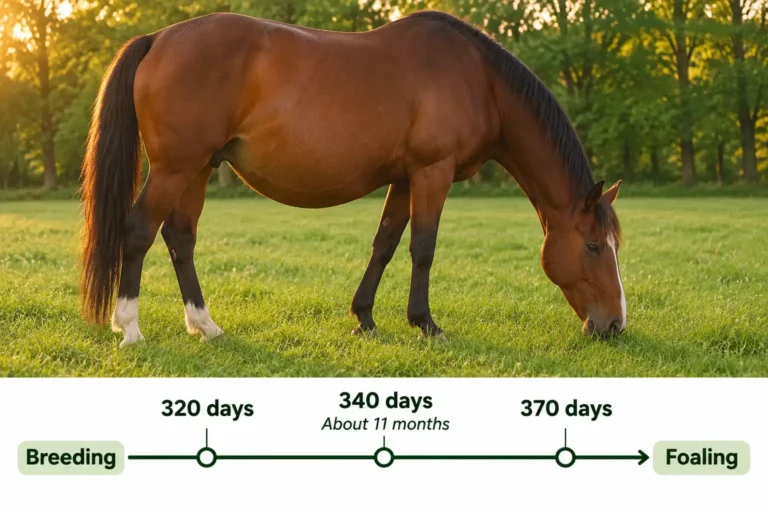
A pregnant mare eats close to maintenance until the last three months. Then demand climbs. Virginia Tech Extension notes the foal gains about 60 percent of its birth weight in that stretch. It also says the mare should gain 0.3 to 0.8 pounds a day through late gestation.
Lactation is the bigger jump. Virginia Tech Extension puts a mare’s milk output near 3 percent of her body weight a day for the first three months. It drops to about 2 percent from months four to six. Meanwhile, her energy requirement runs at twice maintenance.
For a 1,100 pound mare, 3 percent is about 33 pounds of milk a day. That output has to come from somewhere. So nursing mares need better hay, often added concentrate, and plenty of water.
Body condition is the check. A mare that drops below a score of 5 while nursing needs more feed, not less. Build her ration with your veterinarian or extension horse specialist, because protein and mineral needs rise along with energy.
Foals, Weanlings, and Yearlings
Growing horses need more protein and minerals per pound of feed than adults. Body weight percentages alone won’t build a sound ration for them. Work from a ration your equine veterinarian or extension horse specialist helps set, and weigh young horses often as they grow.
Easy Keepers and Senior Horses
Easy Keepers
Some horses hold weight on very little feed. For these easy keepers, aim at the low end of the forage range, near 1.5 percent of body weight. Skip grain. A ration balancer or a vitamin and mineral supplement can cover what grass hay leaves short.
Still, never drop below the 1 percent forage floor to force weight off. An overweight horse or pony carries a higher laminitis risk. For that reason, a weight loss plan belongs with your veterinarian. A slow-feed hay net also helps, because it stretches the same pounds over more hours.
Senior Horses
Older horses often struggle with long-stem hay as their teeth wear. University of Minnesota Extension lists routine dental care among its core feeding rules for this reason.
Watch for wads of half-chewed hay dropped in the stall. Long, undigested fiber in manure is another sign. Either one suggests the horse is not getting full value from its hay.
When that happens, soaked hay cubes, chopped forage, or a complete senior feed can replace part of the hay. Teeth keep wearing over a long horse lifespan, so expect the ration to change more than once in the senior years.
How Much Grass Does a Horse Eat on Pasture?
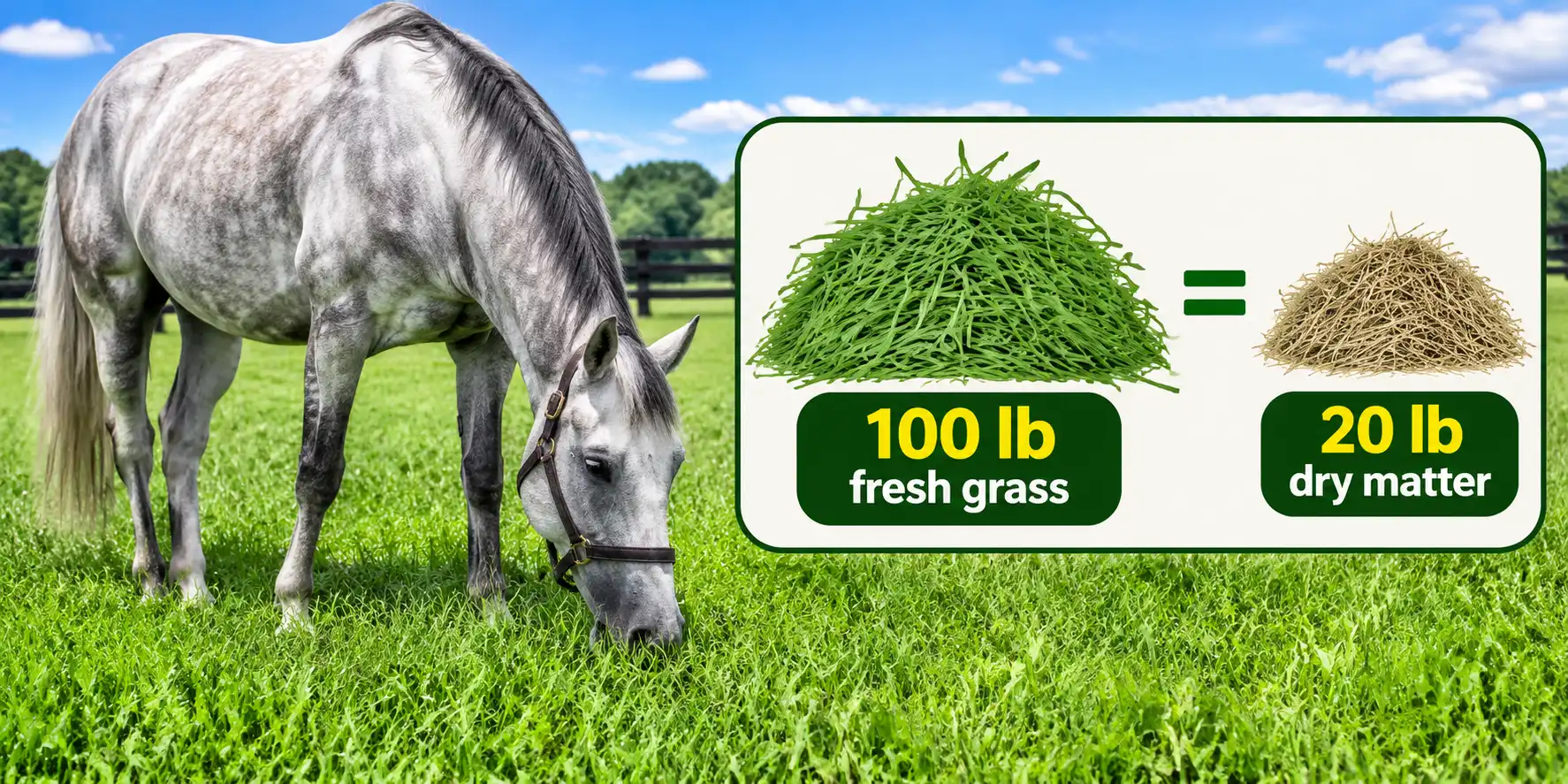
A horse on pasture eats the same 2 percent of body weight in dry matter. The difference is that grass is mostly water. Alabama Cooperative Extension puts fresh, immature pasture near 80 percent moisture, against about 10 percent for hay.
That changes the arithmetic. A 1,000 pound horse eating 20 pounds of dry matter from lush pasture takes in about 100 pounds of fresh grass.
Short turnout also limits intake less than most owners expect. University of Tennessee Extension summarized research where ponies ate 0.8 percent of body weight in just three hours of grazing. That is close to half a day’s ration. In the same work, a grazing muzzle cut intake by 85 percent.
So cutting turnout from all day to a few hours may not slim down an easy keeper. A muzzle often does more.
Pasture quantity matters too. A thin, overgrazed paddock can’t supply a full day of forage, and the horse needs hay to make up the gap. Plan acres per horse with the same stocking rate method used for cattle, using your own forage production.
How Much Water Does a Horse Drink a Day?
A 1,000 pound horse at maintenance drinks 6 to 10 gallons of water a day, per University of Tennessee Extension. That figure roughly triples with heat and hard work.
Tennessee’s table, adapted from NRC data, gives these ranges for a 1,000 pound horse:
| Horse’s situation | Outside temperature | Water per day |
|---|---|---|
| Maintenance | 68°F | 6 to 8 gal |
| Maintenance | 86°F | 11 to 14 gal |
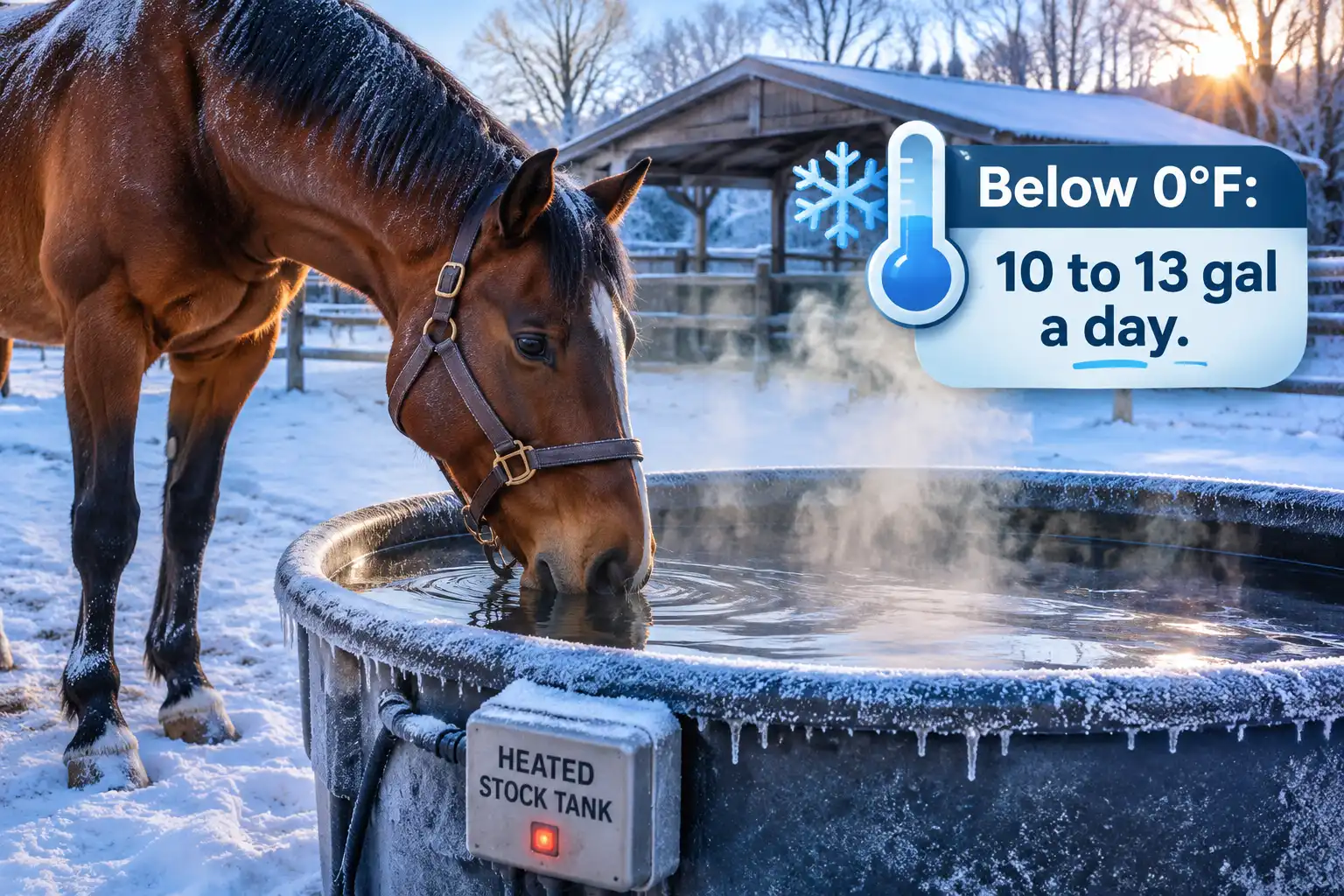
| Maintenance | Below 0°F | 10 to 13 gal |
| Late pregnancy | 68°F | 7 to 9 gal |
| Nursing mare | 68°F | 14 to 21 gal |
| Moderate exercise | 68°F | 10 to 12 gal |
| Moderate exercise | 95°F | 19 to 24 gal |
Notice the cold row. A horse in subzero weather still needs 10 to 13 gallons. Tennessee Extension adds that cold weather tends to cut water intake even as the requirement rises. So keep tanks open with a heater or de-icer, and check them daily.
Diet shifts the figure too. Hay is dry, while lush pasture is mostly water, so a hay-fed horse drinks more.
Now scale it up. Four horses being ridden in 95°F heat can drink close to 100 gallons a day between them. Size tanks and refill schedules for that day, not an average one.
Salt and Minerals for Horses
Horses need salt every day, and forage alone rarely covers it. Virginia Tech Extension notes that sodium sits below requirements in most horse feeds. It says exercising horses should take in 1 to 2 ounces of salt per day. It also recommends free-choice trace mineral salt for horses.
Salt also drives thirst. That matters most in winter, when horses drink less. Offer it loose or as a block, and check that it actually goes down.
Buy salt and mineral labeled for horses, not for another species. Cattle minerals and feeds are the biggest risk. Some carry ionophores such as monensin, which help cattle but are deadly to horses. Kansas State Research and Extension veterinarians warn that even an amount safe for cattle will kill a horse.
On mixed operations, keep cattle supplements, tubs, and medicated feeds where horses cannot reach them. Read every feed tag before it goes in a horse’s bucket.
What Will Horses Eat, and What Should They Never Get?
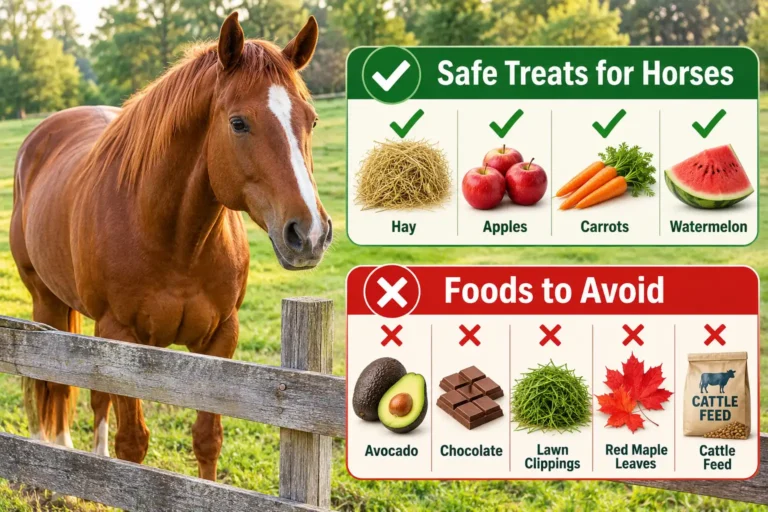
Horses will eat almost anything green or sweet, so the question is what they should eat. A sound equine diet draws from a short list:
- Grass pasture and grass hay
- Legume hay, mainly alfalfa, or a grass and alfalfa mix
- Grains and commercial horse feeds, in measured meals
- Fiber feeds such as beet pulp, hay cubes, and hay pellets
- Small treats such as apples and carrots
Some feeds and plants are dangerous. If you suspect a horse ate any of the following, call your veterinarian right away. Do not wait for signs.
- Lawn clippings and yard trimmings. University of Tennessee Extension flags clippings and ornamental trimmings as a common route for plant toxins.
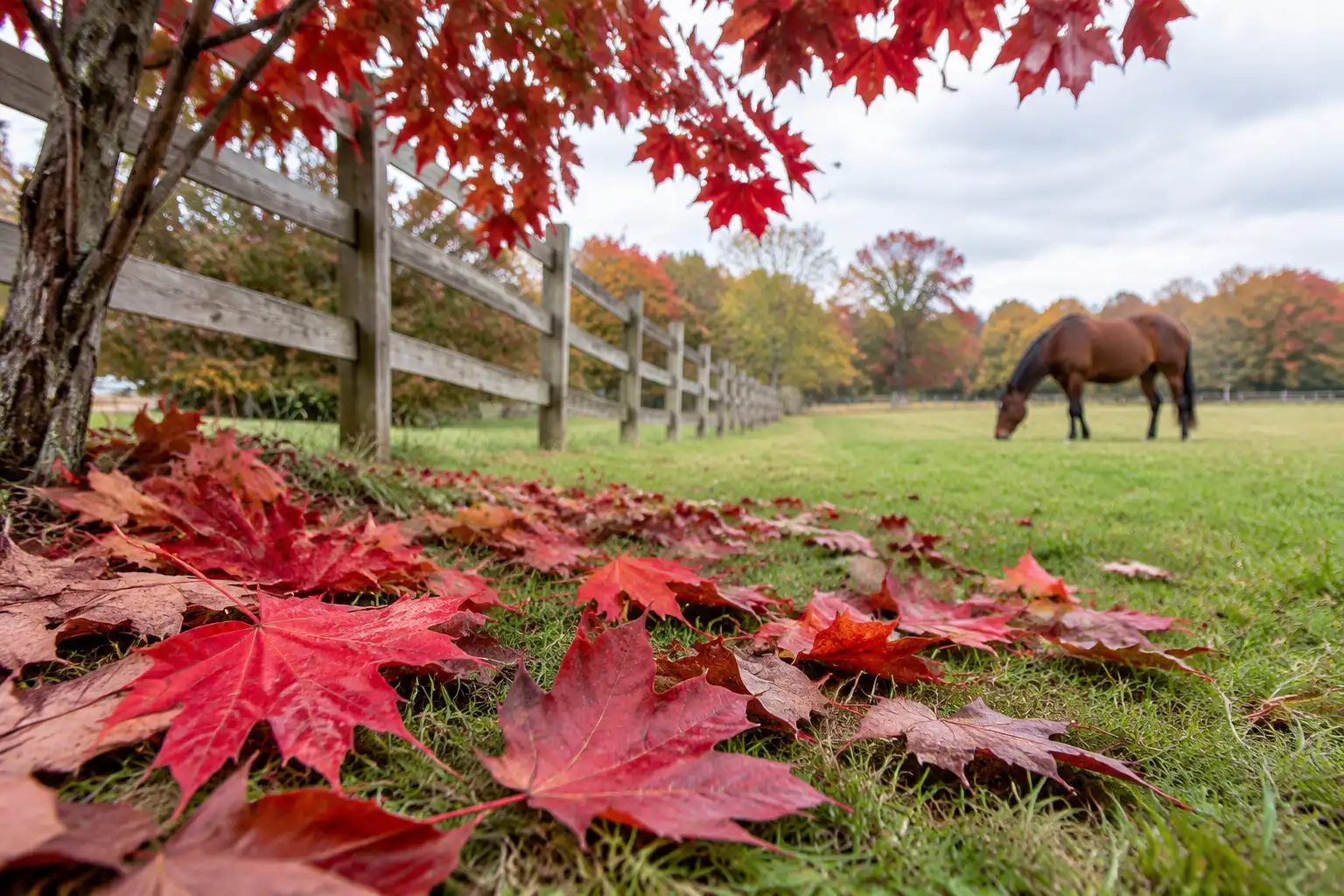
- Wilted or dried red maple leaves. Tennessee Extension reports death in 75 percent of red maple poisoning cases in horses.
- Yew. It stays toxic even when dried, per Tennessee Extension.
- Cattle feed with ionophores. See the salt and mineral section above.
- Moldy hay. Minnesota Extension advises against feeding it.
- Alfalfa with blister beetles. Minnesota Extension flags this risk in alfalfa hay.
Walk fence lines after storms. Wind can drop red maple branches into a paddock overnight.
Turning Daily Intake Into a Winter Hay Order
A daily figure only helps once it becomes a hay order. Work it through in four steps.
- Daily hay. Multiply body weight by 0.02. A 1,000 pound horse needs 20 pounds.
- Season length. Count the days you actually feed hay where you are, then multiply.
- Waste. Add an allowance based on how you feed.
- Bales. Weigh several bales, because labels and guesses run wide.
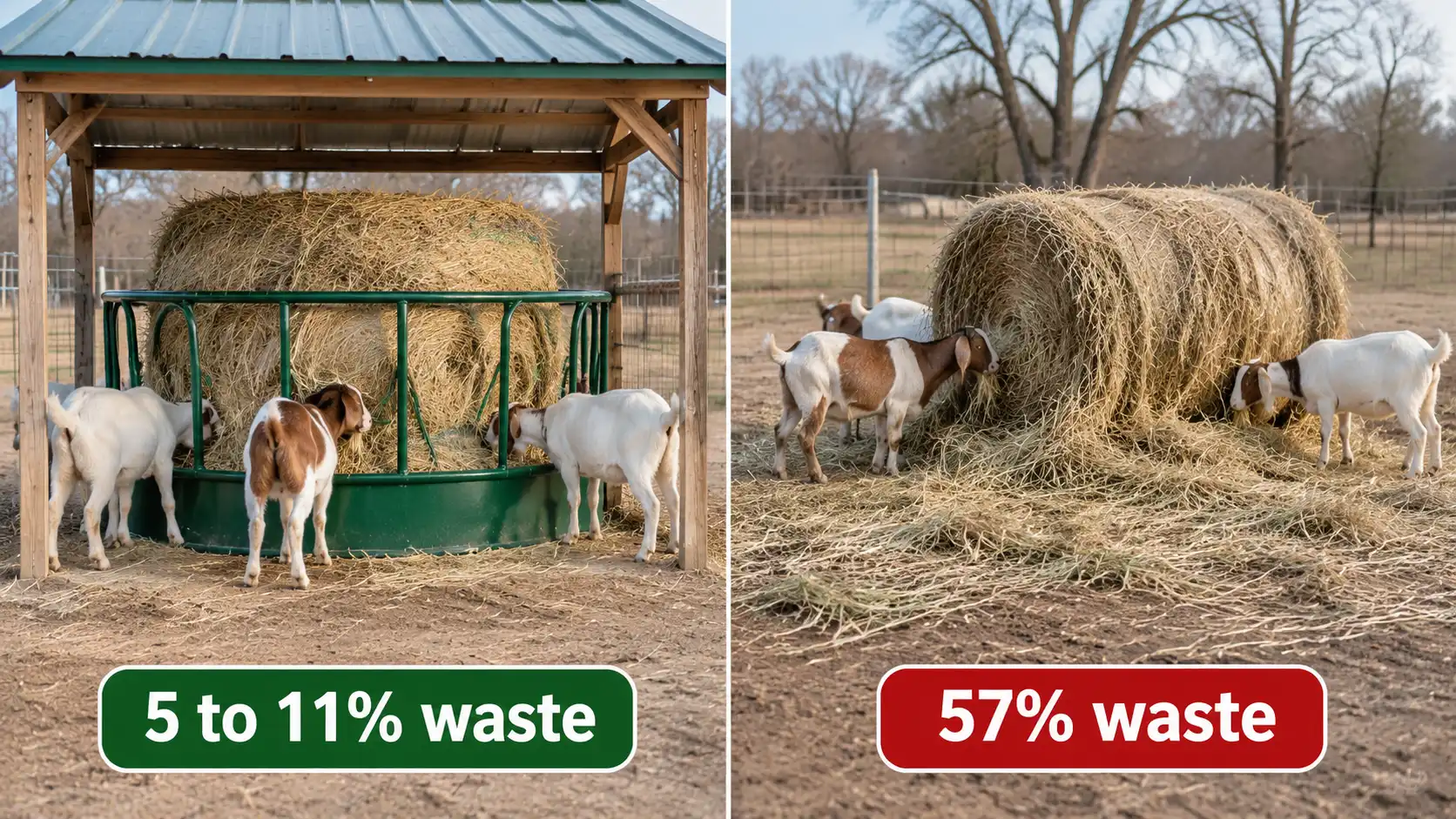
Waste is the step most people skip. University of Minnesota Extension research found horses wasted 57 percent of round bales fed without a feeder. Feeders cut that to 5 to 33 percent, and restrictive designs held it to 5 to 11 percent.
| 1,000 lb horse, 150 hay days | Amount |
|---|---|
| Daily hay | 20 lb |
| Season total | 3,000 lb |
| Plus 10% waste | 3,300 lb |
| 50 lb small square bales | 66 bales |
| 1,000 lb round bales | 3.3, so buy 4 |
For four horses, that becomes about 13,200 pounds, or 6.6 tons.
Feeders affect intake as well as waste. In the Minnesota study, horses ate 2.0 to 2.4 percent of body weight from feeders. Without one, they ate only 1.3 percent, and the herd lost weight.
If cattle share the hay supply, budget each species separately. A cow’s daily hay intake is figured on a different body weight and digestive system.
Common Feeding Problems and What They Usually Mean
Weight loss, colic signs, or a sudden drop in appetite need a veterinarian first. The causes below are management checks to make alongside that call. They are not a diagnosis.
| Problem | Common management cause | What to check |
|---|---|---|
| Losing weight on “enough” hay | Feeding by flake, not pound; poor hay; waste | Weigh flakes; test hay; add a feeder |
| Thin horse in a group | Pushed off feed by herd mates | Watch feeding time; add feeding stations |
| Gaining weight on hay alone | Rich hay, long pasture hours, treats | Hay test; grazing muzzle; cut treats |
| Leaving hay uneaten | Mold, dust, or very stemmy hay | Inspect bales; switch lots |
| Dropping wads of hay | Dental wear or pain | Book a dental exam |
| Drinking less in winter | Icy or very cold water | Tank heater; daily checks |
| Bolting grain | Meal too large | Split into smaller meals |
Most of these trace back to one habit: feeding by volume instead of weight. A flake from one bale can weigh twice what a flake from another weighs. A hanging scale settles the question in a minute.
FAQs About Horse Eat a Day
How many flakes of hay does a horse eat a day?
There is no fixed number, because flake weight varies widely between balers and hay types. Weigh a few flakes on a hanging scale, then feed enough of them to reach about 2 percent of the horse’s body weight.
Can a horse live on pasture alone?
Yes, an idle adult horse can meet its needs on good pasture plus salt and water. Thin, dormant, or overgrazed pasture falls short, so add hay whenever grass height and growth drop off.
Should a horse have hay in front of it all day?
Free-choice hay suits many horses, since they naturally graze for long stretches. Easy keepers often overeat that way, so a slow-feed hay net or measured meals keep each horse’s intake near the target.
How much grain does a horse need a day?
Many idle adult horses need no grain at all if their hay is good. Working horses get it in measured meals, at no more than 0.3 to 0.4 percent of body weight per feeding, per Minnesota Extension.
How often should you feed a horse?
Feed hay at least twice a day, and more often if the horse is stalled. Split any grain into small meals, because a horse’s stomach handles small, frequent feedings far better than one large one.
Do horses eat more in winter?
Often yes, because a horse burns extra energy staying warm in cold, wet, or windy weather. Extra hay is the safest way to cover that need, since fiber fermentation in the hindgut produces body heat.
How long does a round bale last one horse?
A 1,000 pound round bale lasts one 1,000 pound horse about 45 days in a restrictive feeder. Without a feeder, waste near 57 percent cuts that to roughly three weeks, per University of Minnesota research.
Putting This Into Practice
Weigh the horse, then weigh the hay. Start at 2 percent of body weight in forage and adjust by body condition every few weeks. Add grain only when work, growth, or lactation calls for it, and keep each meal small.
Keep water open and salt in reach year-round. Then turn the daily figure into a season’s hay order with a realistic waste allowance. For related guides on feeding, health, and handling, browse our horse care section.