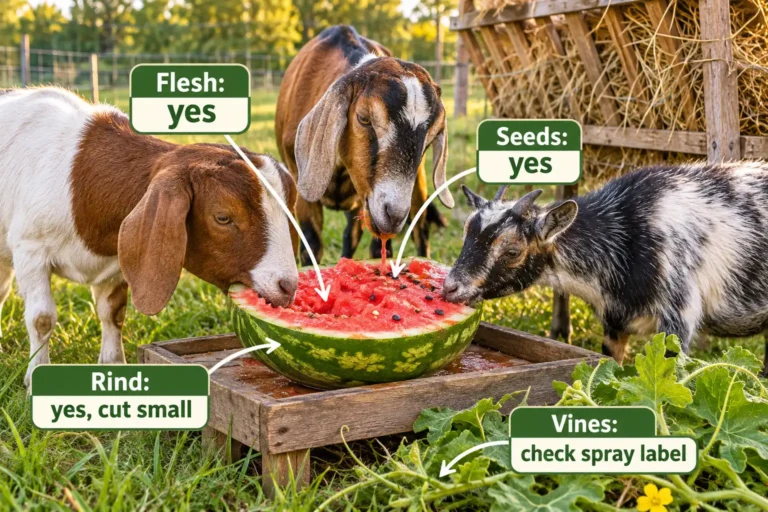
Do Goats Eat Apples? Safe Amounts, Seeds, Crab Apples and Apple Trees

Do goats eat apples? Eagerly, and that eagerness is the problem. A few slices make a good treat. A windfall pile, a crab apple tree, or an unprotected orchard can mean a sick goat or a dead tree, and each carries a different risk.
Yes, goats eat apples, and apples are safe as a treat when sliced, cored, and fed a few pieces at a time. Seeds and wilted leaves contain cyanogenic compounds, and unlimited windfalls can cause rumen acidosis.
Do Goats Eat Apples Safely?
Yes. Goats eat apples readily, and the flesh and skin are safe for them in treat amounts. NC State Extension’s plant toolbox lists apple and crab apple fruit (genus Malus) as edible, but it flags the seeds, and possibly the leaves, for amygdalin, a compound that releases cyanide.
That leaves three things to manage. First, portion: apples are sweet and wet, and sugar ferments fast in a goat’s rumen. Second, shape: a whole apple or a firm chunk can lodge in the throat. Third, access: a goat that finds a windfall pile will not stop on its own.
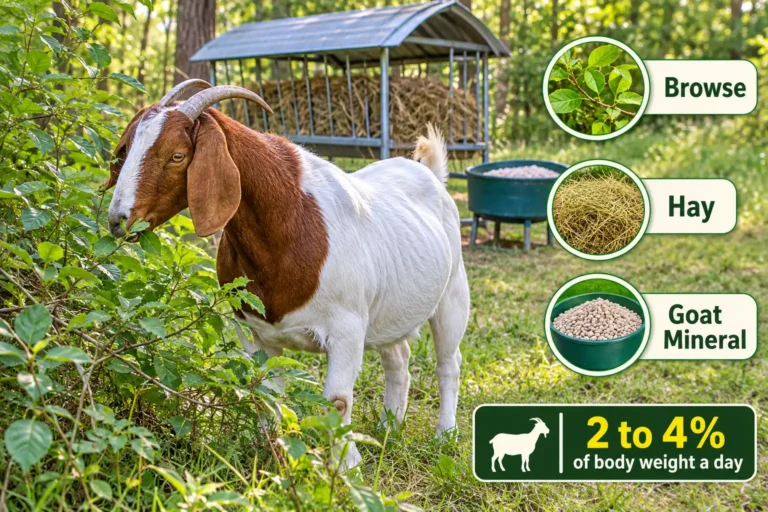
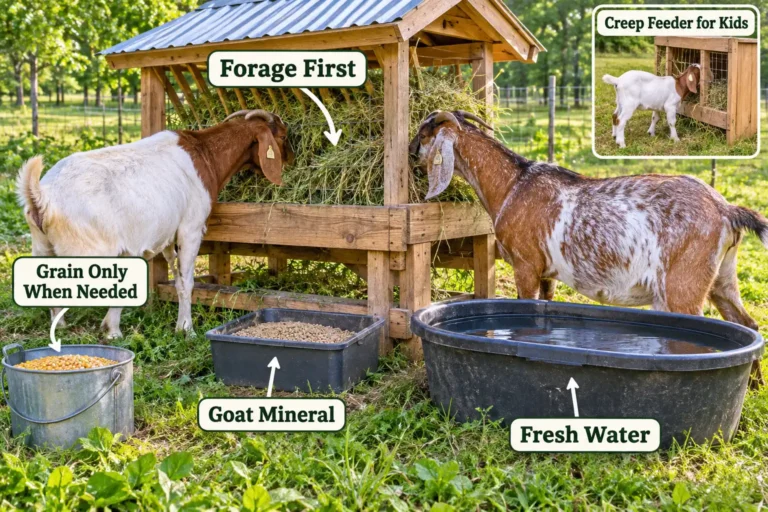
Hay, browse, and a goat mineral make up the core diet for raising goats. Apples sit on top of that diet as a treat, never in place of it.
If a goat has already gorged on apples, or is drooling, bloating, or staggering, call a large animal veterinarian before anything else. Several conditions look alike at the start, and the treatment differs.
How Many Apples Can a Goat Eat?
A treat portion is a few thin slices per goat. No extension publication sets an apple limit for goats, so the research here is thin, and the most useful figure comes from the closest published guidance.
UC ANR’s guide to feeding cull pears, written by a UC Cooperative Extension livestock advisor, starts cattle at 2 to 3 pounds of fruit a day and sheep and goats at about half that. It also says to feed dry forage first, because cull fruit in large amounts is very laxative. For one goat, half the cattle figure is 1 to 1.5 pounds a day. A medium apple weighs roughly 0.4 pound, so that is about two to four apples.
Treat that figure as a ceiling for goats being worked up onto cull fruit as feed, not as a daily treat. It was also published for pears, the nearest sweet, wet fruit with a goat figure attached.
| Goats in the pen | Starting ceiling for goats, cull fruit (lb/day) | About this many medium apples |
|---|---|---|
| 1 | 1 to 1.5 | 2 to 4 |
| 4 | 4 to 6 | 10 to 15 |
| 10 | 10 to 15 | 25 to 38 |
| 25 | 25 to 38 | 60 to 95 |
Small breeds such as Nigerian Dwarf, and young kids, get less. Count any fruit inside the herd’s daily feed plan, not on top of it.
How to Prepare Apples for Goats

Wash, core, slice, and feed after hay. Each step closes off one risk.
- Wash the fruit. NC State Extension advises gathering fruit only where trees have not been treated with pesticides. Washing removes dirt and some surface residue, but if you do not know a tree’s spray history, skip its fruit.
- Remove the core and seeds. The seeds carry the amygdalin, and cutting them out takes seconds.
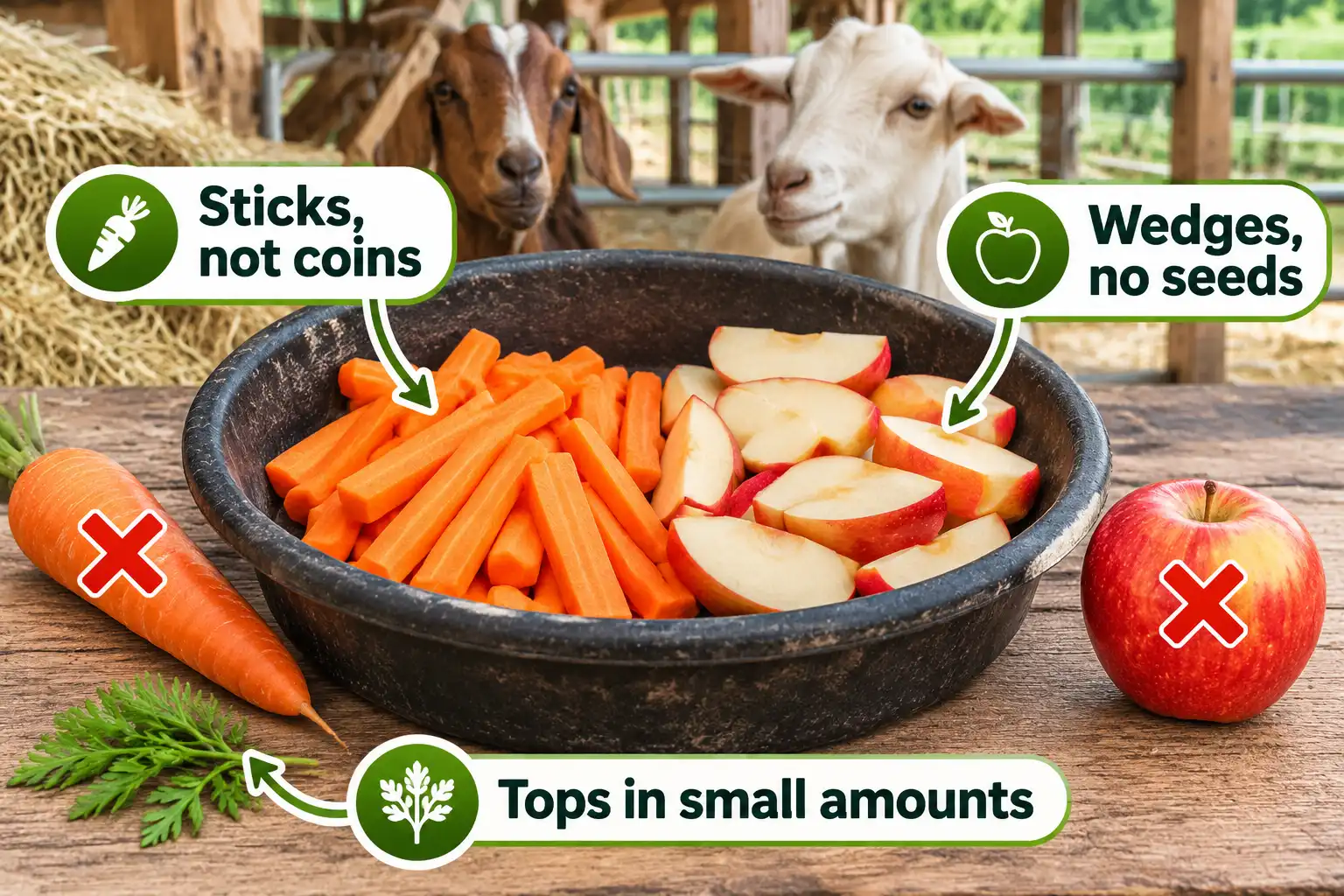
- Slice thin. Thin wedges break apart when chewed. Whole apples and round chunks are the shapes that lodge in a goat’s throat, so cut smaller still for kids and small breeds.
- Feed hay first. UC ANR recommends dry forage before fruit, so goats do not fill up on sugar.
- Spread the slices out. In a group, a dominant goat takes the whole bucket. Hand-feed, or scatter slices along a long trough so each goat gets a share.
- Skip spoiled fruit. UC ANR is direct: spoiled fruit should not be fed. That covers moldy, rotten, and fermenting apples.
Are Apple Seeds Poisonous to Goats?
Apple seeds contain amygdalin, which releases hydrogen cyanide when the seed is crushed or chewed. NC State Extension rates the genus as low severity, so the few seeds in a stray slice are unlikely to harm a goat.
Volume is the concern. NDSU Extension notes that ruminants, goats included, are more susceptible to prussic acid (cyanide) poisoning than horses, because rumen microbes release it from plant material. A pile of cores, a bucket of cider pressings, or a tree’s worth of crab apples swallowed whole delivers far more seed than a hand-fed slice.
No published trial sets a seed threshold for goats. That gap is the reason to remove seeds as a habit rather than count them.
NDSU also describes cyanide poisoning as fast. Signs can appear within 15 to 20 minutes to a few hours, and include excitement, muscle tremors, labored breathing, staggering, and collapse. Those signs overlap with other emergencies, so a goat showing them needs a veterinarian immediately, not a home remedy.
Do Goats Eat Crab Apples?

Yes, goats eat crab apples, and a loaded tree draws them like a feed bunk. Crab apples belong to the same genus as eating apples, Malus, so NC State Extension’s warning about seeds and leaves applies to them as well.
Three things make crab apples riskier than a sliced apple:
- Seeds go down with every fruit. Many crab apples are tiny; NC State describes Hall crabapple fruit at 0.25 to 0.3 inch across. Nobody cores those, so each one arrives with its seeds.
- Bigger varieties are choke-sized. Larger crab apples are hard and round, the shape that lodges in a goat’s throat.
- The supply lasts. NC State notes some crab apple fruit stays on the tree all winter, so access does not end at leaf drop.
Landscape crab apples also carry the diseases NC State lists for the genus, including apple scab, cedar apple rust, and fire blight, and many get sprayed for them. If you do not know a tree’s spray history, keep goats off it.
A few crab apples are a minor risk for a healthy adult goat. The real problem is a goat penned under a heavy tree in fall, so fence the drip line or rake drops daily.
Do Goats Eat Apple Trees?
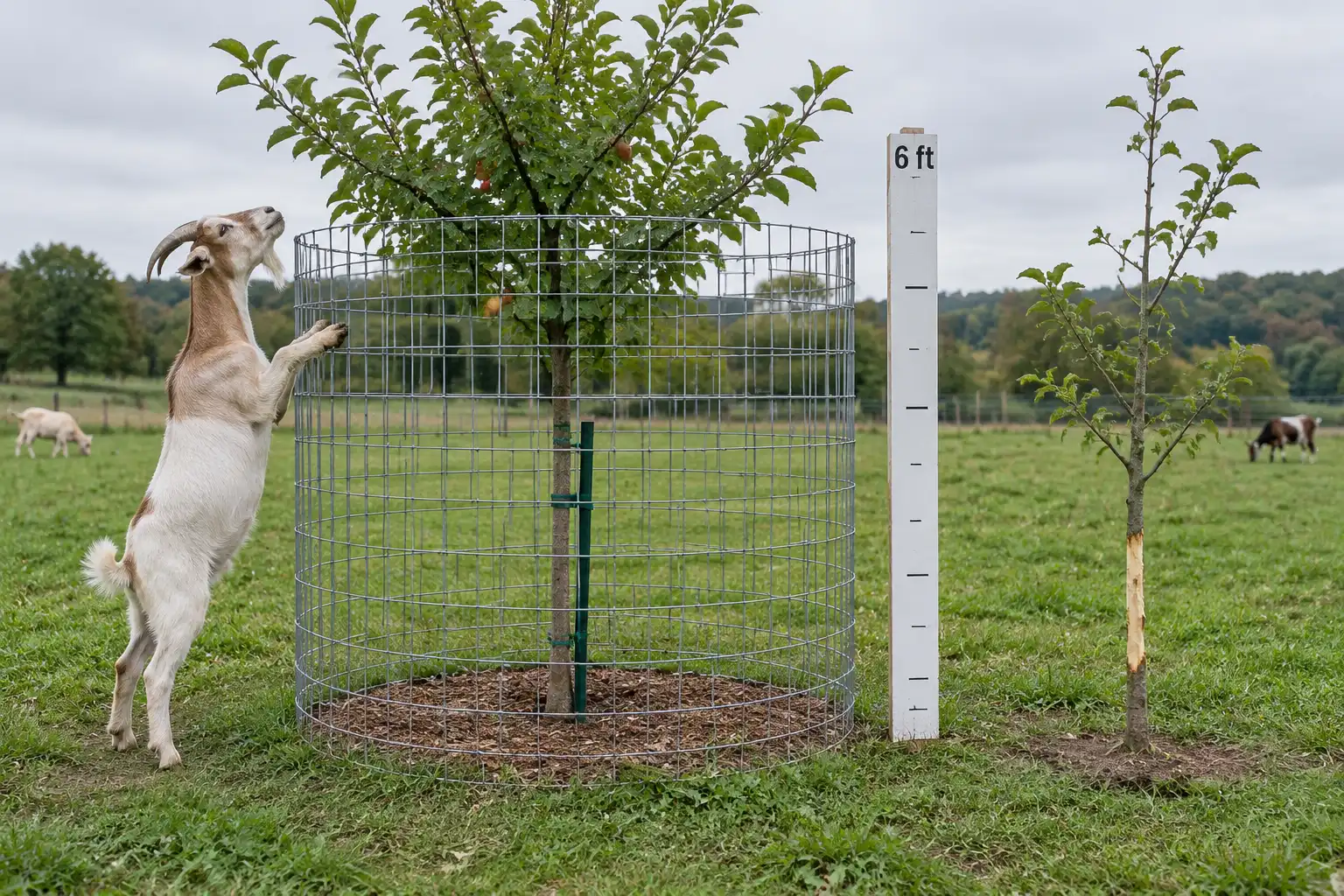
Yes. Goats eat apple leaves, twigs, and bark, and they can kill a young apple tree in one season. Langston University’s goat research notes that goats stand on their hind legs and reach more than 6 feet into browse plants, so a dwarf or semi-dwarf tree sits entirely within reach.
Bark and Girdling
Langston’s vegetation work found goats pull strips of bark from honey locust and black locust, killing even very tall trees. Apple is not on Langston’s list, and no extension trial we found measures how hard goats strip apple bark. The mechanism is the same, though. Bark removed all the way around the trunk cuts off the tree’s supply line, and the tree dies.
Leaves and Pruned Branches
NC State Extension lists the stems, leaves, and seeds of Malus as containing cyanide, and notes they are particularly toxic while wilting. That makes the risky moment predictable: right after pruning, or after a storm drops limbs. Rake prunings out of goat reach the same day. Fresh leaves browsed off a living tree are a smaller concern, though published data on goats and apple foliage is limited.
Protecting Apple Trees From Goats
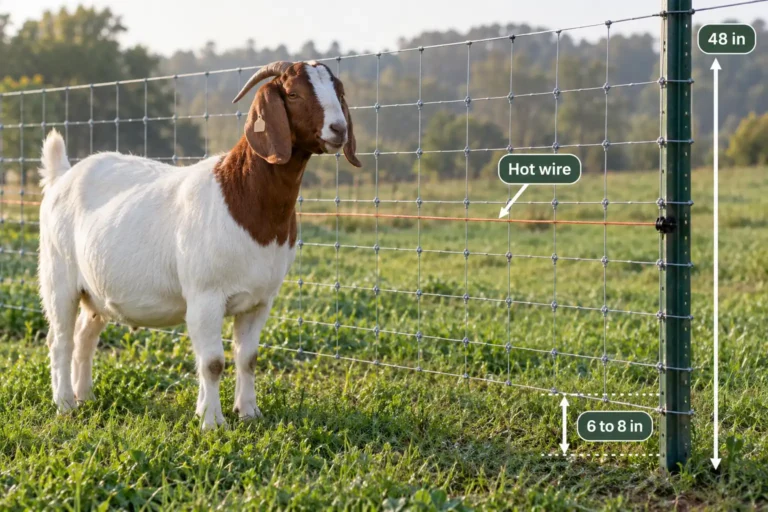
Fence goats out of the orchard, or cage each tree. A cage tight to the trunk protects bark but not branches, because goats reach over it. So set each cage wide and tall enough that a goat on its hind legs cannot reach past it; Langston’s 6 foot reach is the figure to beat. For perimeter fencing, check the fence height goats respect before you buy wire.
Grazing Goats in an Orchard
Some producers graze goats under mature trees to control weeds. If you try it, read the spray label first, because many orchard pesticide labels carry grazing or feeding restrictions, and the label governs. Then prune lower limbs above goat reach, rake windfalls, and keep stays short with rotational grazing so the goats move on before they turn to bark.
Do Goats Eat Carrots and Apples?
Yes, goats eat carrots and apples, and carrots are the easier treat to manage. Washington State University Extension describes carrot leaves, stems, and roots as highly palatable to livestock. Carrots also run 85 to 90 percent moisture, so a goat fills up on water as much as feed.
Carrot tops need one caution. WSU notes the leaves can accumulate high nitrate levels and that ruminant intake should be watched, so feed tops to goats in small amounts only.
| Factor | Apples for goats | Carrots for goats |
|---|---|---|
| Part to remove | Core and seeds | Nothing; limit the tops |
| Main risk | Sugar load, seeds | Choke on whole roots, nitrate in tops |
| Best cut | Thin wedges | Lengthwise sticks |
| Choke shapes | Whole fruit, round chunks | Whole carrots, thick coins |
| Storage | Fresh only; skip soft or moldy fruit | Topped carrots keep 7 to 9 months at 32°F and 99% humidity (WSU) |
Feed both from the same treat allowance. A few apple slices plus a carrot stick is a treat, while a bucket of each is a meal the rumen was not ready for.
Windfall Apples and Rumen Acidosis
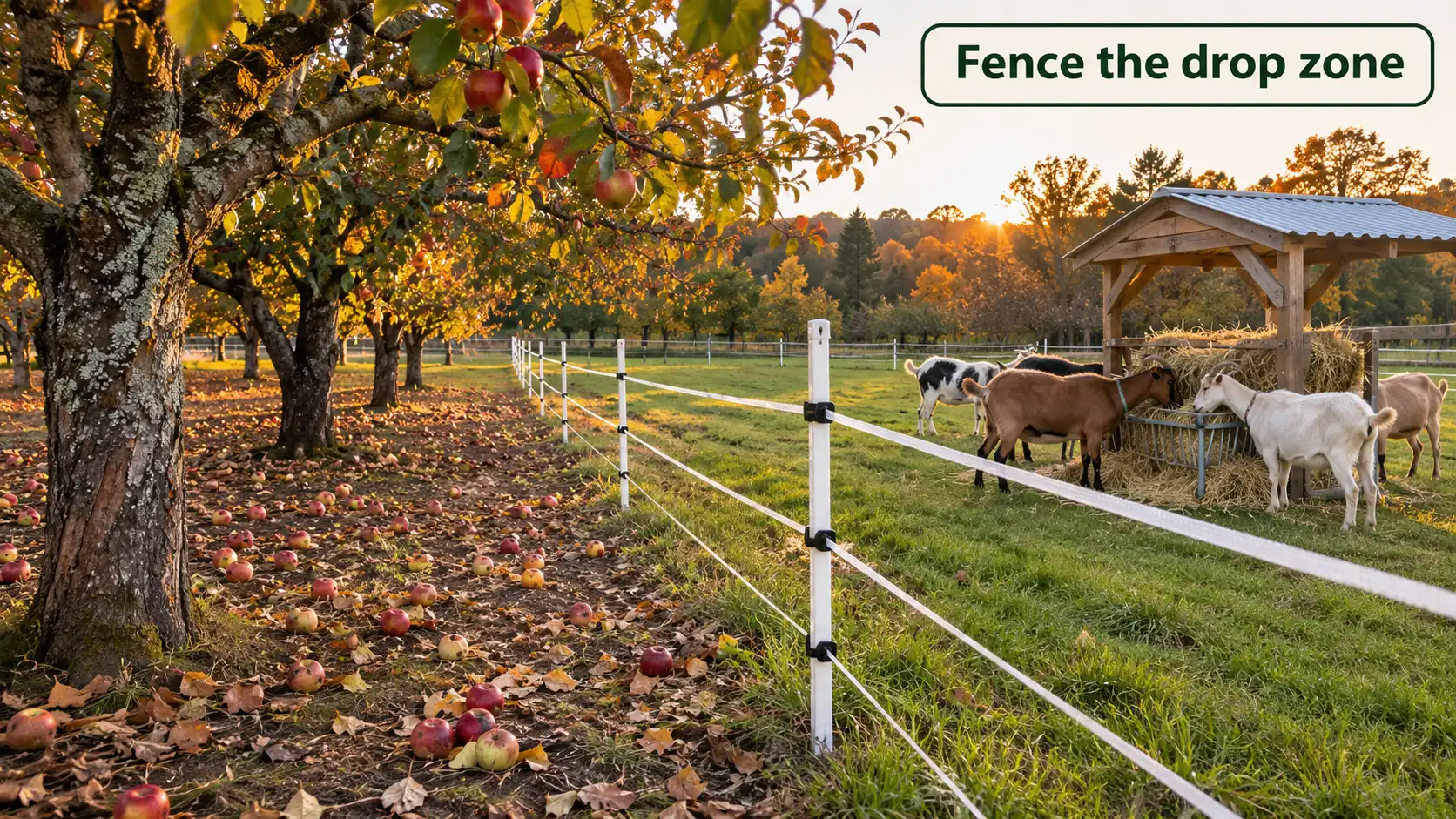
Unlimited windfalls are the most common way apples make goats sick. The Cooperative Extension goat resource at eXtension names windfall apples and bags of grain as the carbohydrate sources to keep goats away from.
Acidosis, also called toxic indigestion, follows a heavy load of fermentable carbohydrate. eXtension lists signs including depression, loss of appetite, bloat, no cud chewing, staggering, diarrhea or no manure, muscle twitching, and teeth grinding. Severe cases can be fatal.
Fallen fruit adds a second problem. Windfalls bruise, rot, and ferment on the ground, and UC ANR says spoiled fruit should not be fed.
To keep windfalls away from goats:
- Fence the drop zone under fruiting trees from first drop to last.
- Pick up drops daily if goats share the space.
- Never dump a load of cull apples in a pen; work goats up slowly, as UC ANR describes for cull fruit.
- Keep grass hay in front of goats through fruit season.
A goat that got into a windfall pile warrants a veterinarian’s call even before signs show, because acidosis can keep building after the meal. Do not drench or dose on your own.
Warning Signs After a Goat Eats Apples
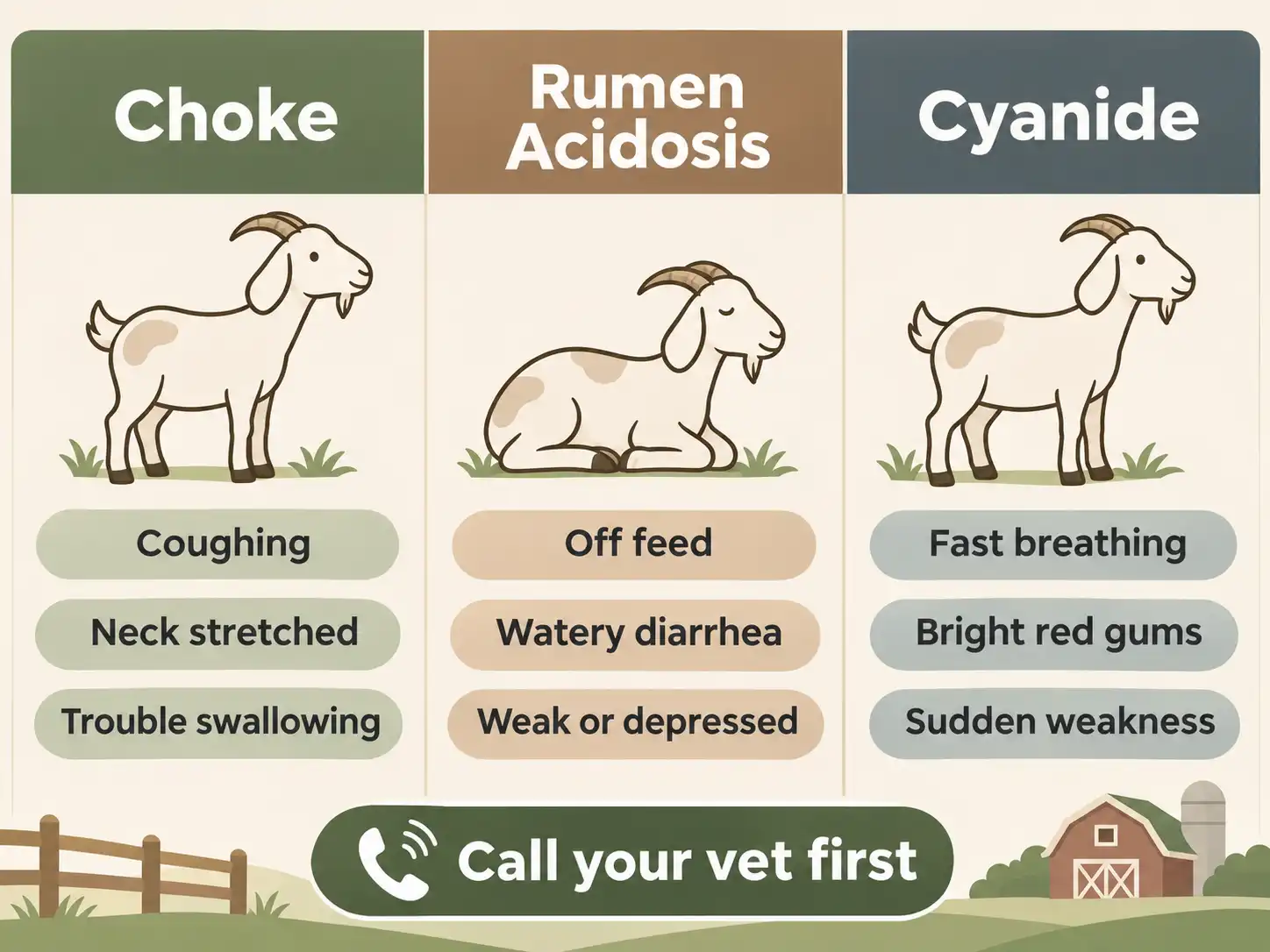
Choke, rumen acidosis, and cyanide poisoning are the three emergencies tied to apples, and each follows a different pattern. This table describes them; it does not diagnose. Several conditions present the same way, so a vet call comes before any treatment.
| Condition | Usual trigger | What it looks like |
|---|---|---|
| Choke | Whole apple, crab apple, or carrot chunk | Drooling, feed or saliva from the nose, coughing, repeated swallowing, swelling on the left side as gas builds |
| Rumen acidosis | Windfall pile or a large fruit load | Dullness, off feed, bloat, no cud chewing, staggering, diarrhea or no manure, teeth grinding (eXtension) |
| Cyanide poisoning | Large amounts of seeds or wilted leaves | Signs within 15 to 20 minutes to a few hours: tremors, labored breathing, staggering, collapse (NDSU) |
Choke carries a welfare warning. Pushing a hose or stick down a goat’s throat can tear the esophagus, so leave clearing a choke to your veterinarian. For broader guidance on herd emergencies, start with the site’s livestock health guides.
FAQs on Apples for Goats
Can baby goats eat apples?
Kids can taste apple once they are eating hay and solid feed, but their throats are small. Cut pieces thin and tiny, keep portions smaller than for adults, and skip fruit entirely for kids still mostly on milk.
Can goats eat apple peels and cores?
Peels are safe, so there is no need to peel apples for goats; wash them instead. Cores hold the seeds, so cut the core out and discard it rather than tossing it into the pen.
Can goats eat dried apples or applesauce?
Plain dried apple pieces work as a small training treat, though drying packs the sugar into a smaller bite. Skip applesauce, pie filling, and anything with added sugar or spices, because goats gain nothing from them.
Are green or sour apples safe for goats?
Unripe and tart apples follow the same rules as ripe ones: slice them, remove the seeds, and keep portions small. Hard green fruit is firmer, so cut it thinner to lower the choke risk.
Can goats eat apple leaves off the tree?
Goats browse apple leaves readily, and a few fresh leaves are a minor concern. Wilted leaves from pruned or storm-broken branches are the bigger risk, since NC State Extension notes Malus foliage is most toxic while wilting.
Can sheep share the same apple treats as goats?
Yes. UC ANR’s cull fruit guidance groups sheep and goats together at about half the cattle starting amount, and the same slicing, seed removal, and windfall rules apply to both species.
Putting This Into Practice
Feed apples as a treat: washed, cored, sliced thin, after hay, a few pieces per goat. Keep goats away from windfall piles, crab apple trees in fruit, and fresh prunings. Protect young apple trees with fencing or cages that clear a goat’s 6 foot reach. If a goat gorges, chokes, or staggers after apples, call your large animal veterinarian first.