Can Goats Eat Oranges? Safe Portions, Peels, and Mandarins
Can goats eat oranges? They can, and many will eat the peel too. The useful question is how much fruit sugar a goat’s rumen handles before trouble starts. This guide covers flesh, peels, mandarins, and canned fruit, with portion math from one doe to a full herd.
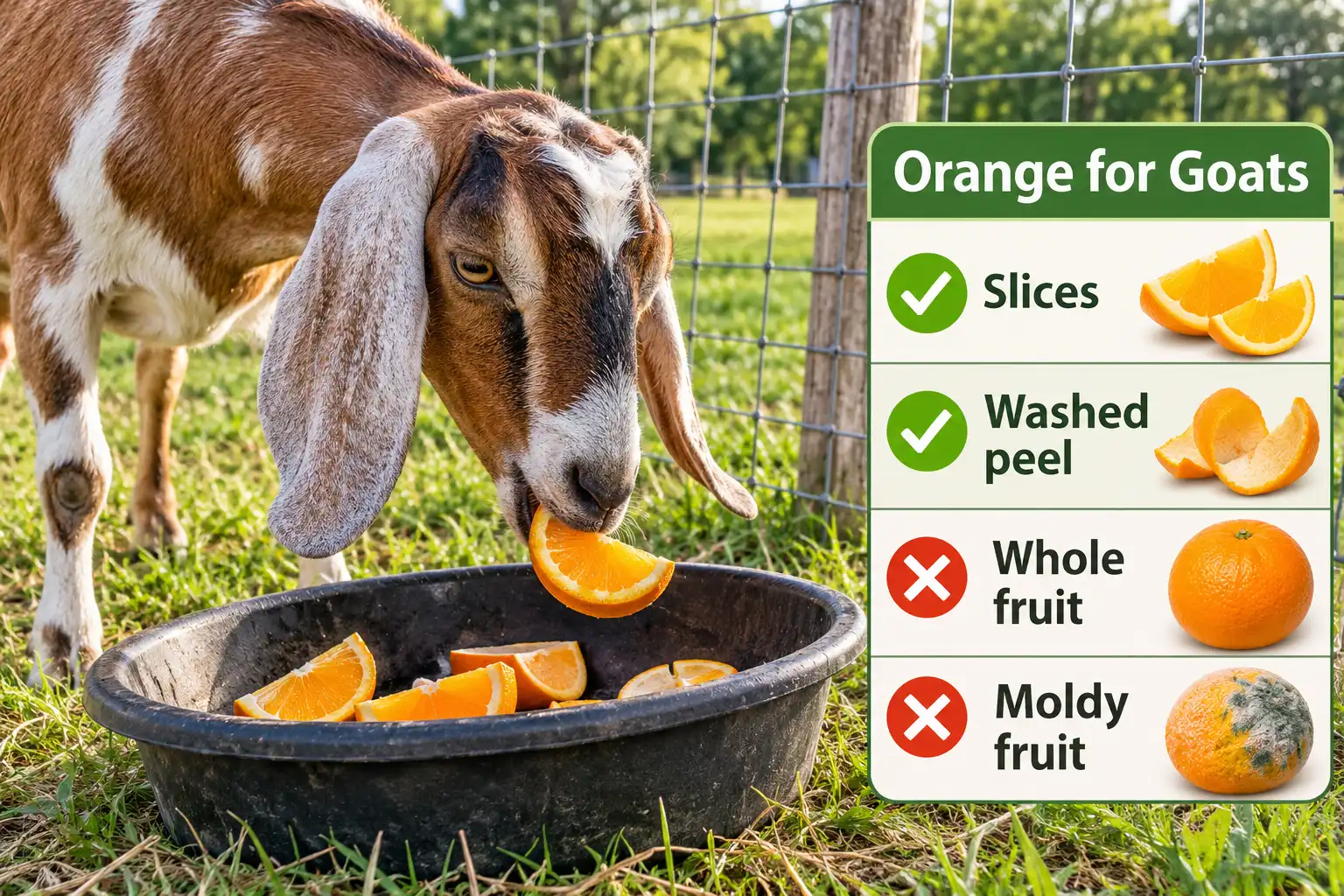
Yes, goats can eat oranges as an occasional treat. Offer a few slices per goat, with washed peel if they want it, and never a pile. Oranges are mostly water and sugar, so forage stays the diet.
Can Goats Eat Oranges Safely?
Yes. Oranges are not toxic to goats. Every part of the fruit (flesh, peel, and seeds) is the same material the feed trade sells as citrus pulp. So the risk is how much, not what.
Goats are ruminants. Their rumen microbes ferment fiber slowly and steadily, and most of raising goats well comes back to keeping that fermentation steady. A sudden load of sugar, however, feeds a different set of microbes, and those produce acid.
The Cooperative Extension goat resource at eXtension ties acidosis to rations high in carbohydrate. It also names unlimited access to windfall fruit as something to prevent.
Therefore, the safe pattern is small, occasional, and spread out. One orange split between two goats is a treat. A dumped box of cull fruit is a feed change nobody planned.
What Oranges Add to a Goat’s Diet
Mostly water and sugar, with some fiber and very little protein. USDA FoodData Central lists raw navel oranges at 8.5 grams of sugar and 2.2 grams of fiber per 100 grams, with under 1 gram of protein. For a goat, that makes an orange an energy snack rather than a feed.
Vitamin C is the usual selling point, but it does not apply here. Unlike people, goats make their own vitamin C in the liver. A healthy goat has no gap for an orange to fill.
Still, a slice has uses. Goats like the taste, so it works as a reward for leading, loading, or stepping onto a milk stand. Count it as handling help, not nutrition.
How Much Orange Can a Goat Eat?
One orange per adult goat, cut into slices and offered a few times a week, is a sensible ceiling. No US extension service publishes an orange allowance for goats. So that ceiling is our editorial working limit, built from intake data rather than a feeding trial.
The math starts with daily intake. Oklahoma State Extension puts goat dry matter intake at 2 to 4 percent of body weight. University of Nebraska-Lincoln Extension gives 2 to 5 percent for a mature doe. Both ranges are wide because intake shifts with size, pregnancy, lactation, and growth.
For a 130 pound doe, the Oklahoma State range works out to about 2.6 to 5.2 pounds of dry matter a day.
Next, the orange. USDA FoodData Central uses a 154 gram serving for a navel orange, about a third of a pound. Roughly 87 percent of it is water. That leaves close to 0.045 pounds of dry matter and about 13 grams of sugar per orange.
In short, one orange is about 1 to 2 percent of that doe’s daily dry matter. A single orange is small. Trouble starts when portions stack up.
Scaling Oranges to a Doe’s Daily Ration
| Amount offered | Fresh weight | Dry matter | Sugar | Share of a 130 lb doe’s daily dry matter |
|---|---|---|---|---|
| 1 navel orange | 0.34 lb | 0.045 lb | 13 g | about 1 to 2% |
| 3 navel oranges | 1 lb | 0.13 lb | 39 g | about 3 to 5% |
| 10 lb of cull oranges | 10 lb | 1.3 lb | 386 g (0.85 lb) | about 25 to 50% |
| 20 lb of windfall fruit | 20 lb | 2.6 lb | 771 g (1.7 lb) | about 50 to 100% |
The table uses USDA navel orange composition and the Oklahoma State intake range. To run it for your own goat, multiply her weight by 0.02 and by 0.04 to get her daily dry matter range. Then divide 0.045 by each figure to see what one orange represents.
The bottom two rows carry the risk. One goat under a fruiting tree, or at a dumped bag of culls, can take in half her day or more as sugar water. Spread across ten goats, 20 pounds is still about six oranges each, and goats never share evenly. For a herd, count treats inside your normal feed and water planning, not on top of it.

Can Goats Eat Orange Peels?
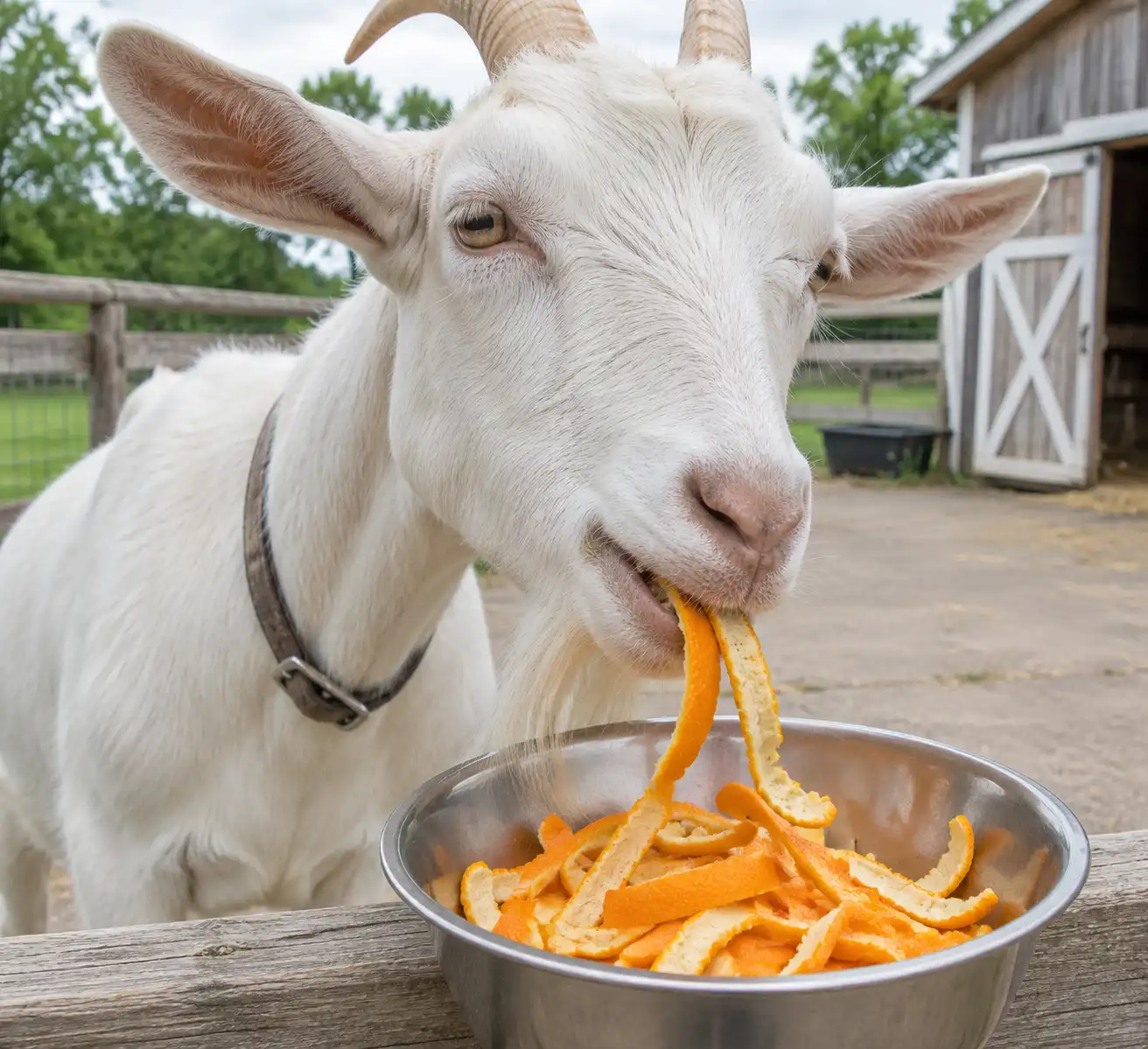
Yes, goats can eat orange peels. Peel is tougher and more bitter than the flesh, so some goats eat it eagerly and others leave it. Either response is normal.
Peel is not an unusual feed, either. The feed trade sells dried citrus pulp (the peel, pulp, and seeds left after juicing) as a ruminant feed. UF/IFAS Extension reports that Florida produced about three million tons of citrus pulp in 2011, mostly for ruminant diets.
However, the feeding data behind it comes from cattle. UF/IFAS tests Florida citrus pulp for cattle at 68 to 75 percent TDN, with 5 to 9 percent crude protein and only 0.13 percent phosphorus on a dry matter basis. In other words, peel adds energy and little else.
Published US research on fresh orange peel fed to goats is thin. Until that changes, treat peel like the flesh: a small extra, not a ration.
Can Goats Eat Orange Peelings?
Yes. Orange peelings are the same thing as peels, so the same limits apply. The practical difference is form. Kitchen peelings arrive as thin strips, which goats chew more easily than a whole half rind.
Collect peelings fresh and feed them the same day. Peel left in a warm bucket molds quickly, and moldy fruit is off the menu. Also, keep peelings out of any compost pile goats can reach, since compost mixes in scraps that are not safe for them.
Wax and Fungicide on Store-Bought Peel
Store-bought oranges usually carry a wax coating, and packers treat many of them after harvest with fungicide to stop mold. UF/IFAS postharvest guidance names imazalil and thiabendazole among those treatments. It also notes that federal rules require shipping containers of fungicide-treated citrus to declare the chemical and why it was used.
Those treatments sit on the rind. A water rinse removes dirt, but it does not strip wax. So rank peel sources this way:
- Unsprayed backyard fruit
- Organic fruit
- Conventional fruit, scrubbed, in small amounts
If you buy cull fruit by the box from a packing shed, read the carton label first. When it lists a fungicide, feed the flesh and discard the peel.
Can Goats Eat Mandarin Oranges?
Yes. Mandarins, tangerines, clementines, and satsumas follow the same rules as oranges, with two small differences.
First, they run sweeter. USDA FoodData Central lists raw tangerines (mandarin oranges) at 10.6 grams of sugar per 100 grams, against 8.5 grams for navel oranges. That is about a quarter more sugar by weight, so trim the portion a little.
Second, the peel is thin and loose. Goats chew it easily, and it goes down more readily than a thick navel rind. Still, wash it the same way, because mandarins go through the same postharvest wax and fungicide treatments.
Small fruit is also easy to gulp whole. Break each mandarin into segments instead of tossing it in intact.
What About Canned Mandarin Oranges?
Skip them. FoodData Central entries for mandarins canned in light syrup run about 15 to 16 grams of sugar per 100 grams, nearly double a fresh navel orange. Juice-packed cans sit closer to fresh fruit, but the liquid still adds sugar with no fiber.
A few stolen segments are not an emergency. Just do not make canned fruit a habit.
Oranges, Peels, and Mandarins at a Glance
| Form | OK for goats? | Main concern | How to offer |
|---|---|---|---|
| Orange flesh | Yes, as a treat | Sugar load | A few slices per goat |
| Orange peel or peelings | Yes | Wax and fungicide residue | Thin strips from clean fruit |
| Orange seeds | Yes | None at treat amounts | No need to remove |
| Mandarin segments | Yes | About 25% more sugar than navels | Segments, not whole fruit |
| Canned mandarins | No | Syrup sugar | Skip |
| Orange juice | No | Sugar without fiber | Skip |
| Whole oranges | No | Choke risk | Always cut first |
| Moldy or fermented fruit | No | Mold, unpredictable fermentation | Throw it out |
Which Goats Should Skip Oranges
Most healthy adult goats handle a slice or two. These groups should get less, or none:
- Kids still on milk. Their rumen is not yet fermenting forage, so fruit adds risk with no benefit. Wait until they are weaned and eating hay and pasture well.
- Goats on heavy grain rations. Langston University advises keeping at least 12 percent crude fiber, or about half the diet as grass, browse, or hay, when goats are on high-concentrate rations. Fruit pushes that diet the wrong way.
- Goats recovering from digestive upset. Wait until appetite, cud chewing, and manure are back to normal.
- Overweight goats. Extra sugar adds weight and little else.
Milking does can have oranges, but keep slices small so they never crowd out the ration behind production. The dairy goat section has more on feeding milking does.
How to Feed Oranges to Goats
- Wash the fruit. This removes dirt and some surface residue, though not wax.
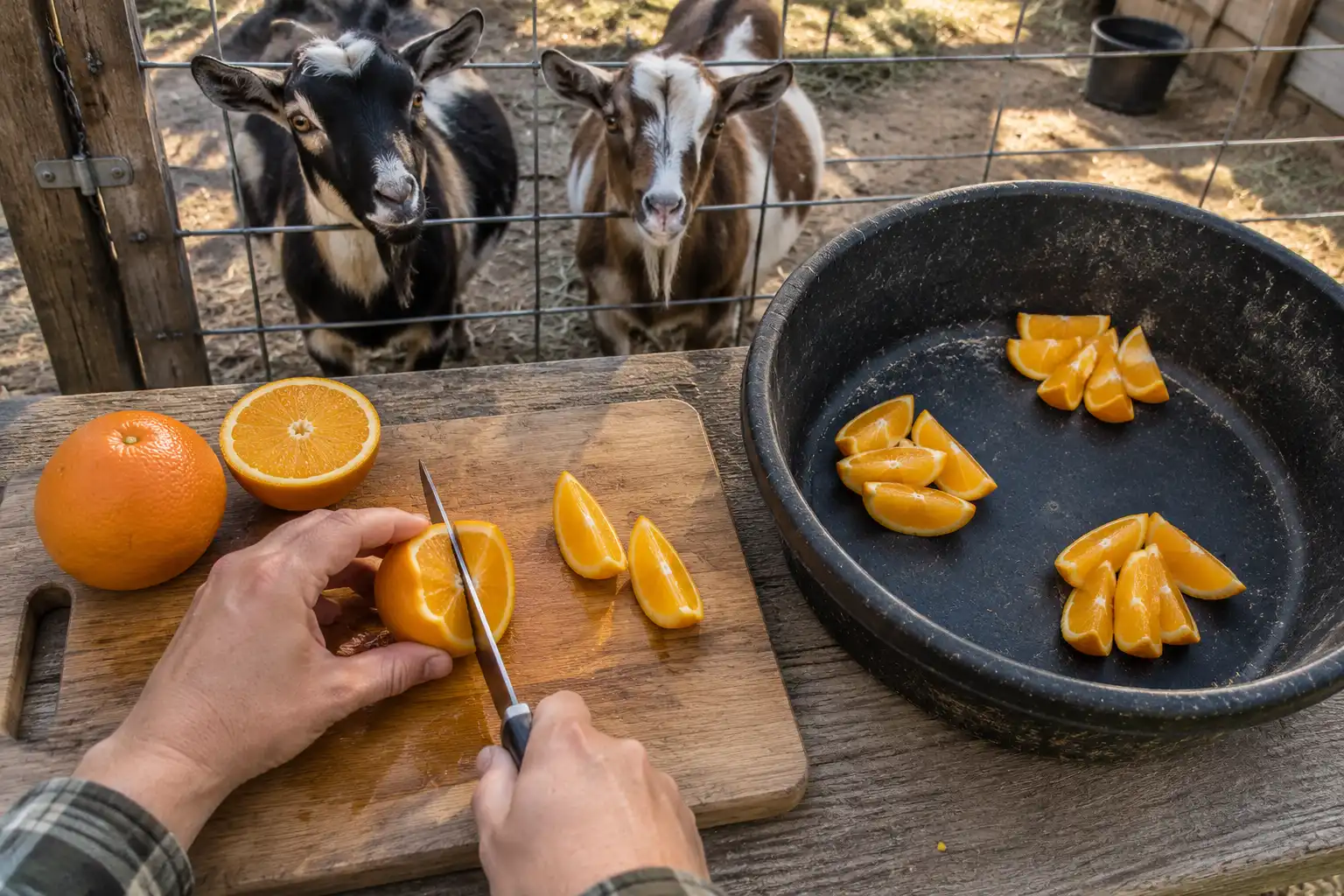
- Cut it up. Slice oranges into wedges, or break mandarins into segments. Whole fruit can lodge in a goat’s throat.
- Spread it out. In a group, the boss goat claims a single pile. Several small piles, or hand feeding, gives each goat a fair share.
- Start small with new goats. Offer one slice to a goat that has never had citrus, then check her manure the next day.
- Feed after hay. Cooperative Extension guidance on grain says to feed roughage first, and the same logic fits fruit. A rumen already full of forage buffers the sugar.
- Clear leftovers. Pull uneaten peel from pens the same day, before it molds.
Signs a Goat Ate Too Much Fruit
If a goat is off feed, bloated, staggering, or down after getting into fruit, call a large animal veterinarian now. Several conditions look alike, and severe acidosis can be fatal.
The Cooperative Extension goat resource at eXtension lists the signs of acidosis as depression, poor appetite, bloat, stopped cud chewing, staggering, diarrhea or no manure, muscle twitching, and teeth grinding. These signs describe a pattern. They do not tell you what a specific goat has.
A milder case usually shows as loose manure the day after a fruit binge. Loose manure has other causes too, including internal parasites, so a fruit day is not proof. Meanwhile, the same resource points to long-stemmed grass hay and fresh water, and no more fruit.
Enterotoxemia, also called overeating disease, is another risk after a sudden carbohydrate load. It is one reason goat vaccination programs cover it. Ask your veterinarian whether your herd’s program is current.
Oranges From Your Own Trees
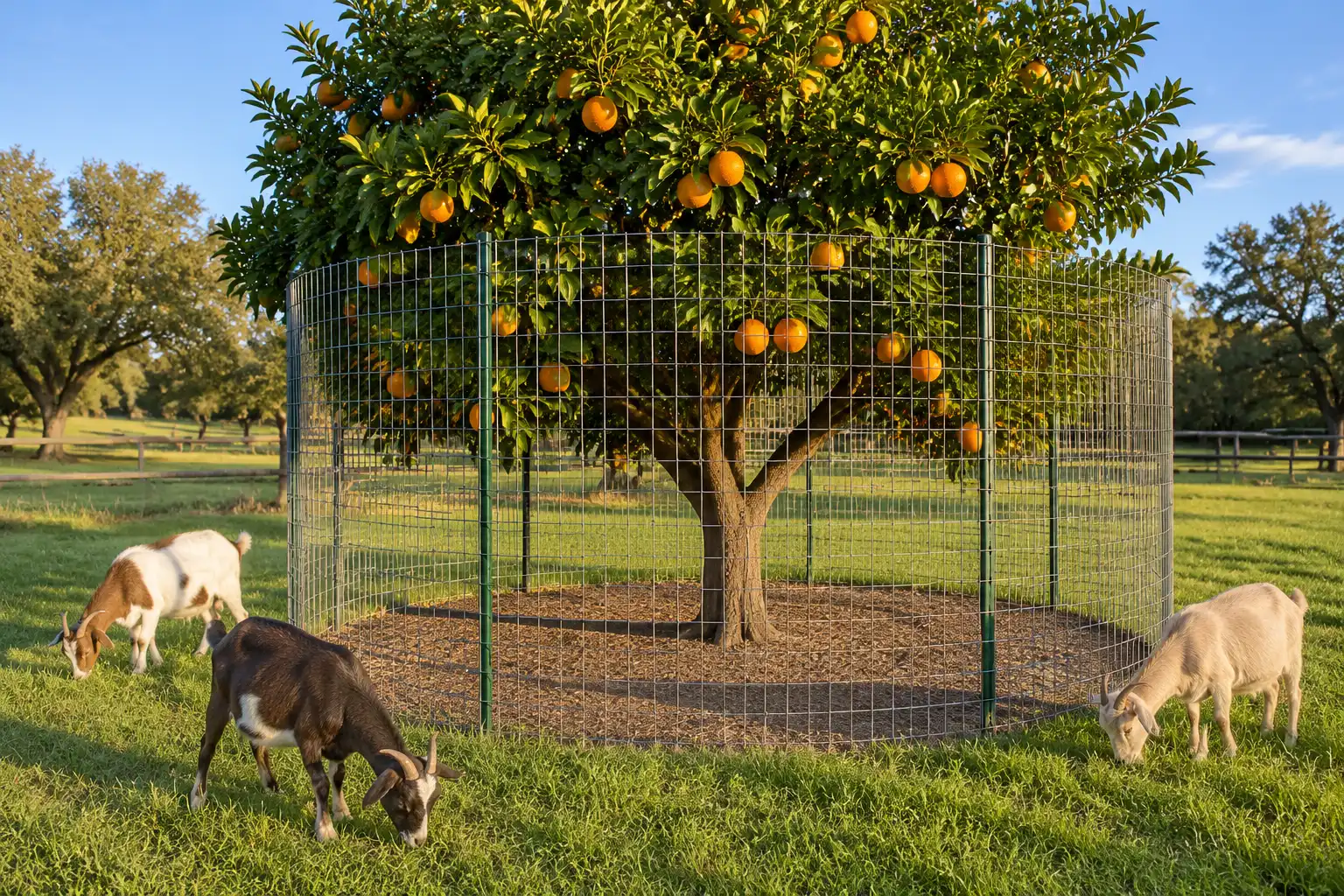
Backyard citrus is where most orange overeating starts. Langston University lists fruit trees among the browse goats choose when turned loose. Goats strip leaves and bark, then clean up every dropped fruit they can reach. That is exactly the windfall access eXtension warns against.
First, fence the tree off. Goats climb and stand on their hind legs to reach branches, so a tree guard needs the same fence height that holds goats as a pasture line. Then cover the rest:
- Pick up dropped fruit daily during the fruiting season.
- Read the pesticide label if you spray the tree, and follow any grazing or feeding restriction before goats get the drops.
- Feed collected drops as slices, by the same limits as store fruit.
FAQs on Oranges for Goats
Can goats eat orange seeds?
Yes, a few orange seeds are not a concern for goats. Commercial citrus pulp fed to cattle includes seeds, so the seeds in a slice or two need no picking out.
Can goats drink orange juice?
Skip it. Juice carries the fruit’s sugar without the fiber that slows fermentation, so it hits the rumen faster than slices do, and it adds nothing a goat’s diet lacks.
Can baby goats eat oranges?
Wait until kids are weaned and eating hay and pasture well. A kid still living mostly on milk has a rumen that is not yet fermenting forage, so fruit adds risk with no benefit.
Can goats eat lemons, limes, or grapefruit?
Goats can eat them, though many turn down lemons and limes for the sour taste. Grapefruit follows the same rules as oranges: wash the peel, cut it up, and keep portions to a few pieces.
Do oranges give goats vitamin C?
They do, but goats do not need it from food. Healthy goats make their own vitamin C in the liver, so an orange is a treat for taste, not a supplement.
Can goats eat rotten or fermented oranges?
No. Moldy or fermenting fruit can carry molds and an unpredictable sugar and acid load, so throw out soft, fuzzy, or sour-smelling oranges and clear leftover peels from pens the same day.
How often can goats have oranges?
A few times a week is plenty. Daily fruit tends to become a habit that grows, and forage, not the treat bucket, should carry nearly all of the goat’s energy needs.
Putting This Into Practice
Treat oranges as a hand-fed extra. A few washed slices per goat, peel included if she wants it, a few times a week, is plenty. Cut every fruit, and skip canned mandarins and juice. Above all, keep goats away from windfall piles. If a goat gets into one and goes off feed, call the vet before anything else.