Can Goats Eat Watermelon? Rind, Seeds, and How Much Is Safe
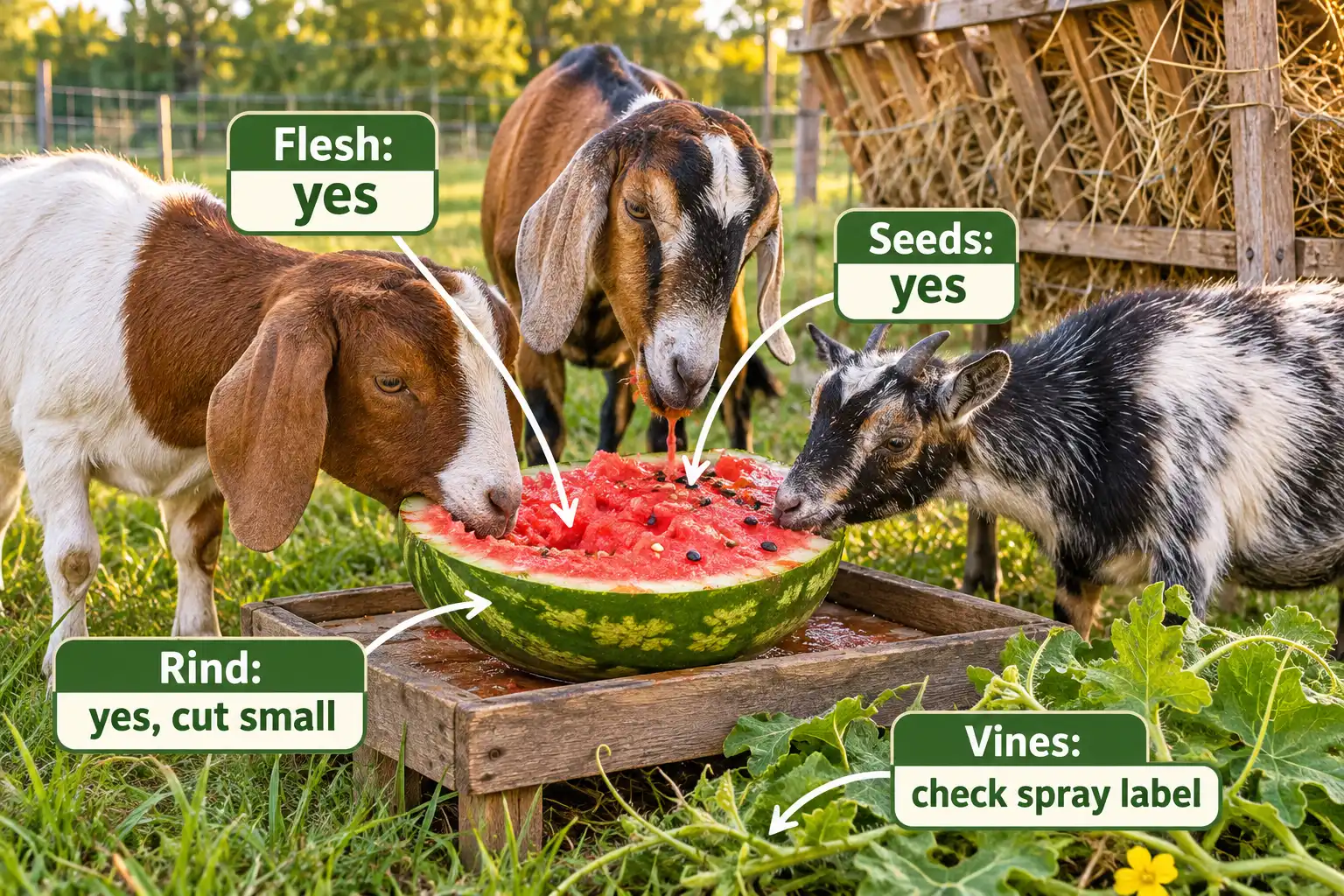
Can goats eat watermelon? Yes, and most goats take it eagerly. The questions that matter are which parts are safe, how much a goat can have, and how a harmless treat turns into a sick goat.
Goats can eat watermelon flesh, rind, and seeds as an occasional treat. Watermelon is about 91 percent water, so the risk is volume: a goat that eats a pile of melons can develop rumen acidosis.
Which Parts of a Watermelon Can Goats Eat?
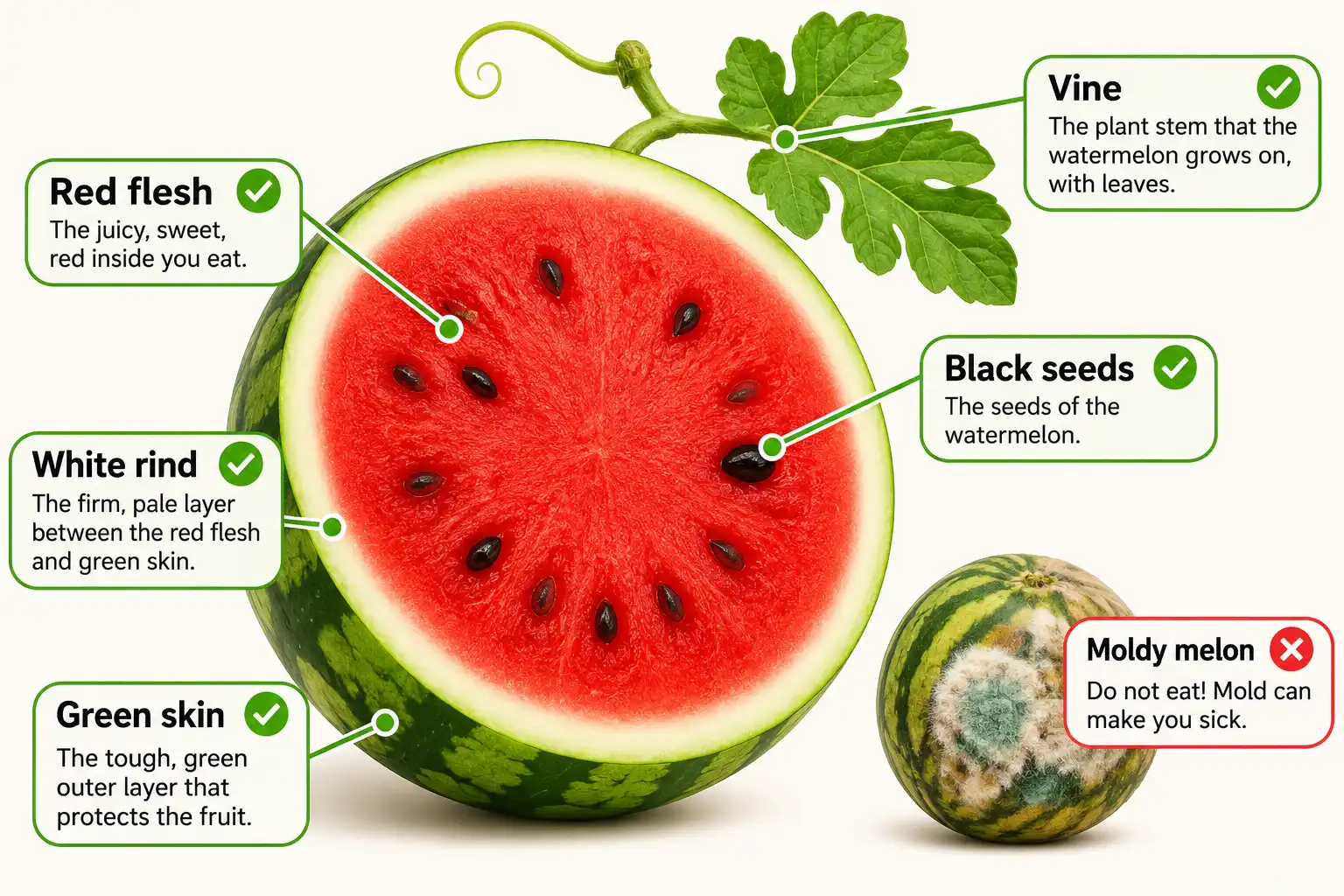
All of them: flesh, rind, seeds, vines, and leaves. Each part comes with one condition, though.
| Part | Safe for goats? | What to watch |
|---|---|---|
| Flesh | Yes | Highest sugar of any part, so keep portions small |
| Rind | Yes | Cut into thumb-size strips and rinse store-bought melons |
| Black seeds | Yes | Fine inside the fruit; skip salted, roasted snack seeds |
| White seeds (seedless melons) | Yes | Soft and edible, no prep needed |
| Vines and leaves | Usually | Only when no pesticide label restricts feeding or grazing |
| Spoiled or moldy melon | No | Compost it instead |
The fruit itself is gentle. USDA FoodData Central lists raw watermelon flesh at 91.45 grams of water and 6.2 grams of sugar per 100 grams. So a pound of flesh gives a goat about an ounce of sugar and less than a tenth of a pound of dry matter.
That means no single part causes trouble. Quantity does.
Read next: Goats Feed
Can Goats Eat Watermelon Rind?
Yes. The rind is the safest part of the melon to feed a goat, and many goats chew it down to the skin.
USDA added a raw watermelon rind profile to FoodData Central in 2026. It lists about 1 gram of fiber and 10 calories per 50 grams of rind. Flesh carries 0.4 grams of fiber and 30 calories per 100 grams. So for a goat, rind delivers roughly five times the fiber of flesh at about two thirds of the calories.
That tilt matters in a ruminant. Fiber keeps a goat chewing cud, and cud chewing produces the saliva that buffers the rumen. Sugar pushes the other way.
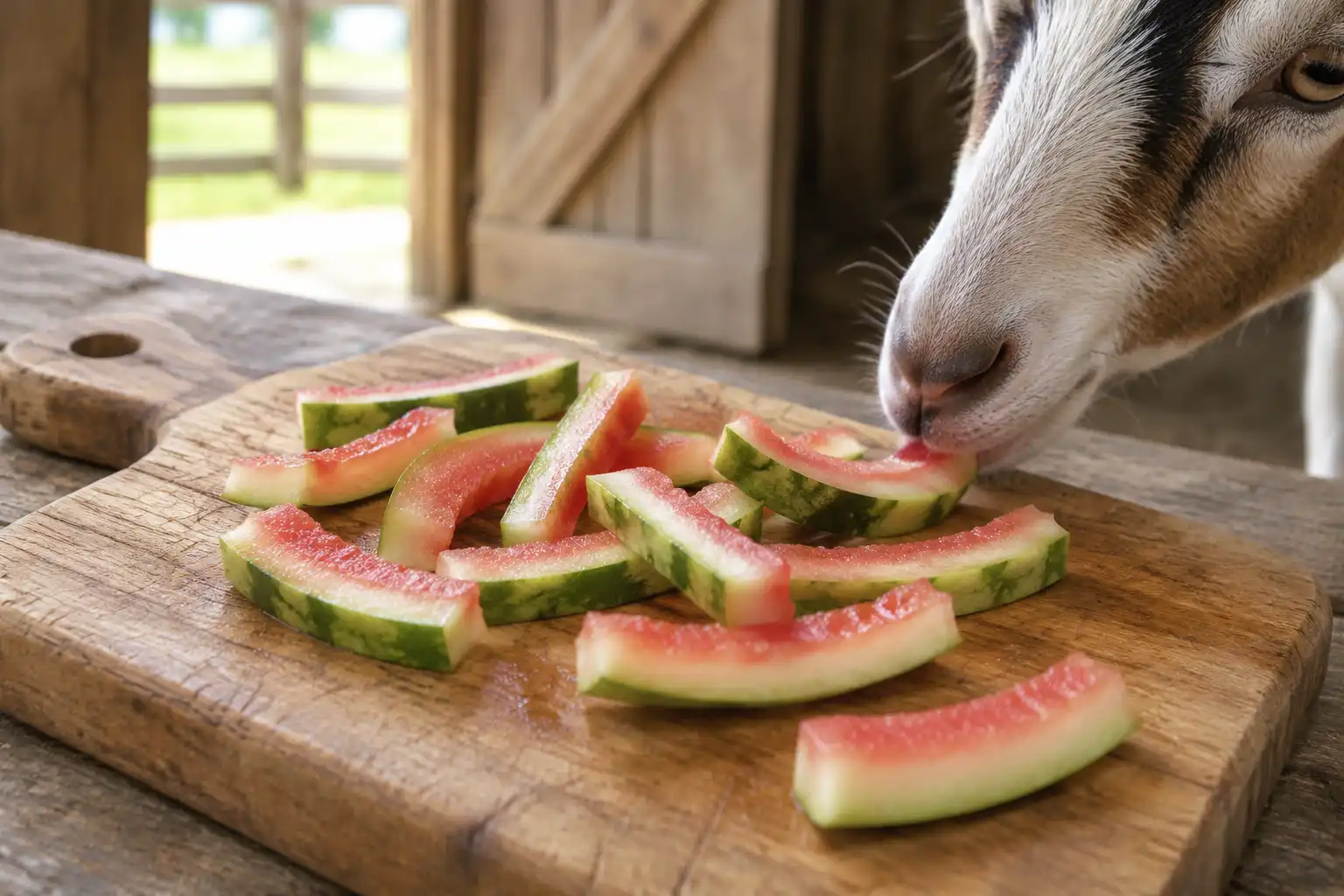
Two cautions apply. First, rind is firm. A large slab can lodge in the esophagus of a goat that bolts its food, so cut rind into strips about the size of your thumb. Second, a grocery store melon has passed through fields, packing sheds, and shelves. Rinse the outside under running water before it goes in the pen.
Some goats strip the red flesh and leave the rind. Leave a thin layer of flesh on each strip, and most goats start eating it.
Can Goats Eat Watermelon Seeds?
Yes. Watermelon seeds are safe for goats, so you do not need to pick them out before feeding.
Black seeds from a seeded melon have a hard coat. Goats crack some while chewing, and the rest pass through. The white seeds in a seedless melon are immature seed coats. They are soft and go down with the flesh.
The seed worry many owners carry belongs to a different fruit family. Langston University lists peaches, plums, wild cherry, and other stone fruits among the plants that carry prussic acid, the compound that releases cyanide. Cornell CALS names the seeds as the most concentrated source in cherries, followed by leaves and bark. Watermelon is not in that group, and it does not appear on the cyanide plant lists published for goats.
Roasted snack seeds are a separate case. USDA FoodData Central puts dried watermelon seed kernels at about 28 grams of protein and 47 grams of fat per 100 grams. That is dense feed for a goat, and store-bought versions are often salted. A few seeds inside the fruit do not matter. A bag of seasoned snack seeds does not belong in a goat pen.
Can Goats Eat Watermelon Vines and Leaves?
Usually, yes. Watermelon vines and leaves are not on the toxic plant lists for goats, and goats browse them readily. The risk comes from what was sprayed on them.
Vines reach goats in two ways: a garden patch after harvest, or crop residue from a commercial melon field. The second case needs a check. UF/IFAS Extension cautions that some pesticides used in crop production make residues unsuitable, or even illegal, to feed to cattle. Labels often restrict feeding treated residue to livestock in general, and that includes goats. So before you haul vines or field culls home, ask the grower what was applied. Then read the grazing and feeding restrictions on that label.
Garden vines are simpler. If you applied nothing, or only products whose labels allow livestock feeding, the vines are fair browse. Feed them fresh. Wilted, moldy, or rotting vines go on the compost pile.
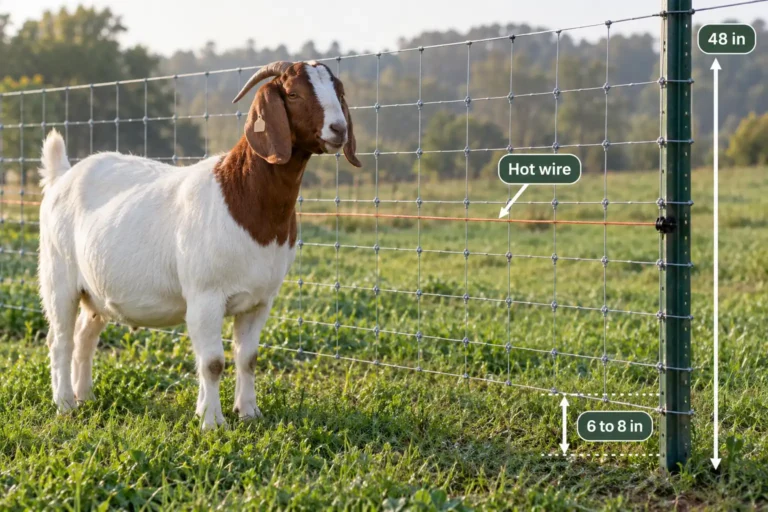
A goat loose in a living melon patch is a bigger problem than the vines. It can eat a lot of ripe fruit fast, and that is how acidosis starts. A fence that actually holds goats around the garden prevents it.
How Much Watermelon Can a Goat Have?
About a pound of flesh and rind per adult standard-size goat, a few times a week, is a cautious ceiling. No extension service publishes a watermelon limit for goats. The research on fruit treats is thin, so we show the arithmetic behind that figure.
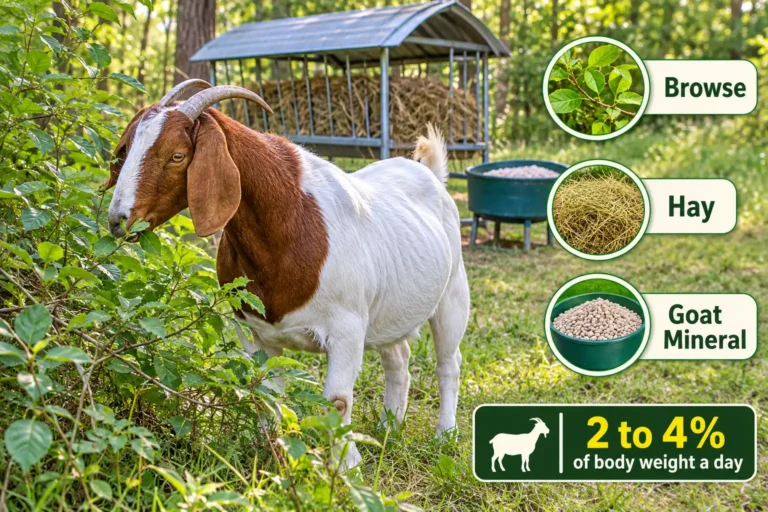
Start with intake. Fort Valley State University puts goat dry matter intake at 2 to 4 percent of body weight per day. For a 150 pound doe, that is 3 to 6 pounds of dry matter. Watermelon flesh is only about 8.5 percent dry matter, per USDA FoodData Central, so it fills a goat’s rumen mostly with water.
A pound of melon therefore adds under a tenth of a pound of dry matter. That is roughly 1.5 to 3 percent of her day, with about an ounce of sugar. Halve the portion for a Nigerian Dwarf or Pygmy goat. For a goat that has never had fruit, start with a few cubes.
Here is how one melon splits. USDA counts a large 15 inch watermelon at about 10 pounds of edible flesh.
| Goats in the herd | Flesh per goat from one large melon | Within the 1 pound guide? |
|---|---|---|
| 2 | 5 lb | No, spread it over 5 days |
| 4 | 2.5 lb | No, spread it over 2 or 3 days |
| 10 | 1 lb | Yes |
| 25 | 0.4 lb | Yes |

Why Too Much Watermelon Makes Goats Sick
Sugar ferments fast in the rumen. Too much at once drops rumen pH and causes rumen acidosis, often called grain overload.
If a goat has eaten a large amount of fruit, call a large animal veterinarian now. Several other conditions look the same, and treatment is veterinary work. Do not wait to see whether she recovers on her own.
Grain is not the only trigger. Oklahoma State University College of Veterinary Medicine names apples, grapes, bread, sugar beets, and potatoes as sources too. Watermelon belongs with those rapidly fermentable feeds. The setup is also the same: a goat on a forage diet suddenly gets access to a large amount.
In practice, that looks like a dumped load of cull melons, a goat loose in the garden, or a whole picnic’s worth of leftovers in one bucket.
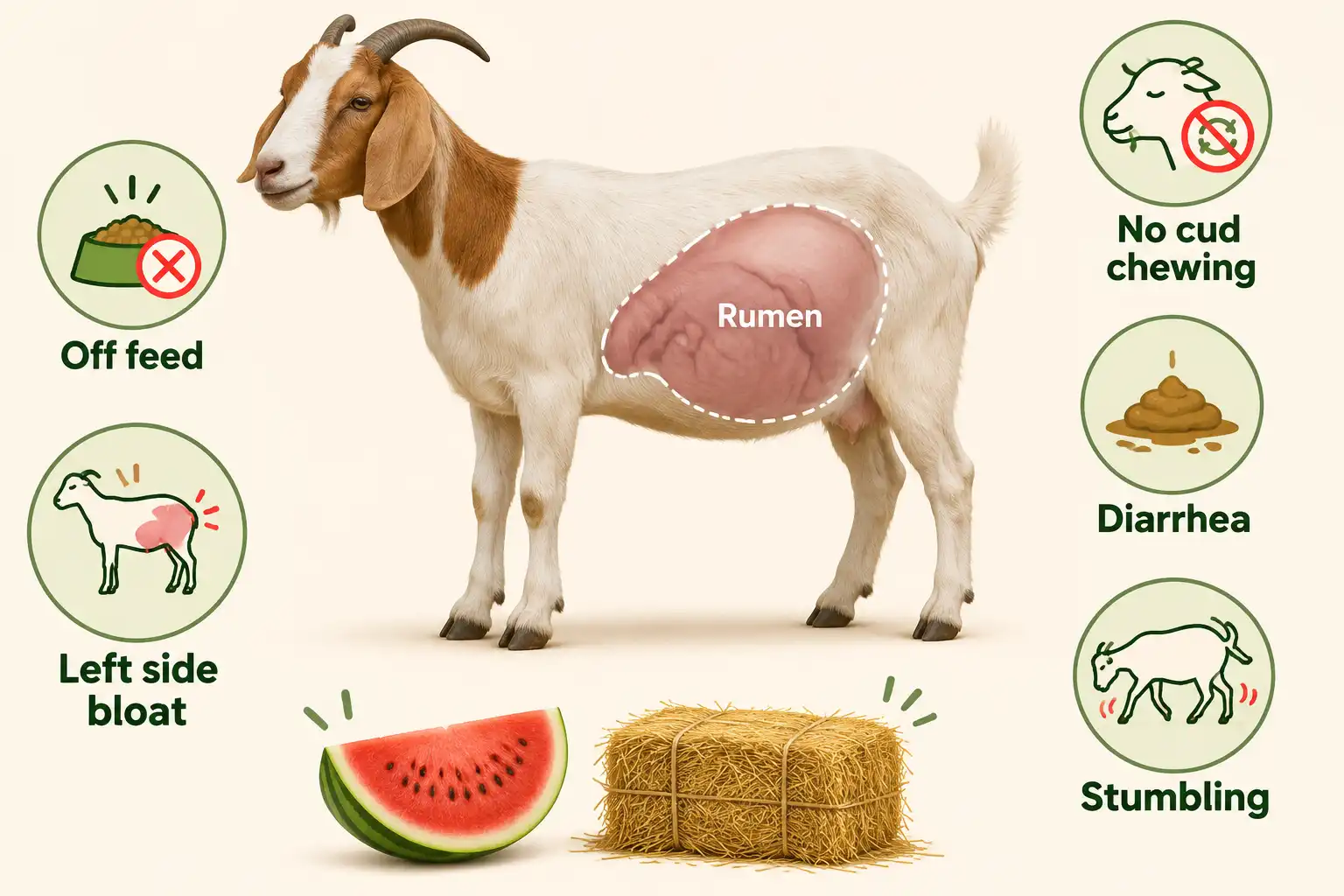
Oklahoma State lists these signs of acidosis in goats:
- Going off feed
- Bloat, seen as a swollen left side
- No cud chewing
- Diarrhea and dehydration
- Dullness, stumbling, or going down
The same source links acidosis to polio (thiamine deficiency), enterotoxemia, urinary calculi, and founder. So one binge can start more than one problem. The livestock health section covers rumen problems beyond this one.
How to Feed Watermelon to Goats
Feed hay first, cut the melon small, and spread it out. Each step below has a reason.
- Pick a sound melon. Choose firm fruit with no soft spots or sour smell. Fermenting or moldy melon is not a treat.
- Rinse the outside. Running water clears field and handling residue from the rind.
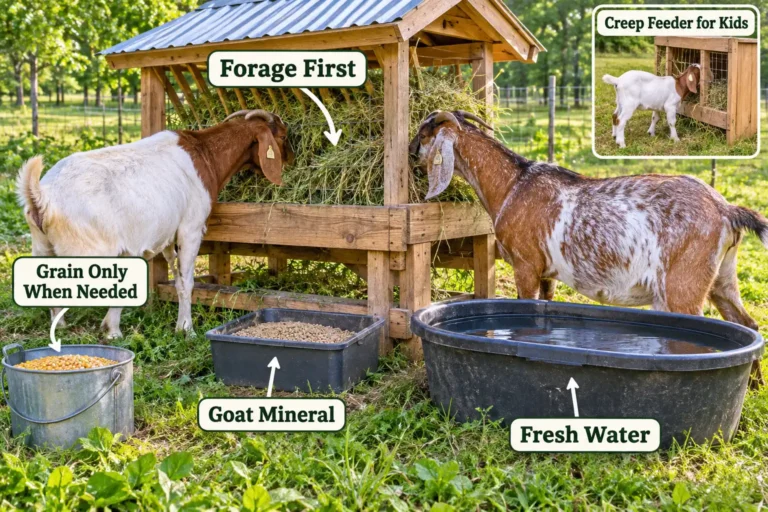
- Feed hay first. A goat with a rumen full of long fiber eats fruit more slowly and keeps chewing cud.
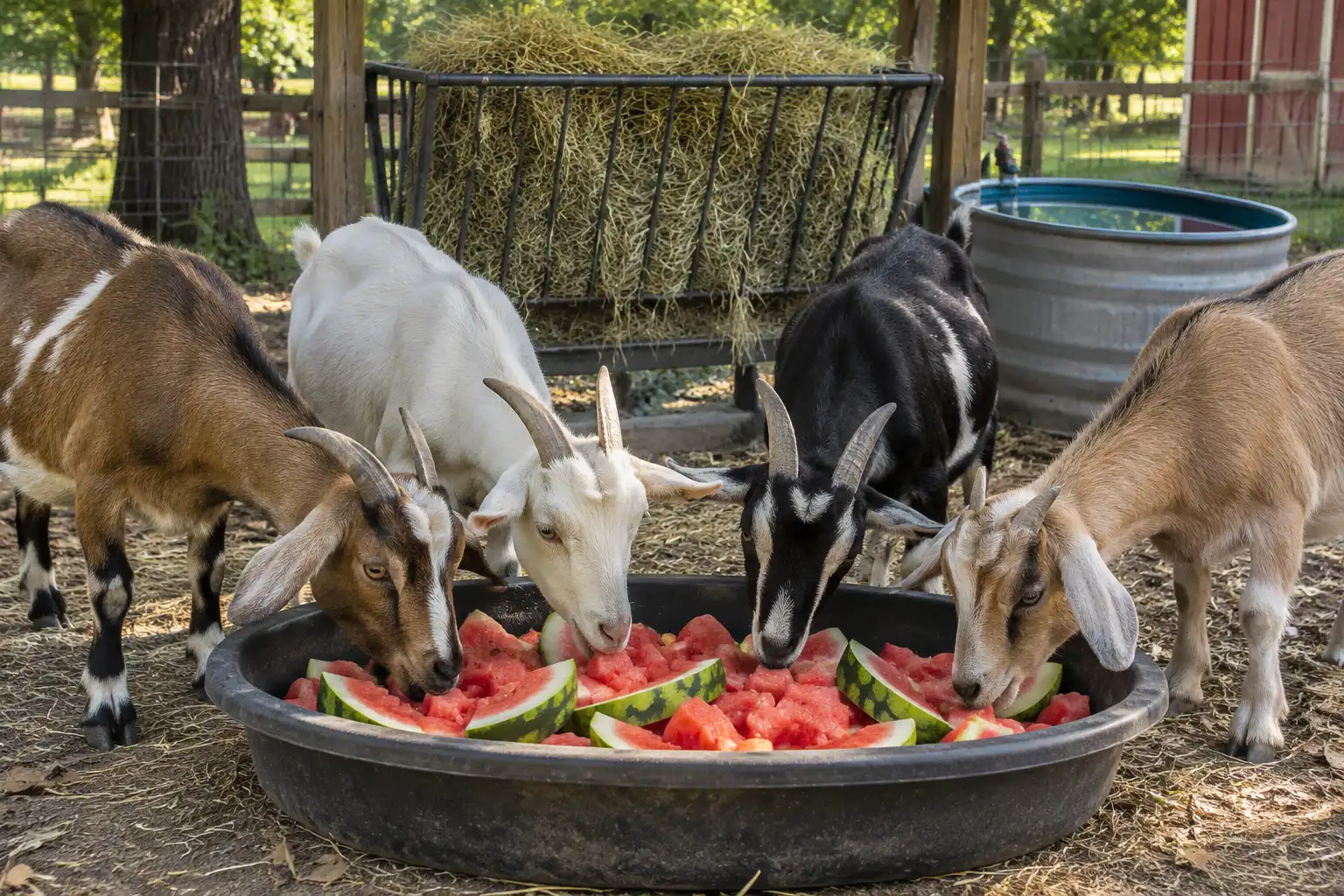
- Cut it up. Cube the flesh and cut rind into thumb-size strips. Big pieces invite choking.
- Spread it out. Use a wide tray or several piles. Otherwise a boss doe takes everyone’s share, and one goat ends up with three pounds.
- Serve it cool. Chilled melon on a hot afternoon is fine. Thaw frozen melon first so goats bite small pieces.
- Clear leftovers within a few hours. Cut melon draws flies and wasps, and it starts to ferment in summer heat.
Watermelon also does not replace the water tank. Langston University research puts a 110 pound goat at 1 to 3 gallons of water a day, with the high end in summer heat. A pound of flesh carries just under a pint. So keep the tank full, clean, and shaded, and see feed and water planning for sizing it.
Kids, Does, Wethers, and Sheep in the Same Pen
Watermelon is safe for every class of goat, but the portion and the prep change.
Kids
Wait until kids are eating hay and forage well. Then offer a few soft cubes, not rind strips. Their rumens are still developing, and firm pieces are harder for them to chew.
Pregnant and Lactating Does
Bred does can have watermelon on the same terms as other adults. It adds little energy, though, so it never stands in for the late gestation ration. Lactating does drink more. Langston University adds about a quart of water for every pint of milk a goat produces, which matters most in dairy goats at peak lactation. A melon treat helps a little. The tank does the real work.
Wethers
Keep treats light. Urinary stones are a known problem in wethers, and Oklahoma State links acidosis to urinary calculi. A wether that never binges on sugar avoids one route to that trouble.
Sheep Sharing the Pen
Sheep can eat watermelon on the same terms as goats. The pen risk sits elsewhere. Treat time pulls every animal into one crowd, and goat mineral carries copper at levels that build up in sheep and kill them. So serve the melon well away from the goat mineral feeder.
Common Watermelon Mistakes With Goats
Most watermelon trouble starts with too much fruit at once. These are the usual ways it happens.
- Dumping a load of cull melons in the pen. Free field culls are the classic acidosis setup. Store them where goats cannot reach and ration them out. UF/IFAS Extension limits cull vegetables to 0.5 percent of body weight in dry matter for beef cattle. No goat figure exists, so talk with your extension agent or veterinarian before culls become part of a goat ration.
- Splitting one melon between two goats in one sitting. That is about 5 pounds of flesh each. Cut it, refrigerate it, and feed it over several days.
- Offering fruit to hungry goats. Empty goats gulp. Feed hay first, then the treat.
- Leaving big rind slabs whole. Firm slabs can lodge in the throat of a greedy eater. Cut strips.
- Feeding vines from a sprayed field. Check the label before any crop residue goes to livestock.
- Counting on melon for water in a heat wave. A pound of flesh holds less than a pint. The tank still carries the load.
- Feeding a melon that smells sour. Fermented or moldy fruit goes to the compost, not the goats.
FAQs on Watermelon for Goats
Can baby goats eat watermelon?
Kids can have a few soft cubes once they are eating hay and forage well. Skip rind strips until they are older, because firm pieces are harder for small kids to chew and swallow.
Can goats eat watermelon every day?
A small daily portion is unlikely to harm a healthy adult goat, but a few times a week is a safer habit. Treats that become routine tend to grow, and the sugar adds up.
Can goats eat frozen watermelon?
Yes, though thawed or chilled melon is easier for goats to bite into small pieces. Frozen chunks tempt a greedy goat to swallow pieces whole, which raises the choking risk.
Why is my goat not eating the watermelon rind?
Many goats eat the sweet flesh first and leave the rind. Leave a thin layer of red flesh on each strip, and most goats work through the rind once they learn it is food.
Can goats eat cantaloupe and other melons too?
Cantaloupe, honeydew, and other melons follow the same rules as watermelon. Feed them as small treats, cut firm rind into strips, and keep the total low because the flesh is sugary.
Is watermelon good for goats in hot weather?
It is a welcome cool treat, but it does little for hydration. A pound of flesh carries just under a pint of water, while an adult goat needs gallons a day from the tank.
What should I do if my goat ate a lot of watermelon?
Call a large animal veterinarian right away, before signs appear. Remove the remaining fruit, offer hay and fresh water, and watch closely for going off feed, bloat, or no cud chewing.
Putting This Into Practice
Every part of a watermelon is safe for goats, from flesh to seeds. Cut the rind small, rinse store-bought melons, and check spray labels before feeding field vines. Keep portions near a pound per adult goat a few times a week, and never give goats open access to a pile of melons. For the rest of the daily ration, start with the goat care guide.