How Much Does a Cow Cost? 2026 Prices for Cows and Beef Shares
Cattle prices are near record highs after three years of gains. A cow’s price still swings with age, pregnancy, breed, and how you buy it. Here is how much a cow costs in 2026, live or as a half or quarter beef share, with the math carried through.
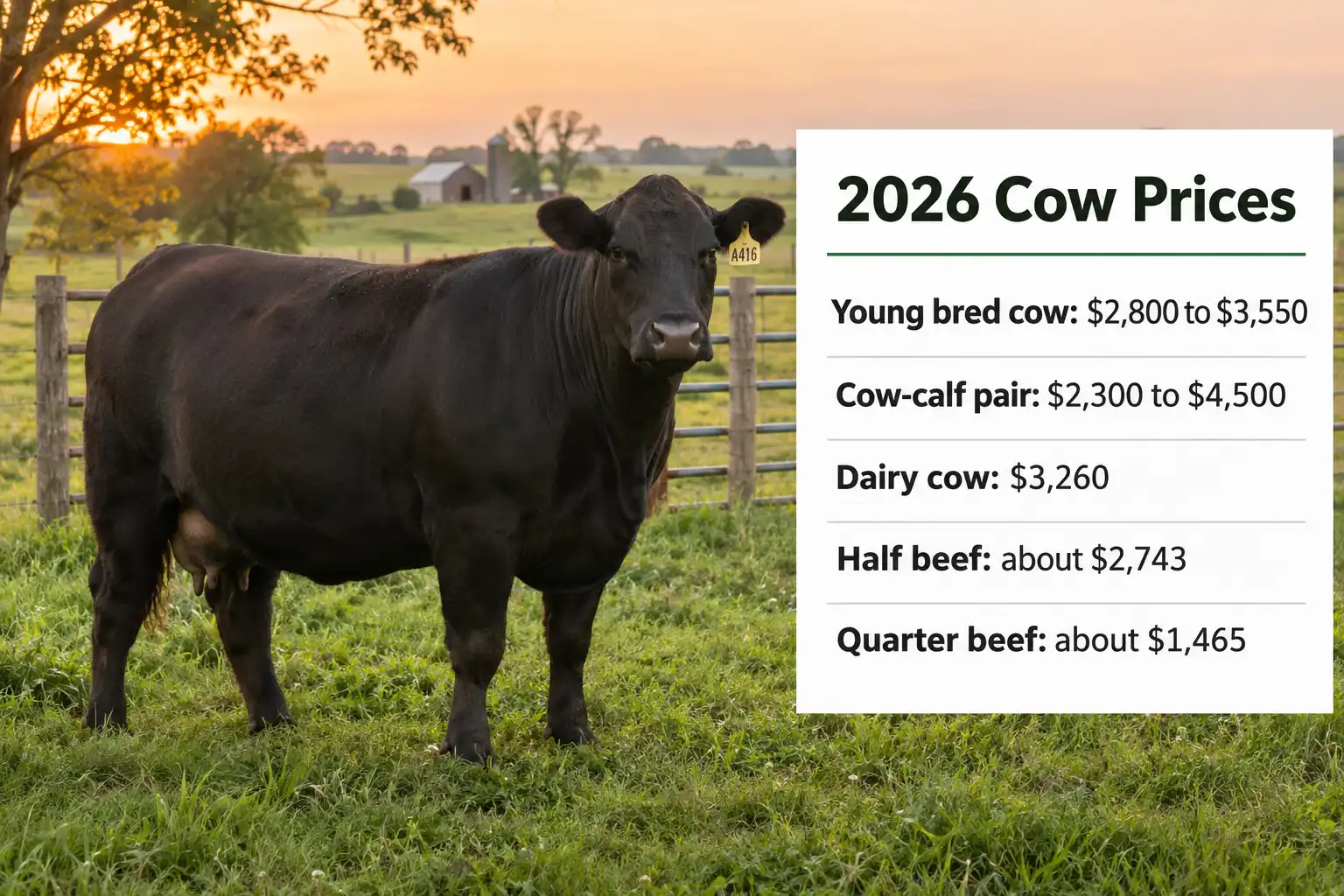
A young bred beef cow brought about $2,800 to $3,550 at 2026 auctions, and a replacement dairy cow averaged $3,260, per USDA. A half beef share runs about $2,700 all in, or $9 to $12.50 per packaged pound.
Why Cattle Cost So Much in 2026
Tight supply sets the price. USDA NASS counted 27.6 million beef cows on January 1, 2026, the smallest herd since 1961. Fewer cows mean fewer calves, so buyers compete harder for each one.
That pressure runs through every class of cattle. Oklahoma State Extension economist Derrell Peel noted that feeder cattle prices rose roughly 25 to 35 percent during 2025, and he expected another 5 to 15 percent in 2026.
So a bred cow costs more partly because the calf she carries is worth more.
Read next: Smartest Farm Animal: Five Livestock Species Ranked by Research
How Much Does a Cow Cost to Buy?
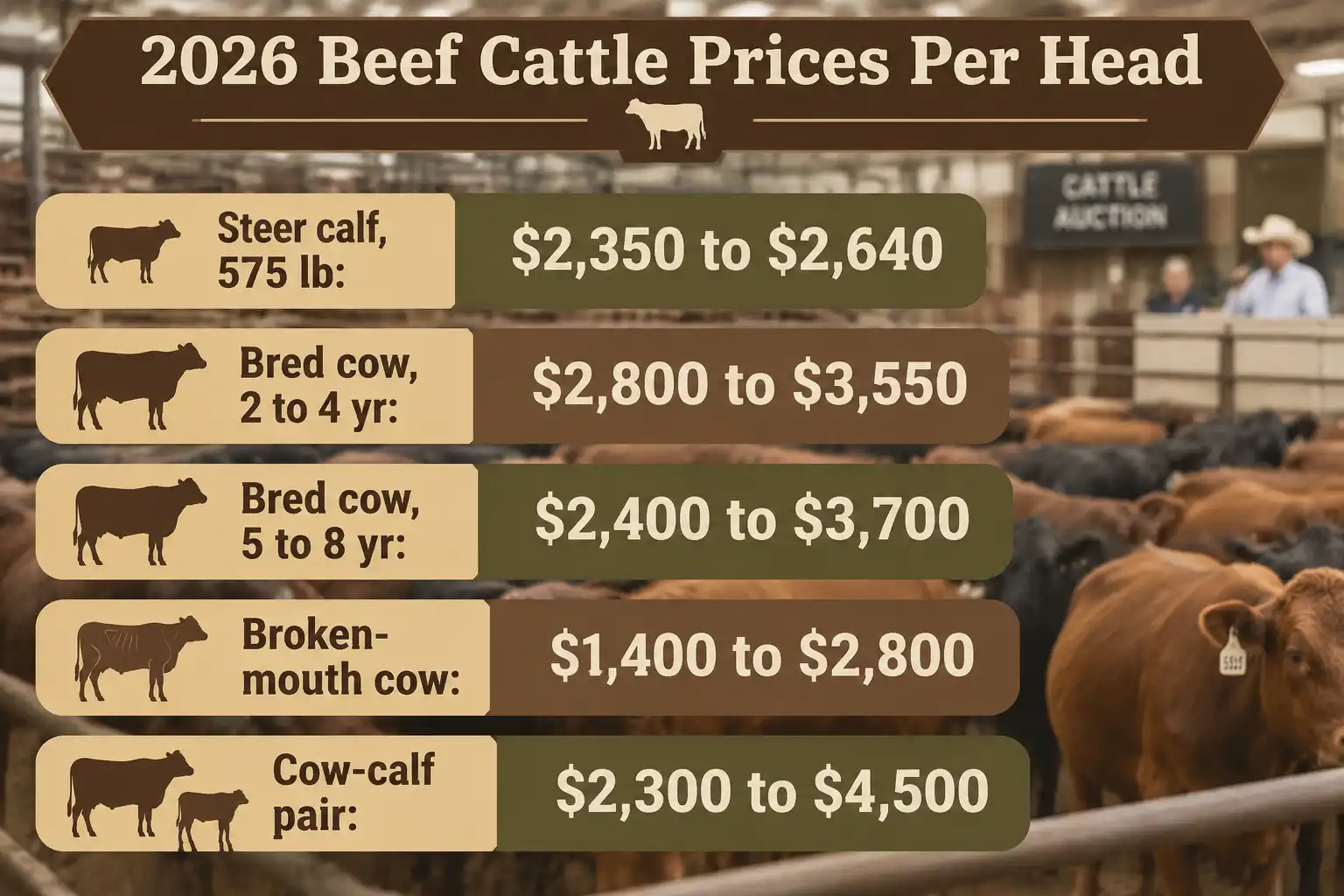
A commercial beef cow costs about $1,400 to $4,500 at auction in 2026. Age, pregnancy stage, and a calf at her side decide where she lands in that range. The figures below come from USDA AMS auction reports for summer and fall 2026, including sales at Oklahoma National Stockyards.
| Type of cattle | 2026 price per head | What moves the price |
|---|---|---|
| Weaned steer calf, 550 to 600 lb | $2,350 to $2,640 | Weight and grade |
| Young bred cow, 2 to 4 years | $2,800 to $3,550 | Most calving seasons ahead |
| Middle-aged bred cow, 5 to 8 years | $2,400 to $3,700 | Body condition and trimester |
| Broken-mouth bred cow, over 8 years | $1,400 to $2,800 | Worn teeth, few seasons left |
| Cow-calf pair | $2,300 to $4,500 | Cow age and calf size |
| Replacement dairy cow | $3,260 average | National figure, July 2026 |
The calf row uses USDA AMS North Dakota prices of $409 to $459 per hundredweight from November 2026, priced at 575 pounds. The dairy row comes from USDA NASS.
Price Each Cow by the Calves She Will Raise
The sticker price misleads on its own. Instead, divide it by the calves a cow is likely to raise for you.
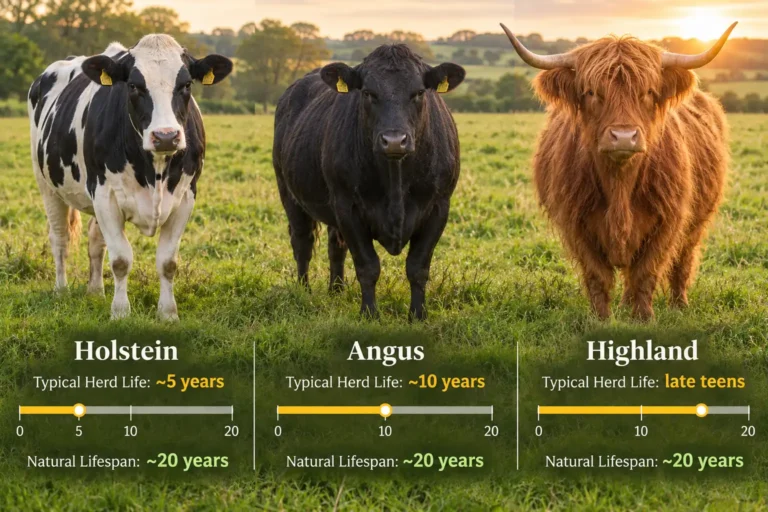
For example, a $3,000 three-year-old who stays six more seasons costs $500 per calf. A $2,200 broken-mouth cow with two seasons left costs $1,100 per calf. So the cheaper cow often turns out to be the pricier one. Check a cow’s productive lifespan before you assume how many seasons remain.
Sale reports also list the trimester. A T2 cow is 4 to 6 months bred, and a T3 cow is 7 to 9 months bred. A T3 cow can calve soon after she unloads, so learn the signs of approaching calving first.
How Much Does a Dairy Cow Cost?
A replacement dairy cow averaged a record $3,260 per head in July 2026, per USDA NASS. The January figure was $2,860, so prices climbed about 14 percent in six months.
The cause is a short heifer pipeline. Many dairies now breed part of the herd to beef bulls, because beef-cross calves sell well. That leaves fewer dairy heifers to replace cows that leave. USDA NASS put January 2026 dairy replacement heifers near 3.9 million head, the fewest since 1978.
For a single family milk cow, published price data is thin. Jerseys and other small dairy breeds usually sell privately. Therefore, compare several local sellers before you trust any one asking price.
How Much Does a Highland Cow Cost?
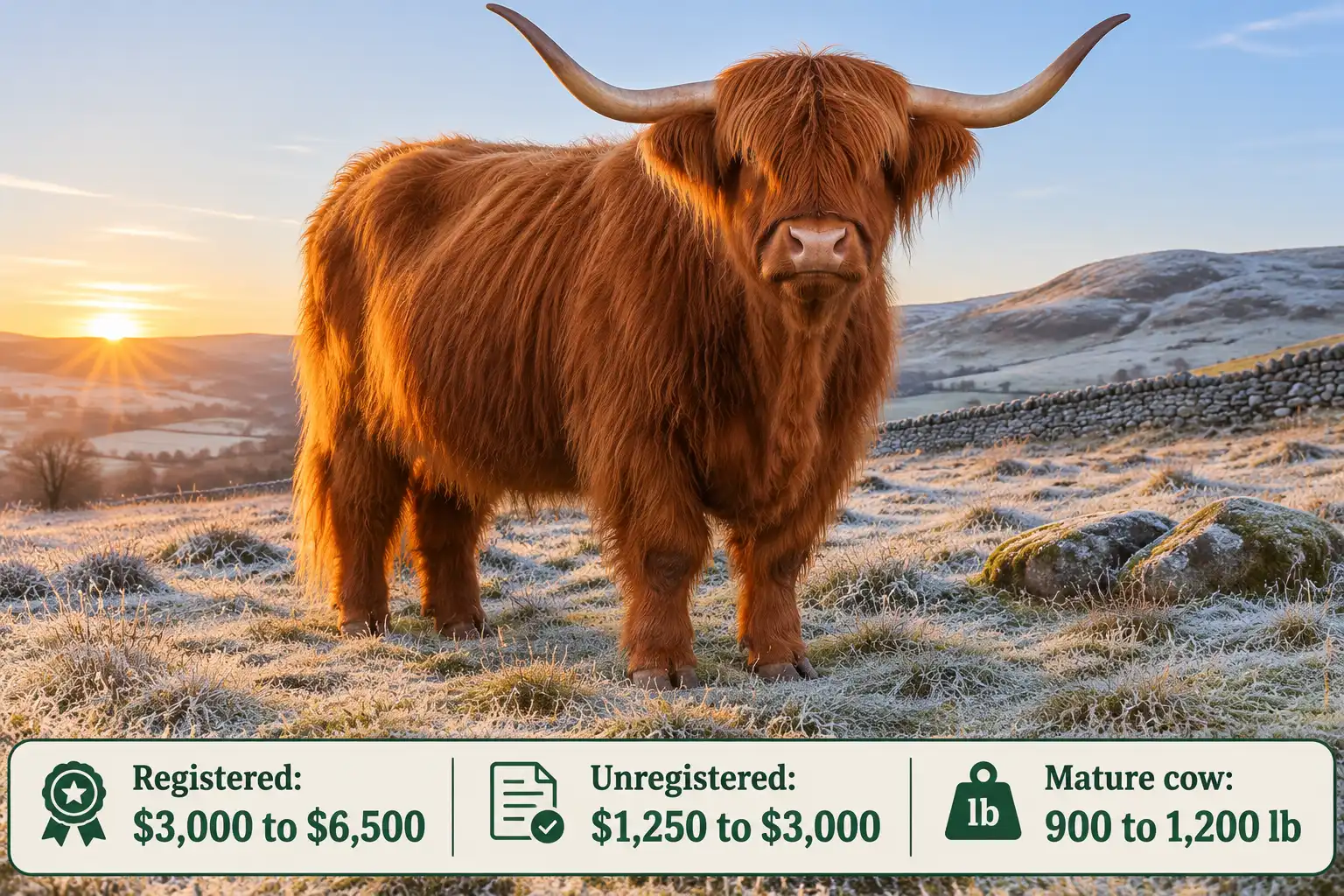
A registered standard Highland cow typically sells for about $3,000 to $6,500, and an unregistered one for about $1,250 to $3,000. Those ranges are the middle half of public auction records compiled by the Creatures livestock marketplace through November 2026. The registered median was $4,500, and the unregistered median was $1,900.
No USDA or extension price series tracks the breed. So treat these ranges as the best published guide, not a quote.
Show cattle sit far above that. The American Highland Cattle Association’s 2026 National Sale in Denver grossed $1,050,650, and females there averaged $19,429. That average reflects elite genetics, not a typical purchase.
Why Highlands Cost More Per Pound
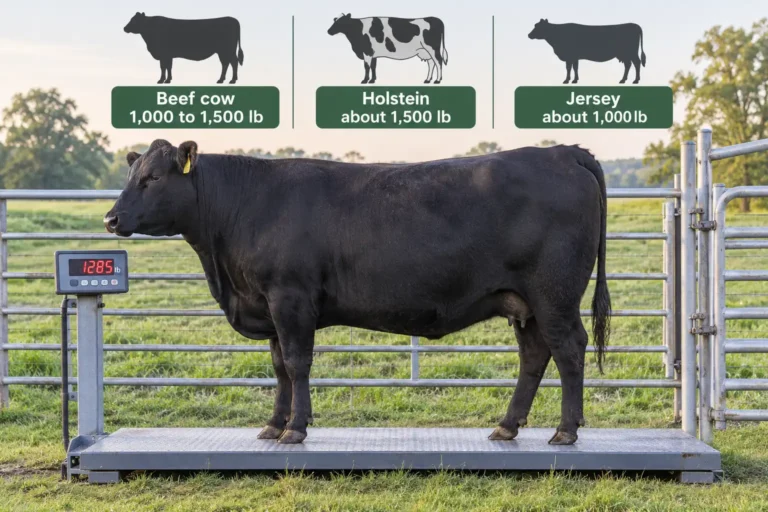
Highlands are small and slow to mature. The American Highland Cattle Association puts mature cows at 900 to 1,200 pounds. That means a $4,500 Highland costs $3.75 to $5.00 per pound of live weight. In contrast, a young commercial bred cow at a November 2026 USDA AMS sale cost about $2.60 per pound.
Buyers pay that premium for hardiness, temperament, and looks rather than beef output. Miniature Highlands push it further, with an auction median near $9,500 in Creatures records through October 2026.
Also, both sexes carry horns. Check that your chute, headgate, and trailer fit them before you buy.
How Beef Shares Are Priced
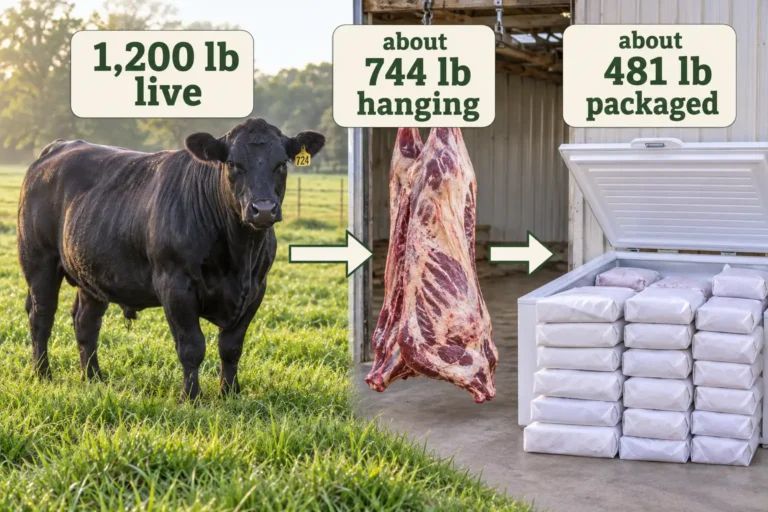
Most farms price a beef share by hanging weight. That is the carcass weight on the rail before cutting, and the processor prints it on the ticket. On top of that, you pay a processing fee and a share of the slaughter fee.
USDA AMS tracks these prices in its quarterly National Grass Fed Beef Report. For July through September 2026, the direct-to-consumer averages ran:
- Half: $5.76 per pound hanging, within a $4.25 to $6.95 range
- Quarter: $6.23 per pound hanging, within a $4.50 to $8.00 range
- Whole: $5.90 per pound hanging
- Processing: $0.94 per pound hanging, plus a $125 slaughter fee per animal
Some sellers quote one all-in price instead. For a half, that averaged $7.71 per pound hanging.
No national series tracks grain-finished freezer beef. So use these figures as a benchmark, then get two or three local quotes.
How Much Does Half a Cow Cost?
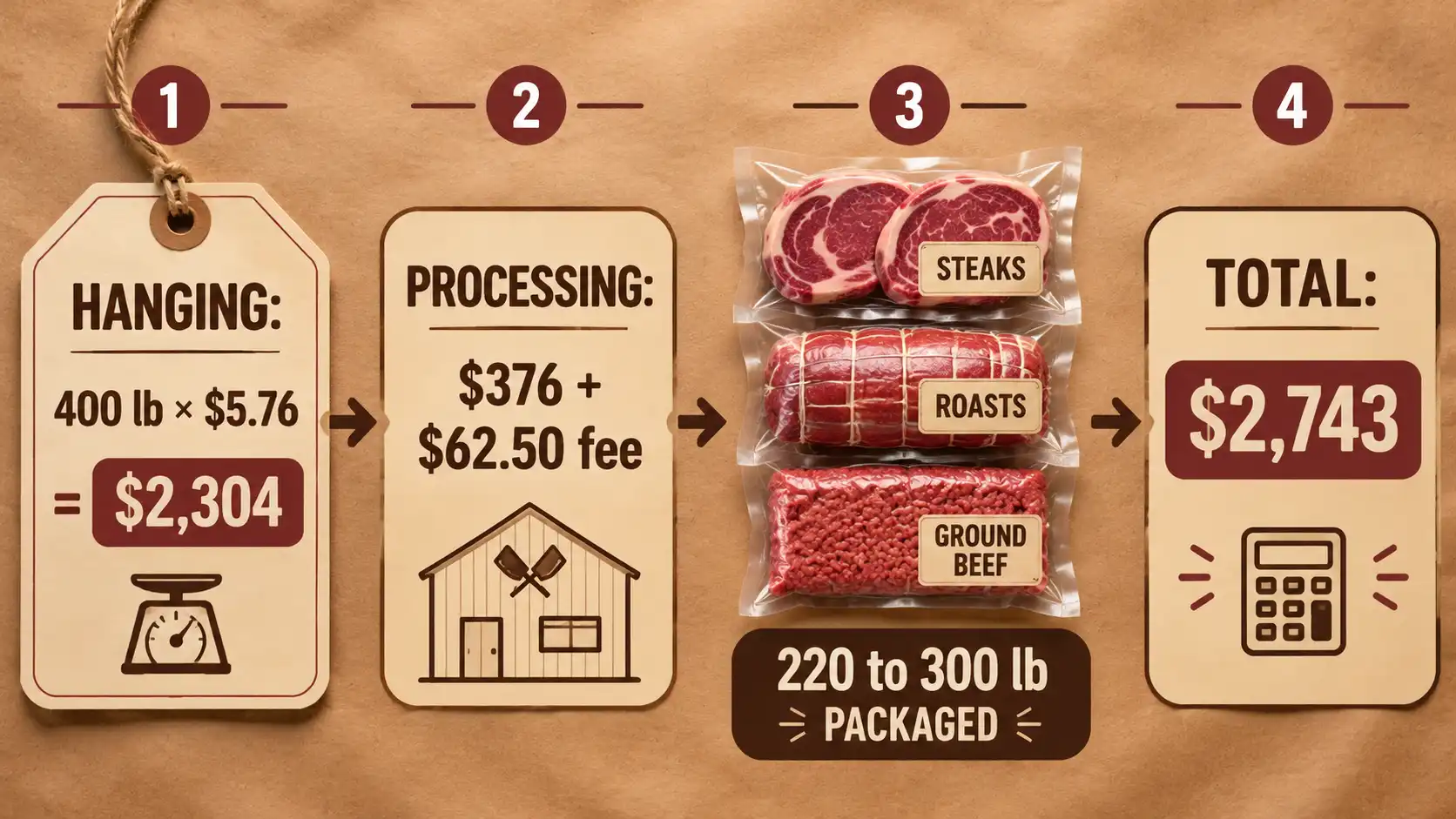
Half a cow costs about $2,740 all in when the half hangs at 400 pounds. That works out to roughly $9 to $12.50 per pound of packaged beef.
Here is the math with USDA AMS averages for the third quarter of 2026:
- Hanging weight: 400 lb × $5.76 = $2,304 to the farm
- Processing: 400 lb × $0.94 = $376 to the processor
- Slaughter fee: half of $125 = $62.50
- Total: about $2,743
Next, convert that to beef you actually take home. Oklahoma State Extension puts cutting, trimming, and boning losses at 24 to 45 percent, depending on fat cover and cut choices. So a 400-pound half yields about 220 to 300 pounds of packaged beef. Divide $2,743 by that weight, and each packaged pound costs about $9.10 to $12.50.
USDA’s net-weight average for a half, $12.39 a pound, sits near the top of that range. Boneless cuts and heavy trim push you there. For the cut-by-cut picture, see how much take-home meat a beef carcass yields.
How Much Does a Quarter Cow Cost?
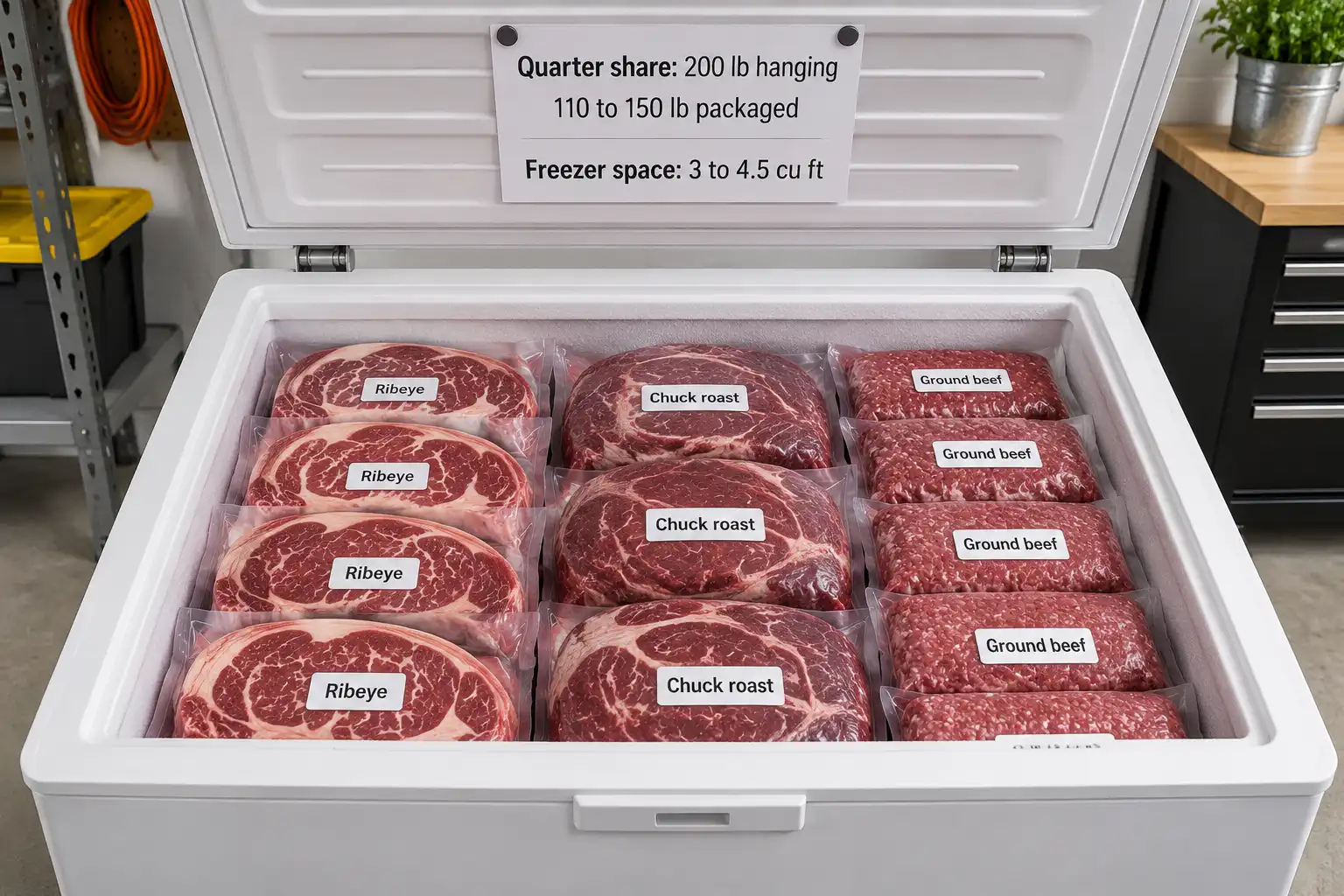
A quarter cow costs about $1,465 all in on a 200-pound share, or roughly $9.60 to $13.30 per packaged pound. Quarters carry the highest hanging-weight price in the USDA AMS data, $6.23 a pound. In return, you commit to less beef and less freezer space.
The math: 200 lb × $6.23 = $1,246. Then add $188 for processing and about $31 of the slaughter fee. Expect roughly 110 to 150 pounds of packaged beef.
Also, ask which kind of quarter you are buying. A split quarter mixes front and hind cuts, while a straight quarter does not. Oklahoma State Extension notes the hindquarter yields more steaks and roasts but costs more per pound. In contrast, the forequarter carries more pot-roast cuts, a higher share of usable lean, and a lower price per pound.
Half vs Quarter vs Whole Cow: Cost Compared
A half gives the lowest price per hanging pound in the third-quarter 2026 data, slightly below a whole. So a whole animal only pays when your seller discounts it.
| Share | Hanging weight | Price per lb hanging | Total with processing | Packaged beef | Cost per packaged lb | Freezer space |
|---|---|---|---|---|---|---|
| Quarter | 200 lb | $6.23 | about $1,465 | 110 to 150 lb | $9.60 to $13.30 | 3 to 4.5 cu ft |
| Half | 400 lb | $5.76 | about $2,743 | 220 to 300 lb | $9.10 to $12.50 | 5.5 to 9 cu ft |
| Whole | 800 lb | $5.90 | about $5,600 | 440 to 610 lb | $9.20 to $12.70 | 11 to 17.5 cu ft |
The table assumes an 800-pound carcass and USDA AMS averages for July through September 2026. Freezer space follows Oklahoma State Extension’s guide of one cubic foot per 35 to 40 pounds of wrapped beef. To rerun it, swap in your seller’s hanging weight and price per pound.
What a Beef Cow Costs to Keep Each Year
Keeping a beef cow costs about $1,214 a year in University of Nebraska-Lincoln Extension’s 2026 sample budget for a 150-cow herd in south-central Nebraska. Feed makes up half of that.
| Cost per beef cow, per year | Amount |
|---|---|
| Feed and pasture | $608 |
| Labor, mostly unpaid family time | $210 |
| Ownership and overhead | $151 |
| Veterinary and health | $30 |
| Fuel, repairs, interest, bull, and other operating costs | $215 |
| Total economic cost | $1,214 |
That is about $3.30 per cow per day. For two cows on a small place, budget near $2,400 a year, and likely more. A bull, a trailer, and fence cost the same whether they serve two cows or two hundred.
UNL’s 2026 to 2027 replacement analysis found annual costs from about $1,300 per cow in low-cost herds to over $1,700 in high-cost ones. Under baseline prices, the average breakeven value of a replacement cow came out near $2,400 a head. It topped $4,700 only in the most optimistic price case. So a $3,000 bred cow pays off only if calf prices hold or she stays in the herd longer.
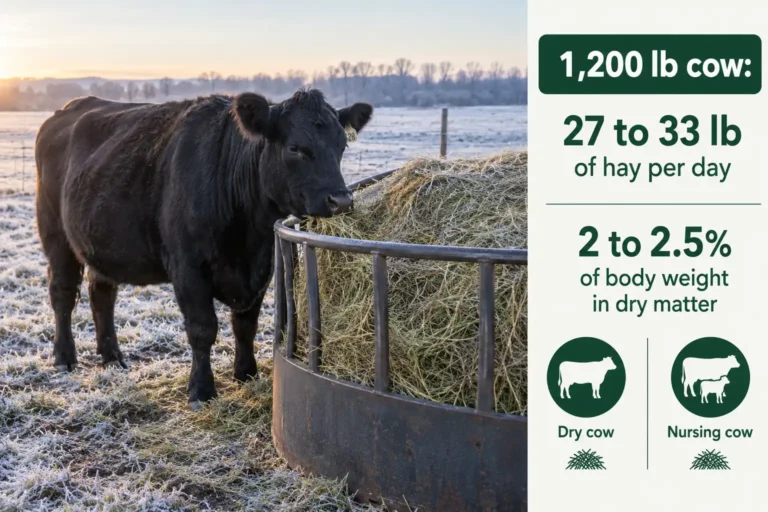
Feed is the cost to watch. Work out daily hay intake for the winter, and match cow numbers to the stocking rate for your pasture before you buy.
Costs Beyond the Purchase Price
The sale price is only the start. Budget for these before the cow unloads:
- Hauling from the sale barn or seller to your place
- A pregnancy check and exam by a large animal veterinarian, if no recent record exists
- Health papers for crossing state lines, as your state veterinarian’s office requires
- Brand inspection, in states that require it
- A separate pen to hold new cattle away from your herd, for as long as your veterinarian advises
- Breeding next season: a bull, a leased bull, or artificial insemination
Each of these varies by state and distance. So get local quotes rather than trusting a national figure.
How to Buy a Cow Without Overpaying
- Name the job first. A cow for raising calves, a share for the freezer, and a family milk cow are three different purchases.
- Pull this week’s USDA AMS report for your nearest auction. It lists bred cows and pairs by age, weight, and trimester.
- Price each cow per expected calf, not per head.
- Ask her age, then confirm it from her teeth with the seller or your veterinarian.
- Ask who pregnancy checked her and when. A recent veterinary check beats a seller’s estimate.
- Look at body condition. A thin cow in late pregnancy needs extra feed before she calves.
- Have a large animal veterinarian examine any cow you buy privately, before money changes hands.
Frequently Asked Questions
Is it cheaper to buy a calf and raise it for beef?
Not always, since a 575-pound steer calf brought about $2,540 in North Dakota in November 2026, per USDA AMS. Feed, processing, and months of care come on top, so compare that total with a half share quote.
How much does a cow cost per pound?
A young bred beef cow cost about $2.60 per pound of live weight at a November 2026 USDA AMS sale. Packaged beef from a half share costs about $9 to $12.50 per pound once processing and trim losses count.
Why do farms charge for beef by hanging weight?
Hanging weight is the carcass weight on the processor’s ticket, so buyer and seller can both verify it. Your packaged beef weighs 24 to 45 percent less, per Oklahoma State Extension, depending on trim and bone.
How much freezer space does half a cow need?
Plan on roughly 5.5 to 9 cubic feet for a half. Oklahoma State Extension figures one cubic foot for every 35 to 40 pounds of wrapped beef, and odd-shaped packages need a little extra room.
Can I keep just one cow?
You can, but a lone cow is often restless, because cattle are herd animals. Most small operations keep at least two head, or a cow with her calf, so each animal has company.
Do miniature Highland cows cost more than standard Highlands?
Yes. Miniature Highlands posted an auction median near $9,500 in Creatures records through October 2026, roughly double the $4,500 registered standard median, because buyers pay for size and looks rather than beef output.
Where to Start
Price the job before the animal. UNL’s baseline breakeven for a replacement cow sits near $2,400, below most 2026 bred cow prices. So if you buy for calves, choose young cows with many seasons ahead and keep feed costs tight.
For beef, a quarter share is the smallest first step, and a half gives the lowest price per hanging pound. Either way, check the latest USDA AMS report for your nearest auction before you pay.