
When to Breed Ewes for Spring Lambing: Count Back 147 Days
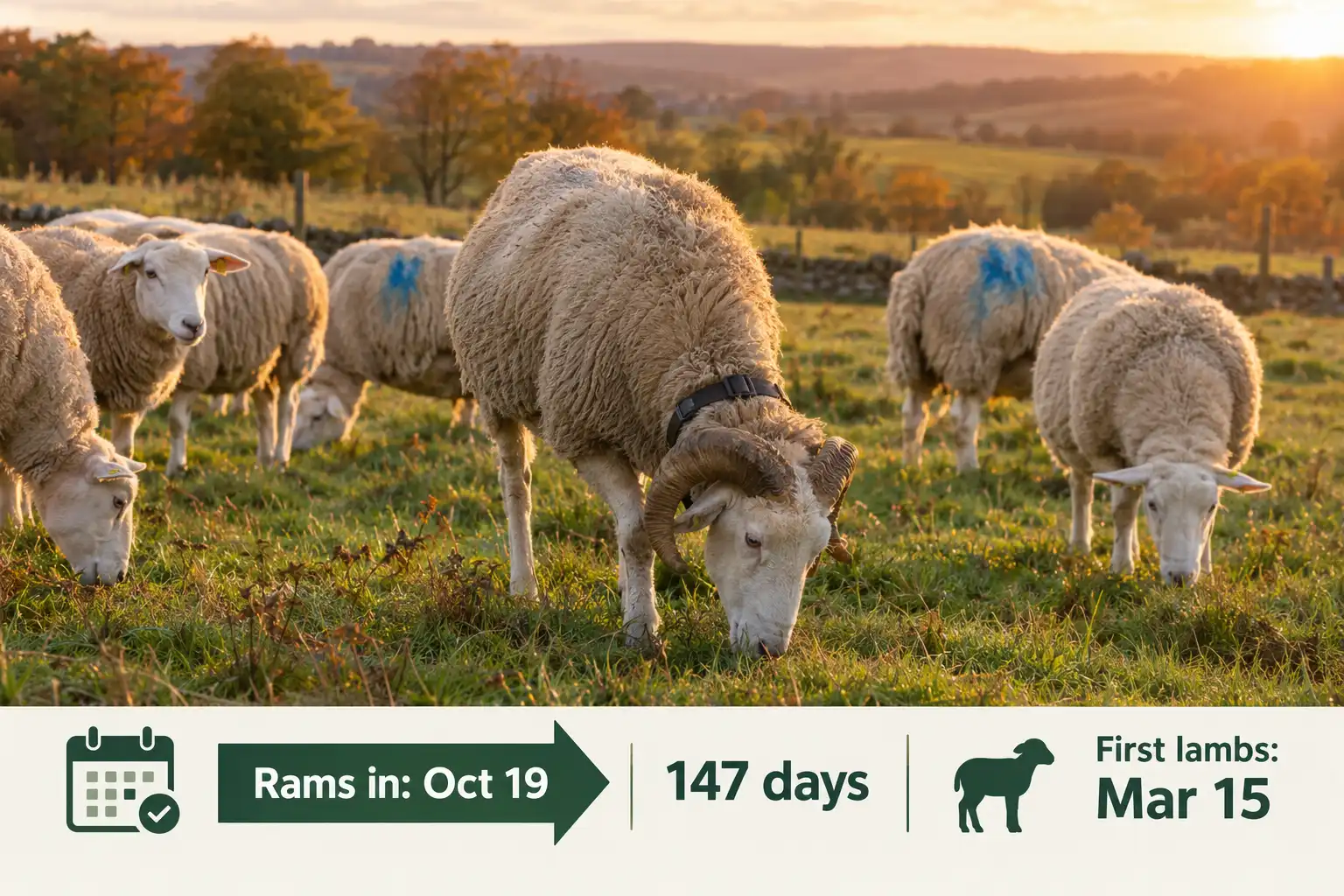
Knowing when to breed ewes for spring lambing comes down to one count. Pick the week you want lambs on the ground, then work back through gestation. Below are the turnout dates for six common targets and the regional trade-offs that should move your choice.
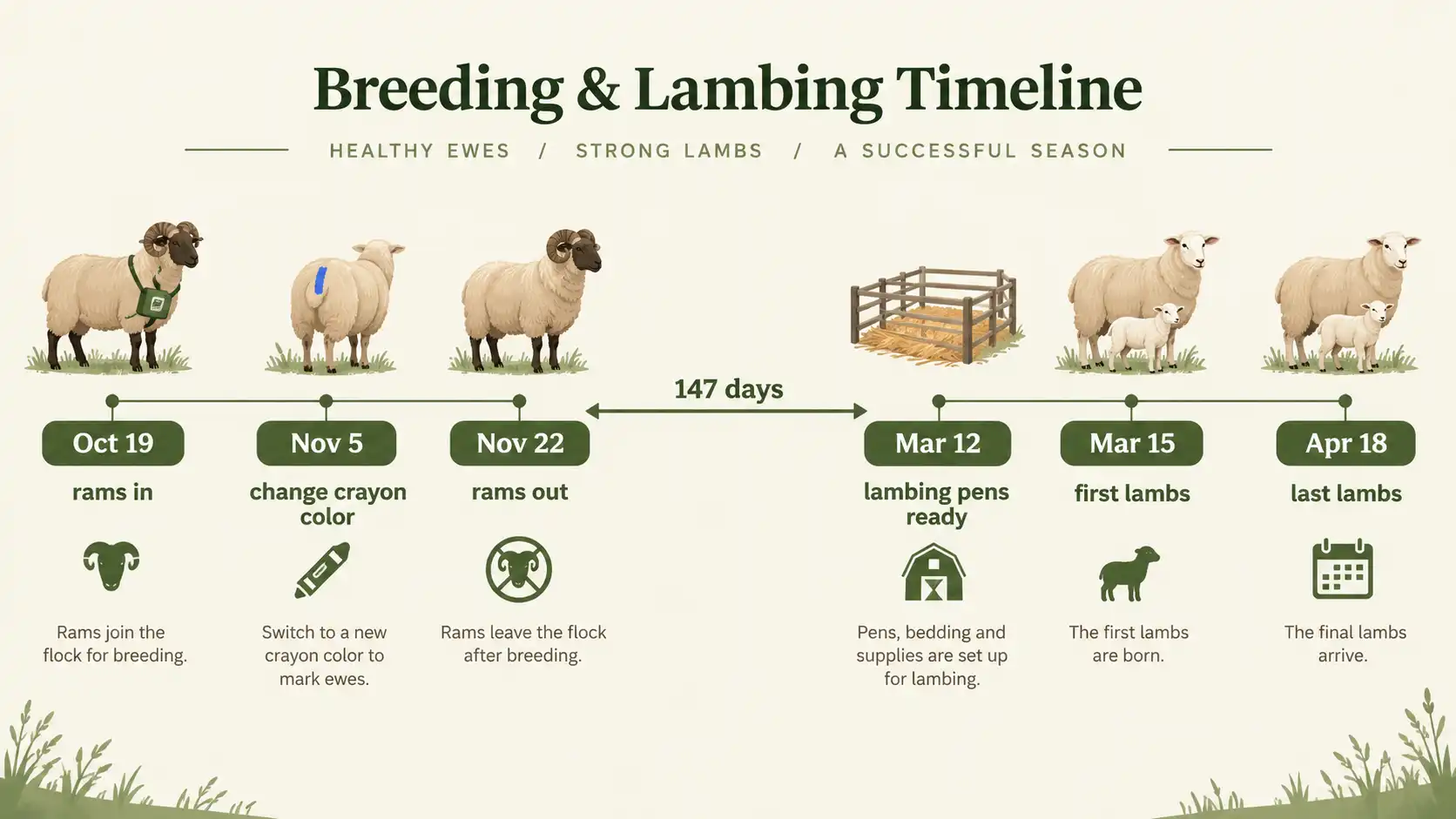
The best time to breed ewes for spring lambing is about 147 days before you want first lambs: mid-October for a mid-March start. Pull rams after 34 days, two heat cycles, so lambing finishes within about five weeks.
When to Breed Ewes for Spring Lambing: Count Back From Day One
Start with the date you want the first lambs on the ground. Then subtract 147 days. That is the day rams go in.
University of Missouri Extension puts sheep gestation at 144 to 152 days, so 147 sits near the middle. A few ewes will lamb up to three days ahead of your count. Have jugs bedded and lambing gear out by then.
Next, set how long rams stay in. Missouri gives the ewe’s heat cycle as 17 days on average, with most between 14 and 20. Two cycles is 34 days, which gives every ewe two chances to settle. Pull rams on day 34, and the last lambs land about 34 days after the first.
The table runs that count for six common targets.
| First lambs wanted | Rams in | Rams out (day 34) | Last lambs due near |
|---|---|---|---|
| February 15 | September 21 | October 25 | March 21 |
| March 1 | October 5 | November 8 | April 4 |
| March 15 | October 19 | November 22 | April 18 |
| April 1 | November 5 | December 9 | May 5 |
| April 15 | November 19 | December 23 | May 19 |
| May 1 | December 5 | January 8 | June 4 |
Dates assume a 28-day February. When lambing falls in a leap year, turn rams in one day earlier for any target after February.
Early Spring or Late Spring: Choosing the Target
Fall turnout already suits the ewe. University of Missouri Extension notes most sheep cycle in fall, with peak fertility from late September through November. Penn State Extension frames spring lambing the same way: breed October through December, lamb March through May.
Within that window, facilities and labor decide the date. University of Wisconsin researchers compared lambing seasons over five years. Their flock of more than 300 ewes ran at the Hayward Agricultural Research Station.
| Factor | March to April lambing | May to June lambing |
|---|---|---|
| Lambs born | Highest lambing percentage of the four seasons tested | Lower than March to April |
| Labor | Less than winter lambing | Least of any season, tied with fall |
| Feed and pasture | Lambs use early summer pasture best | Lowest feed cost |
| Lamb market | Sold when prices usually ran lowest | Sold on a better early winter market |
| Main risks | Shifting weather, more respiratory problems | Disowned lambs, flystrike, internal parasites, weather stress |
Prolific flocks need one more check. The Wisconsin team found pasture lambing in late May or June saves the most labor only below a 150 percent lambing rate. For very prolific ewes, it preferred lambing in a barn lot and moving pairs out to pasture daily.
So lamb in March or April if you have a barn and want the most lambs per ewe. Lean toward May if labor and feed cost are the tighter limits. Either way, settle the setup for lambing in a barn or on pasture before rams go in.
How Your Region Shifts the Date
Region pulls the target two ways, and the pull differs from south to north.
In warm, wet country, parasites favor earlier lambing. Texas A&M AgriLife Extension notes that barber pole worm eggs hatch fast between 70 and 90 degrees F. So rainy springs and summers bring the worst exposure, and lactating ewes and young lambs carry the most risk. Cooler-season lambing cuts that risk, because the worm cannot finish its life cycle efficiently in cool weather.
But earlier lambs need earlier turnout, and heat works against that. Virginia Tech Extension warns that heat stress can hurt ram fertility for up to 60 days. Ewes also lose embryos to heat early in the season.
Weighing the two, a mid-October turnout for March lambs is a workable middle in the South. Ewes breed after the worst heat, and lambs get a head start on the warm, wet months. Rams still need shade and airflow through late summer.
Farther north, cold sets the limit instead. The Wisconsin flock’s January lambing in a below-freezing barn took round-the-clock watching. Without a warm barn, that pushes the target toward April or May.
Fecal egg counts and FAMACHA scoring belong in your flock health plan, set with a veterinarian. We give no dewormer choices or doses.
Countdown to Ram Turnout
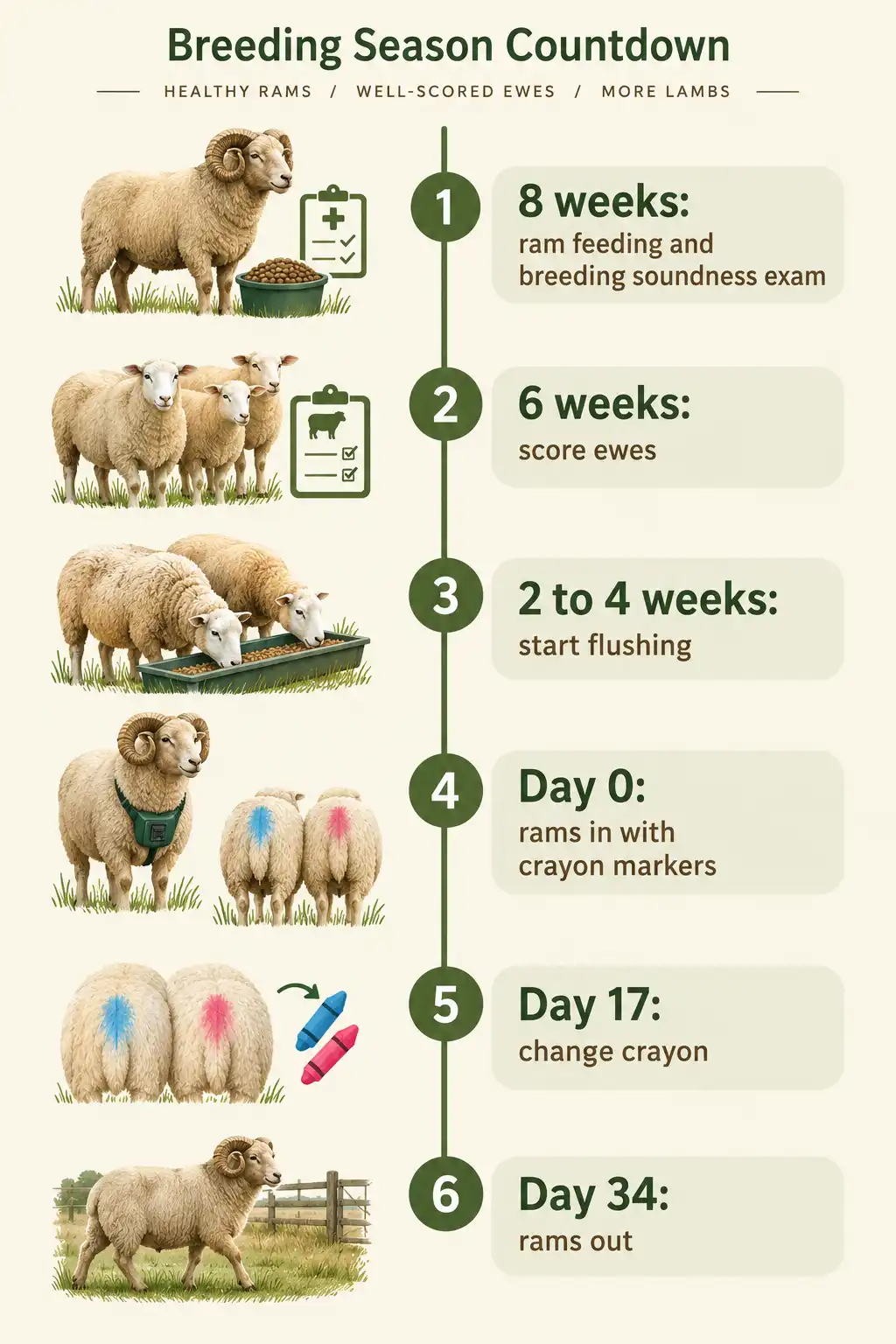
The jobs of the breeding season start about eight weeks before rams go in. Count back from your turnout date.
| When | Job | Why it sits here |
|---|---|---|
| 8 weeks before | Step up ram feeding; book a breeding soundness exam | Missouri: rams need 6 to 8 weeks of better nutrition to build semen quality, and a ram that fails gets a retest 30 to 60 days later |
| 6 weeks before | Body condition score every ewe | Michigan State: three weeks of better feed lifts a ewe about half a score; target 3.0 to 3.5 at breeding |
| 2 to 4 weeks before | Start flushing lean ewes | Sources differ on the start, covered below |
| Day 0 | Rams in, each fitted with a crayon marker | Crayon marks show which ewes the ram bred, and when |
| Day 17 | Change crayon color | Virginia Tech: one heat cycle has passed |
| Day 34 | Pull rams | Two cycles done; lambing stays near five weeks |
Book that exam early. Virginia Tech advises a veterinary breeding soundness exam before every season, with time left to replace a ram that fails. It is veterinary work, not a do-it-yourself job.
The same visit is the time to ask about vaccines for abortion diseases. Virginia Tech notes some need a first dose before rams go in. The product label and your veterinarian set the timing.
Flushing: Two Weeks or Four?
Extension services split on the start. Michigan State University Extension starts two weeks before breeding and continues two to four weeks after. University of Missouri Extension starts three to four weeks before and runs through one heat cycle. Both limit it to ewes that are not already fat.
Use body condition to pick. A ewe at 2.5 needs about three weeks to reach 3.0, so start at four weeks. Ewes already at 3.0 or better need only two, and they respond less anyway. Michigan State also sees no benefit at the height of the breeding season, which is where most spring lambing turnouts fall.
For ewes, Michigan State puts the usual supplement at half a pound to a pound of grain per head per day. Add it gradually, with bunk space for every ewe. Avoid legume pasture for flushing. Both services warn that clovers and alfalfa carry estrogen-like compounds that can upset heat cycles. Treat flushing as a short bump in ewe nutrition, not a new ration.
How Many Rams You Need
Virginia Tech Extension puts a ram lamb at 15 to 25 ewes in his first season. Most mature rams cover 50 or more. Run that against your flock:
- 25 ewes: one mature ram, or one to two ram lambs
- 60 ewes: two mature rams, or three to four ram lambs
- 120 ewes: three mature rams, or five to eight ram lambs
Keep ram lambs out of pastures with mature rams, since Virginia Tech notes they cannot compete. It also caps young rams at 60 days of breeding to protect their growth.
Condition matters as much as count. Penn State Extension wants rams at body condition score 3 to 3.5. Thin rams lack stamina, fat rams lack vigor, and either way fewer ewes settle on the first cycle.
A single-sire flock carries the most risk. Every pregnancy rides on one ram, so his breeding soundness exam matters most.
Ewe Lambs Run on a Later Clock
Ewe lambs need size before they need a ram. Penn State Extension’s rule of thumb is at least 70 percent of mature weight at breeding. University of Missouri Extension asks yearlings to reach 80 percent before the season starts.
For a line of ewes that matures near 160 pounds, that means:
- Ewe lambs: at least 112 pounds at turnout
- Yearlings: at least 128 pounds at turnout
If ewe lambs are short of that in October, a later turnout buys time. Virginia Tech notes that exposing ewe lambs later than mature ewes adds maturity at breeding and size at lambing. Penn State adds that ewe lambs gain less from flushing than mature ewes, since most already eat a growing ration.
Breed them as their own group if you can, with their own ram. Then feed them apart through late gestation, so older ewes do not push them off the bunk.
What a Late Cycle Costs
A ewe that settles one cycle late lambs about 17 days late, and her lambs carry that gap to weaning. Penn State Extension works the example: at three-quarters of a pound of gain per day, 17 days costs 12.75 pounds per lamb.
Now scale it. If 30 lambs in your crop come from second-cycle breedings, that is about 380 pounds less to sell at weaning.
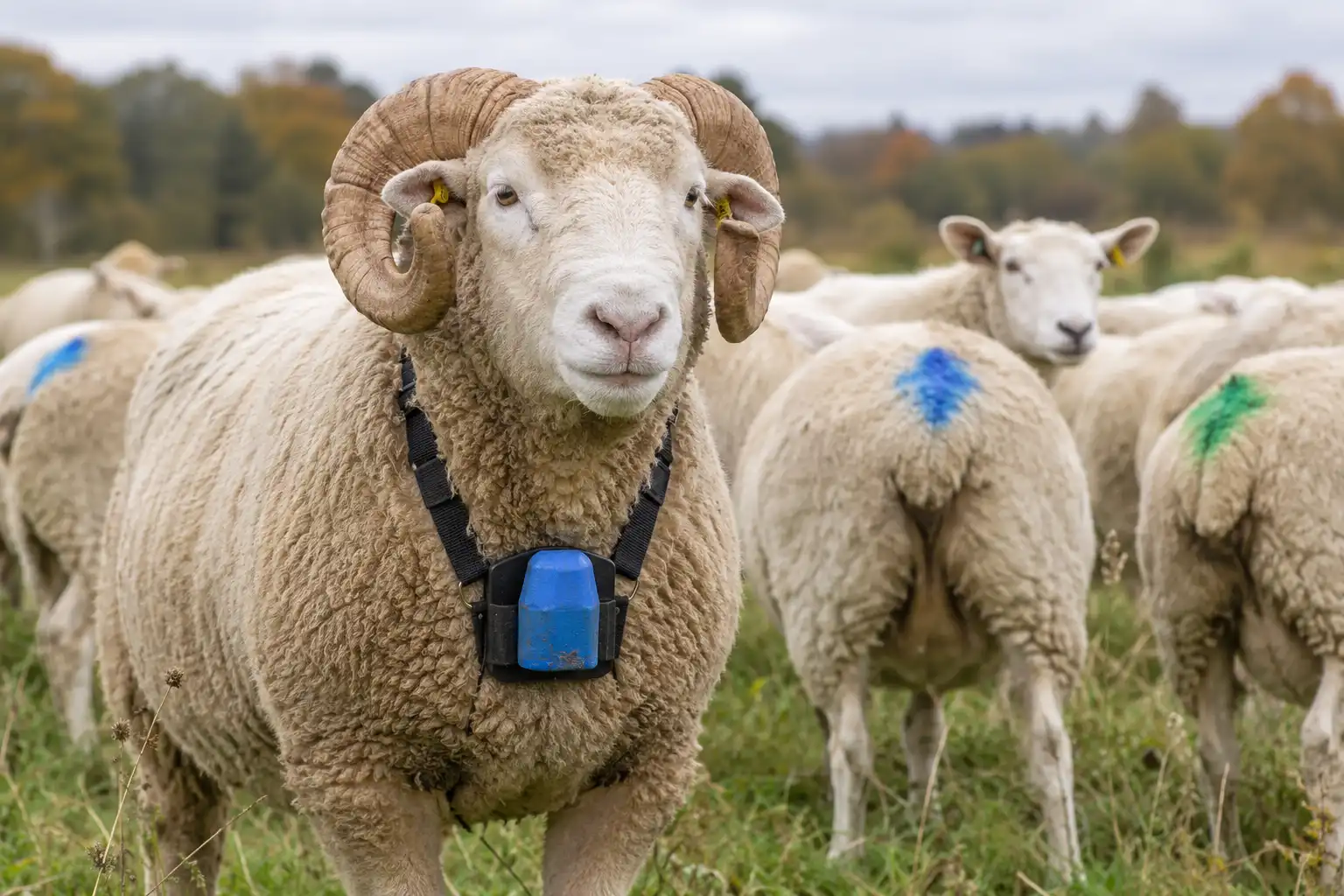
So track who settled when. Virginia Tech recommends a crayon marker on each ram, with the color changed every 17 days. Ewes marked once, in the first color, should lamb in the first half of the season. A ewe marked again in the second color did not settle on her first service.
If several ewes show repeat marks, ask your veterinarian to check the ram while there is still time to bring in another. Penn State makes the same point: skip semen testing if you must, but use a marking method to catch repeat breedings.
FAQs About Spring Lambing Calendar
How long is a ewe pregnant?
University of Missouri Extension puts sheep gestation at 144 to 152 days. Plan around 147 days, and have jugs and lambing gear ready about three days before the calculated first lambing date.
Can I leave the ram in with my ewes all winter?
You can, but lambing then stretches across months and late-born lambs lose weaning weight. Pulling rams after two 17-day cycles keeps lambing near five weeks, and Virginia Tech caps young rams at 60 days.
Do my ewes need flushing before a fall breeding?
Lean ewes do. Michigan State Extension reports no gain from flushing over-fat ewes or at the height of the normal breeding season, and less response in ewes kept in very good condition year-round.
Should ewe lambs go in with the ram at the same time as older ewes?
Not if they are still light. Virginia Tech notes that exposing ewe lambs later than mature ewes adds maturity at breeding and size at lambing, and Penn State wants them at 70 percent of mature weight first.
How many ewes can one ram breed?
Virginia Tech puts a mature ram at 50 or more ewes and a ram lamb at 15 to 25 in his first season. In a single-sire flock, the breeding soundness exam matters most, since every pregnancy rides on one ram.
Why did my ewe get marked again 17 days later?
She did not settle on that first service and will lamb about 17 days later. If several ewes show the second crayon color, have your veterinarian check the ram while there is still time to swap him.
Putting This Into Practice
Choose the lambing date first, based on your barn, your labor, and your region. Subtract 147 days for turnout, start ram work eight weeks before that, and pull rams on day 34. For local forage and parasite timing, your county extension office knows conditions where you farm better than any national calendar.